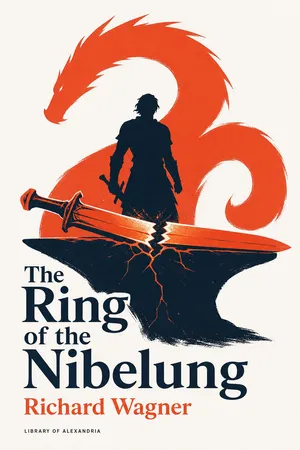
A stolen treasure promises dominion over the world-and sets gods and heroes on a path toward ruin. Love and power collide in a drama where even the gods cannot escape the consequences of their bargains.
Richard Wagner's The Ring of the Nibelung unfolds across four interconnected music dramas: Das Rheingold, Die Walküre, Siegfried, and Götterdämmerung. Drawing on Norse and Germanic legend, the cycle begins when Alberich renounces love and forges the Rhine-gold into an instrument of power. His curse reaches far beyond its first possessors, binding divine ambition to human suffering.
Wotan struggles to preserve his authority while caught between his own laws and those he loves. Brünnhilde defies his command and is condemned to sleep behind a wall of fire. Siegfried reforges a broken sword, kills the dragon Fafner, and awakens her, but courage alone cannot protect him from deception. Across these linked stories, Wagner turns myth into an exploration of greed, loyalty, sacrifice, and the fragility of an order built on domination. Its enduring force lies in the conflict between the desire to possess and the capacity to love.
What readers find inside:
- A fatal bargain - The gods' dealings with giants reveal the cost of ambition at the foundation of Valhalla.
- Divided loyalties - Wotan and Brünnhilde face choices that pit obedience against compassion.
- A fearless hero - Siegfried's sword-forging and encounter with Fafner bring heroic legend vividly into the drama.
- Love under threat - The bonds between lovers and family members are tested by authority, deception, and desire.
- A world transformed - The final drama brings betrayal and destruction together with the possibility of renewal.
For opera lovers who want to follow the dramatic story, readers drawn to Norse mythology, and anyone fascinated by epic conflicts between conscience and power, this work offers a world both strange and recognizably human.
Enter Wagner's mythic world and follow the choices that lead from stolen gold to the twilight of the gods.