The author of the
Exorcism of Anneliese Michel "is to be commended for a stimulating and wide-reaching treatment of a compelling and much-debated subject" (
Journal of Folklore Research).
As part of a series that strives to introduce new or previously unrecognized folkloric phenomena—as well as new approaches and theories that result from discovery and investigation—
How About Demons? provides an overview of a topic that has for many years captured the imagination of people from all walks of life.
Rich in detail derived from the author's fieldwork and anthropological literature, this work contemplates possession and exorcism in a holistic manner—discussing their effects on both the body and soul.
How About Demons? paints a picture of possession as a usually positive experience occurring in a wide variety of cultures and religions around the globe. It also details the ritual of exorcism which is applied when things go wrong.
"Quite an interesting book."—
Religious Studies Review
"It is by far superior to anything else on demons we have seen in the past few years."—
The American Rationalist
Trusted by 375,005 students
Access to over 1.5 million titles for a fair monthly price.
In order to understand possession, we need first of all to come to terms with the concept of the soul. The behavioral sciences, such as psychology or anthropology, consider human beings to be biopsychological systems. According to this view, all experience results from the interaction of the various parts within this integrated unit. Obviously, there is no room for the soul in a theory of this sort. As Virchow, a famous German surgeon of the nineteenth century, used to say, “I never found a soul with my scalpel.” We may ask, of course, whether the scalpel is the most useful tool for finding the soul. Ancient sages as well as religious specialists active in societies today the world over, including our own, certainly never used it for that purpose. They simply took the existence of the soul for granted, building their entire belief system on the conviction that indeed humans do have at least one or possibly even several souls.
The two opinions are clearly at loggerheads with each other, and although as Westerners, we are inclined to opt against the soul theory, we should at least be fair and ask the following question: If you disagree with the idea that humans are integrated systems, a heap of cells having unimaginably complex interconnections as well as psychological dimensions, but nothing else, then what are you going to propose as a countertheory? The answer we will get from those cleaving to the “soul hypothesis” is that in their view, humans consist of a shell, something like a box, namely, the body, and an ephemeral substance or essence residing within, usually termed the soul. All the various religious faiths and systems we are going to become acquainted with in these pages take the soul theory for granted, as a given, as their unshakable foundation.
To clarify some of the ramifications of the soul theory, let us couch it in some seemingly simplistic imagery: for those accepting the soul hypothesis, a human being could be likened to a car with a driver in it. The car is the body, and the driver is the soul. This simile makes it easier for us than any theoretical discussion could to understand what people mean when they talk about the experience of possession. Just as the driver owns the car, so the soul owns the body. The owner of the car drives the vehicle, and it is the soul that activates the body. Now, suppose the driver has a friend who has no car. What might happen? The driver, if he is so inclined, could invite this friend temporarily to take over the wheel and to drive the car. In terms of the soul theory, something of this sort happens in possession. In a religious ritual, this supplicant asks a being of the other, the alternate, reality, who possesses no physical body of its own, to descend into his/her body for the duration of the ritual and to use it as it sees fit.
The question is, what happens to the owner soul when such an alien being takes over its body? To understand that, let us return to the car and its original owner. While his friend drives the car, the owner or host may stay in the back seat, for instance, just watching. He may praise his friend’s driving skill. Or perhaps his friend wants to have the car to himself for a while and so asks the owner to get out. Any one of these things may happen with respect to the interaction between the soul that has proprietary rights to the body and the incoming spirit. The choice is a matter of cultural configuration.
Some ethnographie examples will illustrate the point.1 The Y
nomamö Indians live on the border between Venezuela and Brazil.2 When they are intoxcated with ebene, their hallucinogenic snuff, they sing to their hekura spirits, miniature, glowing beings that live in the jungle, to come and live in their chests. The following is a brief section of an account given by their ethnographer, Napoleon Chagnon, who joined in one of their rituals:
My arms seemed light and began moving almost of their own accord, rhythmically up and down at my sides, and I called to Ferefereriwä and Periboriwä, hot and meat hungry hekura and asked them to come into my chest and dwell within me. I felt great power and confidence, and sang louder and louder, and pranced and danced in ever more complex patterns. I took up . . . arrows, and manipulated them as I had seen . . . shamans manipulate them, striking out magic blows, searching the horizon for hekura, singing and singing and singing. Others joined me and still others hid the machetes and bows, for I announced that Rahakanariwä dwelled within my chest and directed my actions, and all know that he caused men to be violent. We pranced together and communed with the spirits. . . . (1977:158)
One gains the impression in this description that the soul of the shaman and the tiny jungle spirits share the space in the supplicant’s chest as equal partners.
But when the Holy Spirit possesses a Pentecostal worshiper, the body “turns into a tabernacle,”3 as one member of such a congregation told me, and the “owner soul” dwindles into nothingness. I was struck by this impression once more when during fieldwork in a village in Yucatán in January 1985, a member of the Apostolic congregation there reminisced about his first experience of speaking in tongues:
You know how it is: You see it happening to others and you wonder, will it ever happen to me too? And then it does happen. I was praying for this manifestation of the Holy Spirit. All of a sudden I started trembling, and without wanting to, my lips began to move and the sounds came tumbling out, and there was light all about and I knew nothing more.
And there may even be a conflict between the owner of the body and the spirit that would like to take it over for the time being. Siberian shamans tell of knock-down, drag-out fights between their souls and an invading spirit. As the Hungarian folklorist Vilmos Diószegi described it,4
The spirit that is about to take up its abode in the body of the shaman starts battling with the shaman’s own soul; it tries to suppress it and force it into submission. Frequently, the [invading] spirit does not succeed until after a prolonged and vicious struggle. That is why the start of the experience, of the total ecstasy, is preceded by lengthy agony, by nervous trembling, dizziness, and vomiting. When the spirit is finally victorious, the shaman’s soul has been fettered and silenced; it can say nothing at all. Instead, it is the spirit that penetrated that does the speaking, that acts and moves by using the shaman’s body. (1958:331)
From these descriptions, the reader might gain the mistaken impression that a takeover of the owner’s body by some spirit entity can happen any time or any place. Or, speaking in terms of the car and its owner, somebody casually ambling down the street could simply jump in and steal the vehicle. But matters are not that simple. Possession can come about only if certain very specific preconditions are met. The most important of these is a separate entranceway for the spirit into the car.
To understand this precondition, let us think of the mythical car we have been talking about as having a rather singular feature. Only its owner can enter by the ordinary front door. Guests need a special one of their own, a spirit door, if you will. When considering its various features, we come to realize that this entranceway is truly miraculous. Let us examine it a bit more in detail.
The Spirit’s Fingerprints.
By this we mean first of all that not just any spirit can be involved in a particular possession. It has to be the right spirit. That is, the respective spirit is “culture-specific.” Normally, hekura spirits can enter only during a Y
nomamö ritual. The Holy Spirit comes to worshipers during a ritual in a Pentecostal church. A hekura or a Siberian shaman’s spirit would not appear in such a temple.
The Spirit’s Key.
Second, a door will not open without a key. The key to the special spirit entrance is the ritual preparation and a specific cue. As to preparation, Y
nomamös put on some special feather decoration. In a Pentecostal church, there are particular hymns addressed to the Holy Spirit, asking for its “fire,” for instance. Then people go to the altar and kneel down. In Siberia, all the relatives gather, a festive meal is prepared, and gifts to the spirit are placed on an altar. The special cues for the spirit’s arrival are hardest to detect for an outside observer. It is not difficult to note that for the Y
nomamö it is the inspiritation of the hallucinogenic snuff. But in a Pentecostal prayer, it may be anything—a particular phrase, such as, “Oh, my God,” or even just a particular impression or memory called up by the person in prayer. Siberian shamans, on the other hand, often assume a particular posture.
The Spirit’s Door.
The spirit cannot enter until this very complex key is actually in place. But what now about the door itself? This door is marked “trance.” Put differently, the only way a spirit, an alien entity, can take possession of a human’s body is if that body first undergoes certain specific changes, an alteration of consciousness termed religious trance or ecstasy. When these changes happen, humans begin to act in a nonordinary way. There might be dizziness, trembling, convulsions, even a dead faint. That is quite disconcerting to Western-trained anthropologists, who may be tempted to interpret what they see in psychiatric terms. Isn’t such behavior hysteria, or epilepsy?
Anthropologists know, of course, that within the religious specialists’ own culture, these people are considered “normal.” But for centuries, and clear into the present, religious practitioners that were observed when going into trance have been classed in Western literature, be it of psychiatry, psychology, or comparative religion, as mentally ill. It is understandable that even in the minds of anthropologists, who from their participation in the life of non-Western societies should have known better, the suspicion lingered: Was it not possible nevertheless that the shamans, the mediums, the priests in non-Western societies behaving so strangely were actually psychotic?
In order to answer this question, Erika Bourguignon, professor of anthropology at Ohio State University, undertook a five-year large-scale statistical study beginning in 1963 with the support of the National Institute of Mental Health.5 Using the Human Relations Area File, a vast repository of ethnographic data, she and her graduate assistants counted the occurrence of the religious altered state of consciousness or trance in small, non-Western societies of interest to anthropology. They included its expression not only in possession but also in other cultural behavior, such as spirit journeys, visions, or divination. Given the large number of societies that anthropologists have made a record of, it would be an unlikely coincidence indeed if each one of these societies, despite their small size, at all times possessed the right kind of psychotic person of the right sex and the right age to carry out its religious rituals, if indeed that was the case. In other words, if one had to wait for such a coincidence to occur, there could be only a small number of societies using the religious trance. The majority of societies would have to forego the institutional use of this altered state. However, that was not what the statistical study showed. It demonstrated instead that nearly all the societies examined included some form of religious trance in their rituals. In one sample alone of 488 societies, for instance, 437, or ninety percent, had one or more institutionalized, culturally patterned forms of the religious altered state of consciousness. As Bourguignon points out,
[This] represents a striking finding and suggests that we are, indeed, dealing with a matter of major importance, not merely a bit of anthropological esoterica. It is clear that we are dealing with a psychobiological capacity available to all societies. (1973:11)
The significance of this statistical study was that it freed researchers interested in religious trance behavior from the burden of having to start over and over again trying to prove that ecstasy did not represent any pathology. They could begin looking at it as the expression of a ubiquitous, perfectly normal genetic endowment instead. The following discussion will provide an overview of some of the research based on this insight, viewing the religious trance or ecstasy as a general human psychobiological capacity.
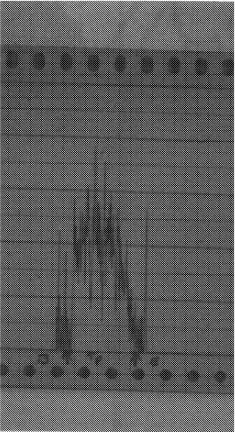
I became interested in ecstasy initially because I was doing research on a behavior observed extensively both in Christian and in non-Christian religious observances, namely, glossolalia, a vocalization called in the congregations of the Pentecostal movement “speaking in tongues.” Frequently, such vocalization consists of syllables that are “vacuous,” not carrying any meaning, such as, “lalalalala,” “?ulalala dalalala,” or “tsetsetsetse.” After carrying out a careful linguistic analysis of tape recordings of such vocalization by speakers of various English dialects, I found that the utterances shared a number of features that were not encountered in English, or in any other natural language, for that matter. Each syllable began with a consonant, if we included the consonant called a “glottal stop” indicated in the second example quoted above by a “?.” They were rhythmical to an extent not heard even in scanned poetry. Because of this rhythm, individual utterances had more in common with music than with natural language; this impression was heightened by the fact that as the result of an accent pattern, each utterance was subdivided into bars of equal length. And most important, all utterances shared a common intonation pattern, which rose to a peak at the end of the first third of the unit and then sloped gradually toward the end. Figure 1 clearly shows the characteristic shape of such a glossolalia curve, traced by a level recorder in a phonetics laboratory.
Features such as accent, rhythm, and intonation are called suprasegmental elements in linguistics, because they float, one might say, above the syllables, the segments. In subsequent fieldwork with Spanish speakers in Apostolic (Pentecostal) congregations in Mexico City and with Maya-speaking Indian congregations in Yucatan, Mexico, I found that their glossolalia had the same suprasegmental elements as that of the English speakers. Tape recordings later supplied by helpful colleagues6 of glossolalia from a non-Christian sect, a so-called New Religion (see chap. 3), in Japan, from spirit mediums in Ghana and Africa, and even from a woman healer among the headhunters in Borneo who is calling her helping spirit, demonstrated that these suprasegmental features were unfailingly present. When we remember that all these people under ordinary circumstances speak very different languages that are not related in any way, it is logical to conclude that what we are hearing here has little to do with language. Put differently, the uniformity of the suprasegmental traits of glossolalia cross-culturally and irrespective of the native tongue of the speaker suggests that we are dealing with a neurophysiological change that is instituted in all religious ritual when humans speak in this nonordinary way. The syllables themselves are probably created in the speech area we have in the left side of our brain. But other than that, those suprasegmental elements we have been talking about are so alien to ordinary language that they must be produced by something else that is happening in the speaker. This impression was strengthened further as I listened to the so-called interpretation of the glossolalie utterance that is mentioned in the Bible as one of the “gifts of the Spirit.” It is not practiced in the Mexican Apostolic churches, but I heard it often during fieldwork in various Evangelical temples in this country. It had a pleasing rhythmical quality to it, and this rhythm occasionally got in the way of grammar, so that a syllable would get lost at the end of a phrase, or a word would break in half. The level recorder revealed a perfectly regular wave pattern for the intonation of this interpretive speech, with each wave once more exhibiting a rather flat peak at the end of the first third of the unit.
Figure 1. “Speaking in tongues” of a member of the Streams of Power congregation of St. Vincent Island. B = beginning; P = peak; E = end. (Bruel and Kjaer level recorder, Model 2304, paper speed 3 mm/sec)
I suspected early on during my research that the “something” affecting the mode of speech was the change wrought in the body by the religious trance, and this supposition was amply confirmed by field ...
Table of contents
Cover
Title
Copyright
Contents
Foreword
Preface
Chapter 1: Possession’s Many Faces
Chapter 2: Spiritualism
Chapter 3: Healing in Umbanda
Chapter 4: Pentecostalism: A New Force in Christendom
Chapter 5: The Dangerous Spirits of Japan
Chapter 6: The Multiple Personality Experience and Demonic Possession
Chapter 7: The Ghosts that Kill
Chapter 8: A Legion of Demons
Chapter 9: Two Recent Cases of Demonic Possession
Conclusion: How about Demons—and Other Spirits?
Notes
Bibliography
Index
Frequently asked questions
Yes, you can cancel anytime from the Subscription tab in your account settings on the Perlego website. Your subscription will stay active until the end of your current billing period. Learn how to cancel your subscription
No, books cannot be downloaded as external files, such as PDFs, for use outside of Perlego. However, you can download books within the Perlego app for offline reading on mobile or tablet. Learn how to download books offline
Perlego offers two plans: Essential and Complete
Essential is ideal for learners and professionals who enjoy exploring a wide range of subjects. Access the Essential Library with 800,000+ trusted titles and best-sellers across business, personal growth, and the humanities. Includes unlimited reading time and Standard Read Aloud voice.
Complete: Perfect for advanced learners and researchers needing full, unrestricted access. Unlock 1.5M+ books across hundreds of subjects, including academic and specialized titles. The Complete Plan also includes advanced features like Premium Read Aloud and Research Assistant.
Both plans are available with monthly, semester, or annual billing cycles.
We are an online textbook subscription service, where you can get access to an entire online library for less than the price of a single book per month. With over 1.5 million books across 990+ topics, we’ve got you covered! Learn about our mission
Look out for the read-aloud symbol on your next book to see if you can listen to it. The read-aloud tool reads text aloud for you, highlighting the text as it is being read. You can pause it, speed it up and slow it down. Learn more about Read Aloud
Yes! You can use the Perlego app on both iOS and Android devices to read anytime, anywhere — even offline. Perfect for commutes or when you’re on the go. Please note we cannot support devices running on iOS 13 and Android 7 or earlier. Learn more about using the app
Yes, you can access How About Demons? by Felicitas D. Goodman in PDF and/or ePUB format, as well as other popular books in Theology & Religion & Religion. We have over 1.5 million books available in our catalogue for you to explore.