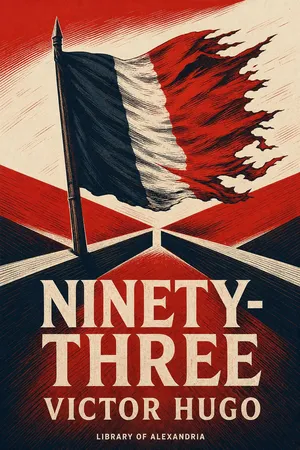
What happens when loyalty to a cause demands the betrayal of conscience? In a country divided by revolution, mercy can become the most dangerous choice of all.
Set in 1793 during the French Revolution's Reign of Terror, Victor Hugo's Ninety-Three follows the struggle between Republican and royalist forces in Brittany. Three men embody its bitter divisions: Gauvain, a Republican commander whose ideals leave room for compassion; Cimourdain, a former priest devoted to revolutionary duty; and the Marquis de Lantenac, a royalist leader determined to defend the old order.
As their paths converge, military conflict becomes a test of what each man believes justice requires. Hugo brings the sweep of historical fiction to intimate questions of loyalty, sacrifice, and responsibility. His final novel confronts the violence committed in the name of principle without abandoning the possibility of human goodness. Its enduring force lies in a question that reaches far beyond revolutionary France: can a just cause remain just when it refuses compassion?
What readers find inside:
- A Nation Divided - Revolutionary France provides the setting for a civil war between competing visions of political order.
- Three Conflicting Convictions - Gauvain, Cimourdain, and Lantenac bring sharply different loyalties to their encounters with duty and conscience.
- The Cost of Certainty - The novel examines how unwavering devotion to an ideal can harden into cruelty.
- Mercy Under Pressure - Acts of compassion challenge the demands of war and expose the limits of rigid judgment.
- History and Moral Inquiry - Scenes of conflict and sustained reflection connect public upheaval with deeply personal choices.
For readers of French classics, historical novels about revolution, and fiction that wrestles with difficult moral choices, this is a powerful encounter with the human consequences of political belief.
Enter Hugo's divided France and discover what remains when conviction is put to the test of mercy.