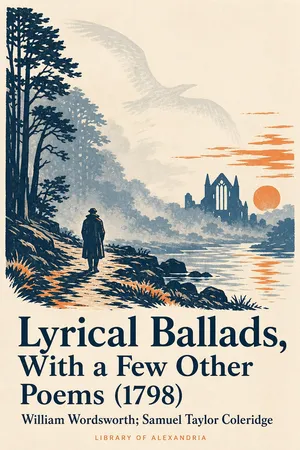
A quiet landscape can transform the mind; a voyage can become a haunting encounter with the unknown. Here, ordinary life and extraordinary imagination meet at a turning point in English poetry.
First published in 1798, William Wordsworth and Samuel Taylor Coleridge's Lyrical Ballads, With a Few Other Poems helped establish English Romanticism. Turning toward rural people, familiar speech, and deeply felt experience, the poets challenged prevailing ideas about the subjects and language worthy of verse. Their poems find emotional depth in humble lives and make the natural world a source of both consolation and mystery.
The collection brings together the reflective power of Tintern Abbey and the supernatural voyage of The Rime of the Ancient Mariner. In Expostulation and Reply, questions about learning and perception emerge through conversation. Across these different voices and forms, memory, solitude, suffering, and imagination become ways of exploring the relationship between the mind and the world. The result is not simply a landmark in literary history, but poetry that still asks readers to look and listen more closely.
What readers find inside:
- Nature and Memory - Landscapes stir reflection on time, feeling, and the lasting influence of past experience.
- Supernatural Wonder - Coleridge's mariner carries readers into a sea voyage charged with dread and moral consequence.
- Ordinary Lives - Rural figures and humble circumstances receive sustained imaginative attention.
- Fresh Poetic Language - Familiar speech and direct feeling challenge the distance between poetry and everyday experience.
- Romantic Beginnings - The poems reveal a new emphasis on imagination, inward life, and humanity's connection with nature.
For readers drawn to nature poetry, students exploring English Romanticism, and anyone who enjoys reflective verse alongside tales of the uncanny, this collection offers two distinct poetic imaginations in conversation.
Begin with a remembered landscape or a mysterious voyage, and discover where these poems take you.