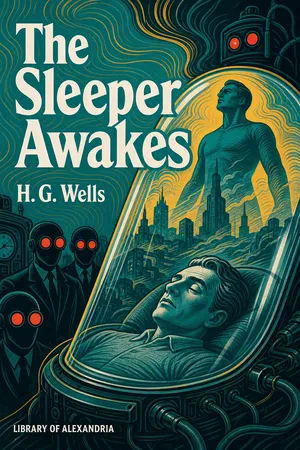
He has slept for two centuries. In his absence, his fortune has become an empire-and humanity has paid the price.
In H. G. Wells's The Sleeper Awakes, Graham emerges from a mysterious sleep into a transformed London. Towering buildings, flying machines, and unfamiliar systems of communication surround him. More bewildering still, the wealth accumulated during his long unconsciousness has made him the nominal master of the world. Yet the men who govern in his name have no intention of simply handing over control.
Drawn into a struggle between entrenched authority and popular rebellion, Graham must discover what his extraordinary position really means. Is he a ruler, a prisoner, or a useful symbol for someone else's ambitions? Wells brings the spectacle of technological change into sharp conflict with the persistence of exploitation. The result is an early dystopian novel whose questions about concentrated wealth, manufactured consent, and political responsibility remain unsettlingly familiar.
What readers find inside:
- A stranger in the future - Graham's bewildered perspective makes a radically altered society both dazzling and disturbing.
- Wealth without limits - An immense accumulated fortune exposes the dangerous relationship between ownership and political power.
- A transformed London - Vast structures and aerial transport give physical shape to Wells's imagined social order.
- Rebellion and manipulation - Rival claims to authority force Graham to question who speaks for the people and who profits from their obedience.
- The burden of action - A man treated as a living legend must decide whether to accept his symbolic role or take responsibility for its consequences.
For readers of classic science fiction, politically charged dystopias, and stories of ordinary people confronting extraordinary power, this novel offers both imaginative adventure and a searching social critique.
Enter Wells's future and discover what it costs to wake up to the truth.