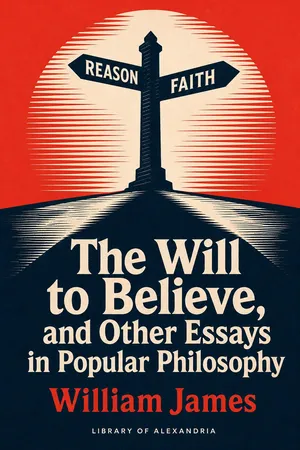
Must we wait for certainty before committing to what matters? William James asks how we can choose, act, and hope when evidence leaves life's deepest questions unresolved.
In The Will to Believe, and Other Essays in Popular Philosophy, James brings philosophical argument into contact with personal experience. The title essay defends the right to adopt a belief when a genuine choice is momentous, unavoidable, and beyond settlement by evidence alone. Rather than dismissing reason, James examines its limits-and the role our hopes, needs, and commitments play in decisions we cannot postpone indefinitely.
The collection ranges from religious faith to moral judgment and the possibility of meaningful action. Is Life Worth Living? confronts despair and the grounds for hope, while The Dilemma of Determinism considers causality, choice, and responsibility. In Reflex Action and Theism, James connects questions about the mind with religious thought. His lively, direct arguments remain valuable because they take uncertainty seriously without treating it as a reason to stop living or thinking.
What readers find inside:
- Faith and evidence - The title essay asks when commitment may be justified even without conclusive proof.
- Hope and meaning - James examines whether life is worth living and how belief can sustain engagement with it.
- Choice and responsibility - The discussion of determinism explores what is at stake in our understanding of human action.
- Mind and religion - Reflections on reflex action and theism bring psychological questions into philosophical debate.
- Ideas tested by life - Throughout the essays, abstract questions gain urgency through their consequences for conduct and experience.
This collection will appeal to readers of philosophy of religion, those interested in American philosophical thought, and anyone weighing the claims of doubt and conviction in their own life.
Begin with James's challenge to certainty and discover a thoughtful companion for the decisions that cannot wait.