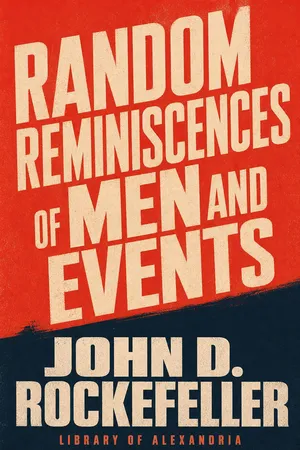
How does a builder of extraordinary wealth explain his methods-and his responsibility to others?
In Random Reminiscences of Men and Events, John D. Rockefeller looks back on the business relationships, decisions, and convictions that shaped his life. The co-founder of Standard Oil offers a personal account of American industry, recalling the people he worked with and explaining the value he placed on discipline, cooperation, and trust. These recollections bring readers close to the thinking of a central figure in the rise of modern American capitalism.
This is not a detached history of an industrial empire, but Rockefeller's own perspective on business and the use of money. Alongside his reflections on commercial life, he considers charity and the responsibilities that accompany great wealth. Its lasting interest lies in that combination: a powerful businessman's account of his methods and a statement of the principles by which he wished those methods to be understood. For readers today, it opens questions about corporate power, personal character, and the relationship between private fortunes and public benefit.
What readers find inside:
- Standard Oil - Recollections illuminate Rockefeller's approach to building and conducting a major industrial enterprise.
- Business Relationships - Accounts of associates and encounters show the importance he assigned to cooperation and confidence.
- Habits and Judgment - Reflections on discipline and decision-making reveal the principles he brought to commercial life.
- Wealth and Giving - Rockefeller explains his views on charity and the purposes to which money can be put.
- A Personal Historical Voice - The memoir offers a firsthand perspective on the values and ambitions behind American industrial growth.
For readers of business biography, students of American economic history, and entrepreneurs interested in the human choices behind large institutions, this memoir offers both historical insight and a perspective worth examining critically.
Begin Rockefeller's recollections and consider how he understood the making-and the meaning-of wealth.