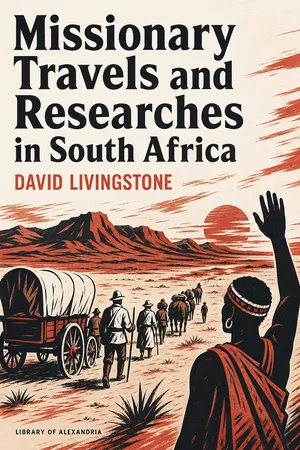
What drives a person to cross deserts and rivers in pursuit of a mission? David Livingstone's account brings the physical demands and moral ambitions of nineteenth-century exploration into sharp focus.
In Missionary Travels and Researches in South Africa, Livingstone recounts journeys through southern Africa, describing the Kalahari, the Zambezi River, and Victoria Falls. A missionary and explorer with a keen interest in natural history, he records landscapes, wildlife, climate, and the societies he encounters. The result is both a personal travel narrative and a substantial record of the places and people along his routes.
Faith and opposition to the slave trade shape his account. Livingstone connects his hopes for Christian missions with a belief that commerce could offer an alternative to enslavement. Read today, his observations offer insight into African history as well as the assumptions and ambitions of a Victorian European traveler. His attention to everyday encounters gives the narrative an interest beyond its journeys and geographical discoveries.
What readers find inside:
- Demanding journeys - Desert crossings, river travel, illness, and difficult terrain reveal the practical challenges of exploration.
- African societies - Accounts of customs, beliefs, languages, and encounters preserve Livingstone's perspective on the communities he visits.
- Natural history - Observations of animals, plants, weather, and geography connect travel with scientific curiosity.
- Faith and purpose - Christian conviction informs his decisions and his understanding of the missionary calling.
- The slave trade - His condemnation of slavery accompanies arguments for commerce and a different relationship between Africa and Europe.
This book will appeal to readers of historical travel writing, those interested in southern African history, and anyone exploring the relationship between religion, exploration, and empire.
Begin a journey through Livingstone's firsthand observations and the convictions that carried him onward.