What if the story of creation also revealed a divine pattern for every year, festival, and Sabbath?
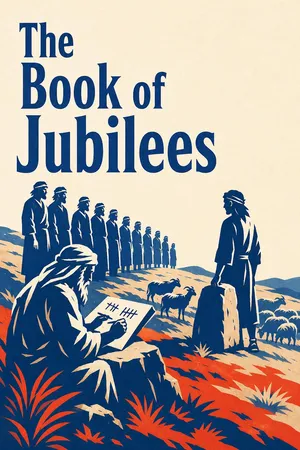
The Book of Jubilees, also known as Little Genesis, retells the events of Genesis and the beginning of Exodus within a revelation delivered to Moses on Mount Sinai. Creation, Adam and Eve, Noah and the Flood, Abraham, Jacob, and Joseph take their places in a history organized into periods of forty-nine years. Familiar biblical narratives acquire new emphasis through accounts of angels, ancestral observances, and the ordering of sacred time.
Composed in the Second Temple period, this ancient Jewish work connects the lives of the patriarchs with questions of law, covenant, worship, and communal identity. Its insistence on a 364-day calendar makes the measurement of time a matter of religious faithfulness. Preserved as scripture in the Ethiopian Orthodox tradition, it remains an important witness to the diversity of ancient Judaism and the ways biblical stories were interpreted and expanded.
What readers find inside:
• Creation and beginnings - The earliest biblical stories unfold within an account of divine order and purpose.
• Patriarchs and covenant - The lives of Abraham and his descendants connect ancestral history with religious obligation.
• Angelic revelation - An angel conveys sacred history to Moses in the setting of Mount Sinai.
• Sacred time - Sabbaths, festivals, and a 364-day calendar shape the work's understanding of faithful observance.
• History in cycles - Forty-nine-year periods give the narrative its distinctive chronological framework.
This work will appeal to readers of biblical apocrypha, students of Second Temple Judaism, and anyone curious about ancient interpretations of Genesis.
Enter a world where the stories of the ancestors and the rhythms of the calendar belong to one sacred history.