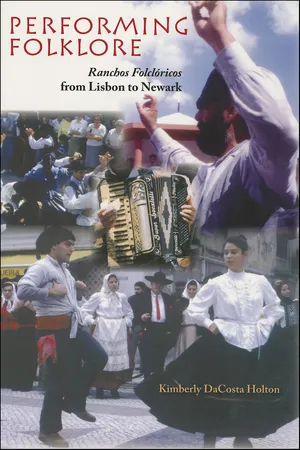
Through the lens of expressive culture, Performing Folklore tracks Portugal's transition from fascism to democracy, and from imperial metropole to EEC member state. Kimberly DaCosta Holton examines the evolution and significance of ranchos folclóricos, groups of amateur musicians and dancers who perform turn-of-the-century popular tradition and have acted as cultural barometers of change throughout 20th-century Portugal. She investigates the role that these folklore groups played in the mid-twentieth-century dictatorship, how they fell out of official favor with the advent of democracy, and why they remain so popular in Portugal's post-authoritarian state, especially in emigrant and diasporic communities. Holton looks at music, dance, costume, repertoire, venue, and social interplay in both local and global contexts. She considers the importance of revivalist folklore in the construction and preservation of national identity in the face of globalization. This book embraces "invented tradition" as process rather than event, presenting an ethnography not only of folkloric revivalism but also of sweeping cultural transformation, promoted alternately by authoritarianism, democracy, emigration, and European unification.
Choreographing the Spirit: Fascism, Folklorization, and Everyday Resistance
Throughout the 1930s, as post–World War I Europe witnessed rising social instability brought on by intensifying industrialization, unemployment, and economic crisis, political leaders sought solutions to social unrest. The idea that popular culture and the management of leisure time held the potential to defuse social problems while softening the blow of unemployment became a unifying theme in international meetings across Western Europe in the 1930s and 1940s. At the 1936 International Congress of Leisure and Recreation, for example, an Austrian participant stated, “Popular culture with its spirit of collective community-based creativity, is the natural base for the organization of leisure” (Winkler-Hermaden 1936, 41). In the early forties, the Vichy government hailed folklore as the “official culture of France” and the “only solution for the depraved practices of the popular urban classes and young people”(Valente 1999, 176). Even within democratic countries such as England, folklore became the foundation for state initiatives destined to help “peasants, miners and students, saving them from perdition” (Valente 1999, 175).
European leaders became increasingly attentive to the issue of leisure time management, as the workweek diminished from 70 to 75 hours in the nineteenth century to 40 to 45 hours in the twentieth. With this shift, workers enjoyed an unprecedented increase in free time. Theories popularized at the turn of the century linked worker satisfaction (“joy in work”), productivity, and workplace harmony to the effective use of leisure time.1 Helping workers manage their free time also piqued the interest of European governments due to the fact that the truncated workweek became an effective means for “absorbing the enormous volume of unemployment that ravaged the Western World” during the 1930s (Valente 1999, 17).2 The “Joy in Work” movement found an ultranationalist incarnation in the totalitarian governments of Nazi Germany and Mussolini’s Italy. Both the German Kraft durch Freude movement and the Italian Opera Nazionale Dopolavoro provided influential models for Portugal’s Fundação Nacional para a Alegria no Trabalho—FNAT (National Foundation for the Joy in Work).
Founded in 1935 during the Estado Novo’s early period of cultural policy creation, FNAT coordinated recreational activities at the national level, creating large-scale colónias de férias (subsidized vacation resorts), refeitórios económicos (subsidized cafeteria lunches for workers), seaside camps for children, gymnastics classes for men and women, radio programs, a Worker’s Theater, the National Workers Museum, among many other initiatives. Through its Gabinete de Etnografia (Ethnography Office), FNAT also conducted research in the form of questionnaires and surveys distributed throughout Portugal’s rural populations. In tandem with research into the lifestyle, expressive traditions, and material culture of the countryside, FNAT’s Gabinete de Etnografia also attempted to oversee and orient folklore performance troupes throughout Portugal.
FNAT’s official mission was to “help Portuguese workers utilize leisure time to better their physical, intellectual and moral development” (Kuin 1994). The creation of FNAT reflected Salazarism’s totalizing project, which aimed to impose a unified conception of “all levels of civil society—within the workplace, the family, education, culture, and, finally, leisure and recreation—according to nationalist, corporative and Christian imperatives” (Valente 1999, 41). In addition to the mass “spiritualization” of workers through sport, culture, and repose, FNAT dressed ideological indoctrination in the garb of cultural dynamism. Early on in its development, FNAT offered workers adult education classes which contained overt Estado Novo propaganda, aimed at neutralizing the threat of communism and providing an ideological barrier between Portugal and Spain, then engulfed in civil war. Employing a politics of surveillance and a geographic fixing of the labor force, FNAT closely monitored associative activity, defusing any event that threatened to mobilize political action (Kuin 1994).
Beginning in the early 1940s, ranchos folclóricos operated within both local and national frameworks of institutional influence. Initiatives geared toward the standardization and regulation of rehearsal and performance practices occurred nationally, through FNAT, the Junta Central das Casas do Povo (JCCP [Central Council for the Houses of the People]), and the Secre-tariado de Propaganda Nacional (SPN/SNI [Secretariate for National Propaganda/Information]),3 and locally within casas do povo (houses of the people), centros de recreio popular (popular recreation centers), and centros de alegria no trabalho (joy in work centers).
Casas do povo, decreed into being by the 1933 constitution, quickly evolved into the most vital localized outposts of corporative cultural activity, serving as the platform for Estado Novo cultural policies (Melo 2001, 18). Replacing the old rural unions, casas do povo were denied any representative function and were frequently controlled by powerful local landowners. Initially designed to provide social assistance, relief services, and community improvement, the casa do povo’s main function was to direct and monitor the leisure activities of the rural working class. By offering regular screenings of the Cinema Ambulante, productions of the Teatro do Povo, and libraries replete with propagandistic texts, António Ferro, cultural policy mastermind and director of SPN, envisioned the casa do povo as
the village center for popular corporative education, a place where rural laborers and country folk can gather after a hard day’s work, participating in innocent games, theatrical performances, and choral groups. Casas do Povo will facilitate our spiritual rebirth as they become centers of folklore. Folklore, the soul of the people with its songs, dances, rural costumes and traditions, will be constantly aflame. (Ferro 1982, 262)
Punctuated with the rhetoric of social Catholicism, Ferro describes casas do povo as spaces for the ideologically infused enjoyment of leisure time, where target activities revolving around the restoration and performance of folklore would keep participants under the watchful eye of local leaders and cultural collectives while the natural beauty and “innocence” of tradition illuminated the path toward moral salvation.
Popular culture, in all of its formal manifestations and expressions, comprised the cornerstone of dictator António Oliveira Salazar’s plans for a national culture throughout the Estado Novo. Salazar tied the celebration of popular culture to long-term governmental initiatives which cloaked ideological indoctrination in the neutral garb of cultural enrichment. The Estado Novo’s ideological foundation was built upon sedimented sociocultural realities rather than revolutionary overhaul, with Catholicism, nationalism, and traditional ruralism comprising the three pillars of Salazarist doctrine (Silva 1991; Melo 2001). Popular culture became the grist for fashioning Portugal’s national identity, and, as both fixed symbol and lived activity, the key to social harmony, political stability, and collective moral rectitude.
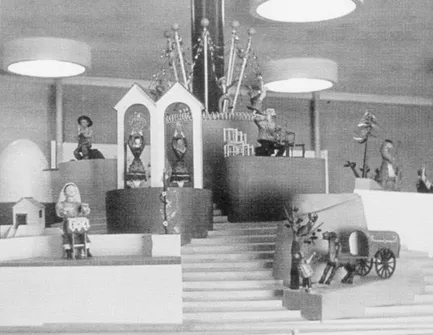
Salazar and António Ferro focused their attention on two major areas of cultural production and consumption, which can be characterized as “intellectual” and “popular” spheres of activity.4 Within the intellectual sphere, an emphasis was placed on the restoration of historical architecture and mon-uments,5 the creation of large-scale international festivals, and the development of other exportable spectacles, exhibitions, and professional troupes. Combining the celebration of Portugal’s “glory days” (the golden age of the discoveries) with the “convocation of the pre-industrial past,” Salazarist ideology depended upon the idiosyncratic blending of two strains of “non-contemporaenity” (Melo 2001,37). Cultural dramatizations of Portugal’s peasant past mingled with allusions to her navigational triumphs in many large-scale spectacles, where the syncretic blending of popular culture and modernist aesthetics formed a new symbolic lexicon. Both the Verde Gaio national ballet troupe and Portugal’s 1940 World Exhibition bore António Ferro’s unmistakable signature; folkloric elements such as regional costumes, rural tools, terra cotta figurines, and turn-of-the-century songs and dances were reassembled using modernist principles of composition and geometric visual economy (see fig. 5). These smartly presented folkloric adaptations always carried an ideological charge, bringing the virtues of the countryside into the potentially corrupted space of the city while transposing popular cultural vocabularies into more sophisticated visual and aural idioms for consumption by the urban elite.6
Figure 5. Exposição Mundial 1940, Popular Life Pavilion, Lisbon. Revolving disc with movable figurines designed by João Tomé. Courtesy of Livros Horizonte. Reprinted from Margarida Acciaiuoli, Exposiçoes do Estado Novo, 1998, 170.
Within the “popular” sphere of activity, the primary focus of this chapter, rural tradition played an even greater role in the communication and realization of Salazar’s political and social doctrine. The process of “folklorization”7 constituted a marked feature of the Estado Novo period, and in the late 1930s, as revivalist folklore performance became institutionalized and “endowed with the mechanisms of production and regulation,” ranchos folclóricos began to appear in increasing numbers (Branco and Branco 2003). Although revivalist folklore troupes existed as early as the mid-nineteenth century, their widespread proliferation occurred throughout the Estado Novo in direct response to cultural initiatives such as the Most Portuguese Village Contest of 1938 and as a result of Salazar’s corporatist social engineering. Ranchos folclóricos came to serve significant functions under Sala-zar. Folklore performance kept the rural masses in a constant state of festivity while spinning a national image of Portugal as a rural paradise stopped in time.
This chapter exposes the many different forms folkloric performance assumed in order to teach Salazarist principles of social conciliation, defuse political mobilization, and express national identity during the Estado Novo period. The chronological trajectory which drives the subsequent chapters will draw on this historical foundation to measure the extent to which the twentieth-century folklore movement can be construed as a practice characterized by continuity and/or rupture. By understanding how and why the Estado Novo placed folklore at the center of Portugal’s nation-building endeavors and at the service of Salazar’s plans for ideological indoctrination, we can better understand the protean adaptation of ranchos folclóricos following the regime’s collapse in 1974.
This chapter also examines the extent to which Salazarist corporative and propagandistic initiatives took hold at the ground level. Did the Estado Novo’s totalizing ambitions in the cultural sphere leave any room for individual creation? Or did Salazar’s drive to eradicate the individual for the good of the collective render personal creativity and resistance impossible? Were rancho performers simply the vehicle for indoctrinating and distracting Portugal’s rural masses while spinning the Estado Novo’s target image to those at home and abroad? Or did they serve their communities and themselves in alternative ways? Did rancho members comply with FNAT’s regulation of folklore practice, or was there intended or inadvertent resistance? Employing ethnographic data gleaned from fieldwork and interviews with the oldest members of the Rancho Folclórico de Alenquer (RFA), a group whose lineage dates back to the 1930s, I suggest a broader reading of folklore performance during the Estado Novo—one where individual creativity can be glimpsed in the slippage between invented tradition and historical restoration, allowing individuals the opportunity to exhibit virtuoso “shows of strength.” This reading hovers along the cleavages and inconsistencies of the Estado Novo’s totalizing reach, positing ethnographic research, encouraged by FNAT in order for folklore groups to build repertoire, as an “everyday act of resistance” (Scott 1990), where unsupervised sociability led to an intimate politics of proxemics, and folklore performers and informants mined personal memories, placing the “people’s cultural history” (Hall 1981) in the service of individual, autonomous creativity.
Corporatist Ideology, Political Immobilization, and Spatial Tactics
Termed “the ideological combat weapon of the Estado Novo” (Paulo 1994, 36), Salazar’s unique brand of corporatism has captured the interest of political scientists and historians for several decades (Lucena 1979; Wiarda 1977; Schmitter 1975; Figueiredo 1976; Riegelhaupt 1979, 1967, 1964; Pinto 1995; Martins 1990; and Paulo 1994). Phillip Schmitter offers an aggregate definition of Salazar’s corporatism, explaining it as a system of interest representation
whose constituent structures and interdependent relations differ markedly, if not diametrically, from those of pluralism ... [and] in which the constituent units are organized into a limited number of singular, compulsory, non-competitive, hierarchically ordered and functionally differentiated categories, recognized or licensed ... by the state and granted a deliberate representational monopoly within their respective categories in exchange for observing certain controls on their selection of leaders and articulation of demands and supports. (1975, 8–9)
Within this system, the breaking down of social groups into their smallest constitutive bundles was part and parcel of dissipating political power. Joyce Riegelhaupt’s ethnographic study of a peasant community in the Sa-loio region during the 1950s reveals the link between small corporatist units of association and political disempowerment (1964, 1967, 1979). Labor unions and rural associations, ostensibly organized at the local level to represent the interests of the working class, were powerless due to structural inequalities which favored the interests of the economic and political elite and the inability of these isolated local units to mobilize across expansive geographic terrain.8 Unlike Nazism, Salazarist corporatism opposed mass popular movements. Salazar once stated,“we need neither fawn on the working classes to get their backing, nor provoke their ire only to have them later shot for their excesses” (in Pinto 1995, 178). This ideological belief derives in part from Salazar’s personal predilections and leadership style. Unlike Mussolini or Hitler, who Salazar once noted,“like to live an intense, frenetic life,” Portugal’s dictator maintained an understated public persona—he was “conservative to the core,” always preaching the virtues of religion, rurality, routine, modesty, humility and simplicity. Aiming to avoid inspiring “sacred hate toward our enemies”and political agitation, Salazar stated:“I want to normalize the nation. I want to make Portugal live habitually”(in Lucena 1979, 58).
Living habitually meant defusing or preempting mass political action across national terrain by controlling the lives of the Portuguese working class through strategies of socio-spatial containment and by organizing regular cultural activities for apolitical distraction and “spiritual” nourishment. Salazarism exploited the moral controls and the forces of habit that preceded his rule. Riding the coattails of the pervasive Catholic order, Salazarism counted on the self-censorship and auto-repression that had been “plainly established by the so-called social doctrine of the Church” (Carvalho 1995, 107). Salazarism also relied upon the individual family, as both an ecclesiastic and social unit, to become the foundational building block of his disciplined, conflict-free nation. Salazarism utilized concentric circles of socio-spatial control to insure that within domestic households, parents would discipline childr...
Table of contents
Cover
Half Title
Title Page
Copyright Page
Dedication
Table of Contents
Acknowledgments
List of Abbreviations
Introduction
1. Choreographing the Spirit: Fascism, Folklorization, and Everyday Resistance
2. Battling the Bonitinho: Revolution, Reform, and Ethnographic Authenticity
3. From Intestines into Heart: The Performance of Cultural Kinship
4. Festival Hospitality: New Paradigms of Travel and Exchange
5. “We Will Not Be Jazzed Up!”: Lisbon 94 and Ranchos’ Festival Absence
6. Dancing along the In-between: Folklore Performance and Transmigration in Newark, New Jersey
Conclusion
Appendix: Musical Notation of Select Modas from the Repertoire of the Rancho Folclórico de Alenquer
Notes
Works Cited
Index
Trusted by 375,005 students
Access to over 1.5 million titles for a fair monthly price.
Study more efficiently using our study tools.
Frequently asked questions
Yes, you can cancel anytime from the Subscription tab in your account settings on the Perlego website. Your subscription will stay active until the end of your current billing period. Learn how to cancel your subscription
No, books cannot be downloaded as external files, such as PDFs, for use outside of Perlego. However, you can download books within the Perlego app for offline reading on mobile or tablet. Learn how to download books offline
We are an online textbook subscription service, where you can get access to an entire online library for less than the price of a single book per month. With over 1.5 million books across 990+ topics, we’ve got you covered! Learn about our mission
Look out for the read-aloud symbol on your next book to see if you can listen to it. The read-aloud tool reads text aloud for you, highlighting the text as it is being read. You can pause it, speed it up and slow it down. Learn more about Read Aloud
Yes! You can use the Perlego app on both iOS and Android devices to read anytime, anywhere — even offline. Perfect for commutes or when you’re on the go. Please note we cannot support devices running on iOS 13 and Android 7 or earlier. Learn more about using the app
Yes, you can access Performing Folklore by Kimberly DaCosta Holton in PDF and/or ePUB format, as well as other popular books in Ciencias sociales & Folklore y mitología. We have over 1.5 million books available in our catalogue for you to explore.