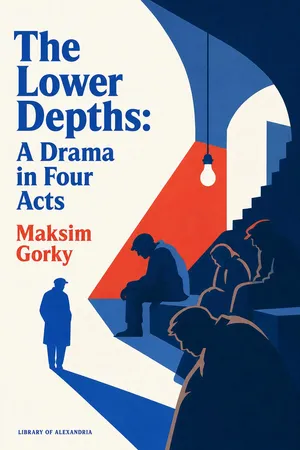
When hope is all a person has left, is it cruel to take it away? In a Russian flophouse, the struggle to survive becomes an argument about truth, compassion, and human dignity.
First performed in 1902, Maksim Gorky's The Lower Depths gathers people driven to the margins of society into a crowded lodging house. A fallen nobleman, a thief, a prostitute, and a dying woman share a world of deprivation, quarrels, remembered possibilities, and stubborn dreams. Their voices make poverty a lived experience rather than an abstract social problem.
At the heart of the play lies a conflict between consoling belief and painful honesty. The wanderer Luka offers sympathy and reassurance, while Satin gives forceful expression to the question of human worth. Gorky does not let these competing responses settle into an easy answer. Across four acts, bitter humor and moments of tenderness interrupt the suffering, revealing people who cannot be reduced to their circumstances. The result is a theatre classic whose questions about inequality and the ethics of compassion remain urgent.
What readers find inside:
For readers of Russian literature, lovers of realist theatre, and anyone drawn to searching portrayals of social inequality, this play offers an unsettling encounter with lives too often overlooked.
Step into Gorky's lodging house and listen to the voices that refuse to disappear.