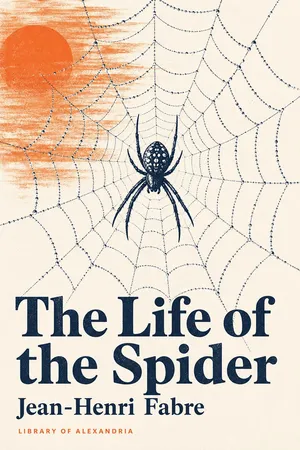
A web in the garden is more than a trap: it is an invitation to look closer. Follow the patient observer who made the hidden lives of spiders a subject of lasting fascination.
In The Life of the Spider, French naturalist Jean-Henri Fabre explores spider behavior through firsthand observation. Silk production, web construction, hunting, and maternal care become absorbing subjects as he watches these small creatures meet the demands of survival. From orb-weavers to ground-hunting wolf spiders, his subjects reveal a world of different methods, precise actions, and intricate relationships with their surroundings.
Fabre combines a scientist's attention with a storyteller's feeling for suspense and detail. Rather than treating the garden as a familiar backdrop, he makes it a place of discovery, where an ordinary encounter can raise difficult questions about instinct and animal behavior. His writing endures for its curiosity and its insistence that close observation matters. Read today, it offers both a classic encounter with natural history and a reason to pause before passing a web unnoticed.
What readers find inside:
• Silk and structure - Web building reveals the relationship between a spider's materials, movements, and hunting needs.
• Hunters at work - Different ways of capturing prey show that spiders do not all follow the same strategy.
• Maternal care - Observations of reproduction and care for young bring another dimension to creatures often known only as predators.
• The puzzle of instinct - Seemingly exact behavior prompts questions about how animals act without instruction.
• Patient discovery - Fabre's close attention transforms small events in garden wildlife into compelling subjects for inquiry.
For readers of classic nature writing, animal behavior enthusiasts, and gardeners curious about their smallest neighbors, this book rewards a willingness to watch and wonder.
Step into Fabre's world and discover how much there is to notice in a single strand of silk.