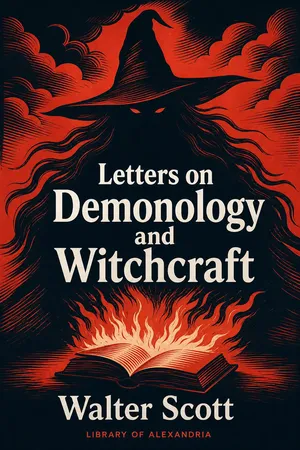
Why do people believe in ghosts, demons, and magic-and what happens when those beliefs acquire the force of law?
In Letters on Demonology and Witchcraft, Walter Scott brings historical inquiry and a novelist's feeling for a compelling story to the supernatural past. First published in 1830 and arranged as a series of letters, the work explores apparitions, magical traditions, witch trials, and the legends that helped shape European belief. Its subject is not simply the strange tale, but the society willing to accept it as truth.
Scott approaches these accounts with skepticism while taking seriously their hold on the human imagination. Fear, suggestion, mistaken perception, and inherited tradition all enter his inquiry. Alongside eerie narratives stands a darker history of accusation and persecution: the consequences of treating suspicion as proof. The result is both a storehouse of supernatural folklore and a searching reflection on how people explain what they cannot understand-a question that remains familiar in an age of rapidly spreading rumors.
What readers find inside:
• Supernatural traditions - Ghosts, spirits, and magical beliefs reveal the richness of the European folk imagination.
• Witch trials - Historical accounts expose the human cost of fear, accusation, and persecution.
• The workings of belief - Scott considers how imagination and suggestion can give extraordinary claims their persuasive power.
• A skeptical perspective - Uncanny stories become occasions to weigh evidence and question accepted explanations.
• History through storytelling - Memorable tales connect popular superstition with the cultural circumstances that sustained it.
This book will appeal to readers of supernatural folklore, students of witch-trial history, and anyone curious about the uneasy relationship between reason and belief.
Enter Scott's world of haunted traditions and discover the human questions behind its supernatural tales.