- 176 pages
- English
- ePUB (mobile friendly)
- Available on iOS & Android
eBook - ePub
About this book
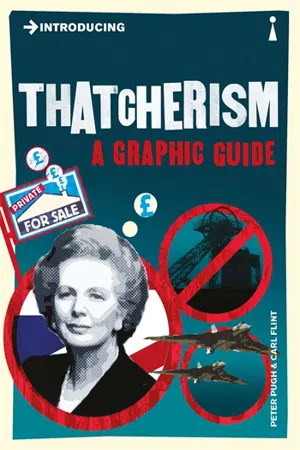
Margaret Thatcher's political career was one of the most remarkable of modern times. She rose to become the first woman to lead a major Western democracy, serving as British Prime Minister. Admired by Ronald Regan and the United States Congress, "Introducing Thatcherism" looks at the political philosophy behind this influential and controversial woman.
Information
Britain Before Thatcher
In February 1974 the Conservative Party, led by Edward Heath (1916-2005), was defeated in a General Election which had been precipitated by the government’s failure to cope with the trades unions, most especially the National Union of Mineworkers. Keith Joseph (1918-96), a member of Heath’s cabinet, attributed Britain’s ills to the harmful effects of socialism:
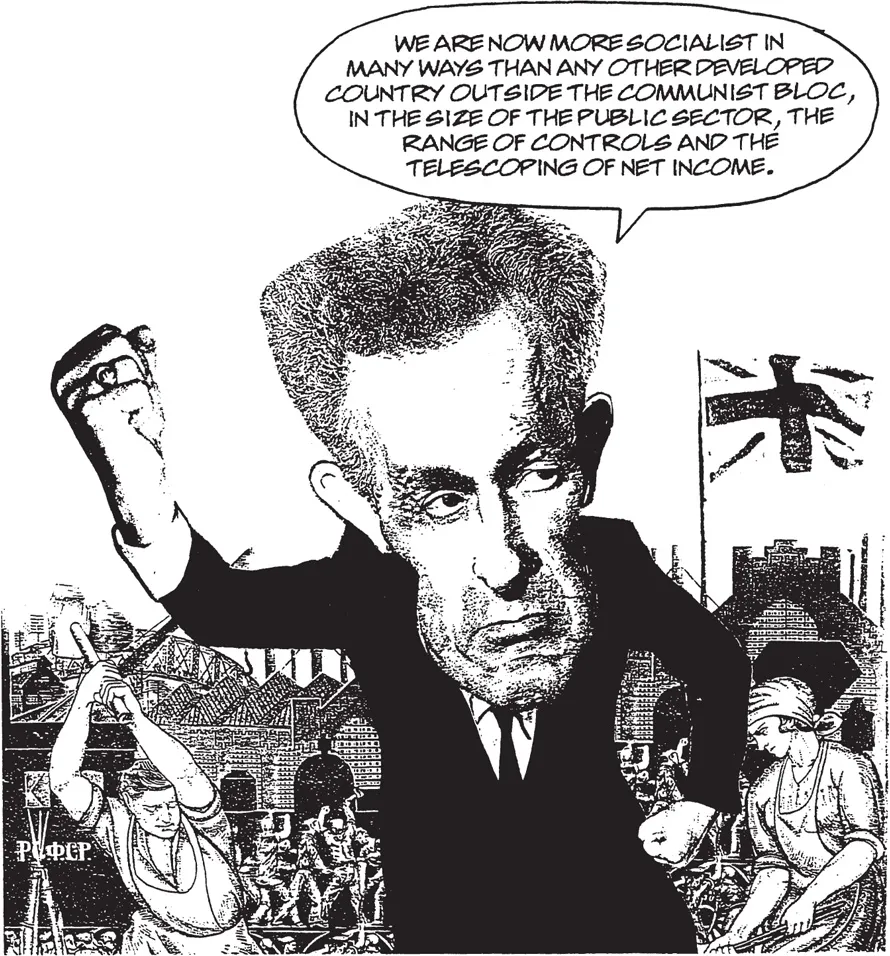
WE ARE NOW MORE SOCIALIST IN MANY WAYS THAN ANY OTHER DEVELOPED COUNTRY OUTSIDE THE COMMUNIST BLOC, IN THE SIZE OF THE PUBLIC SECTOR, THE RANGE OF CONTROLS AND THE TELESCOPING OF NET INCOME.
He went further, saying that Tory governments had travelled this path as surely and enthusiastically as Labour ones.
Was Joseph right? Was Britain socialist in the 1970s, and if so, how did it get that way?
Brief History of Post-War Britain
The Labour Party had grown in the first half of the 20th century into a mass party, and had won a decisive victory in the General Election at the end of the Second World War. The Election was held in early July 1945 when the Allies had achieved victory over Hitler in Europe but were still at war with Japan. Conservative Prime Minister Winston Churchill (1874-1965) came back from the peace negotiations in Potsdam with his deputy, Labour leader Clement Attlee (1883-1967), for the announcement of the results on 25 July 1945.
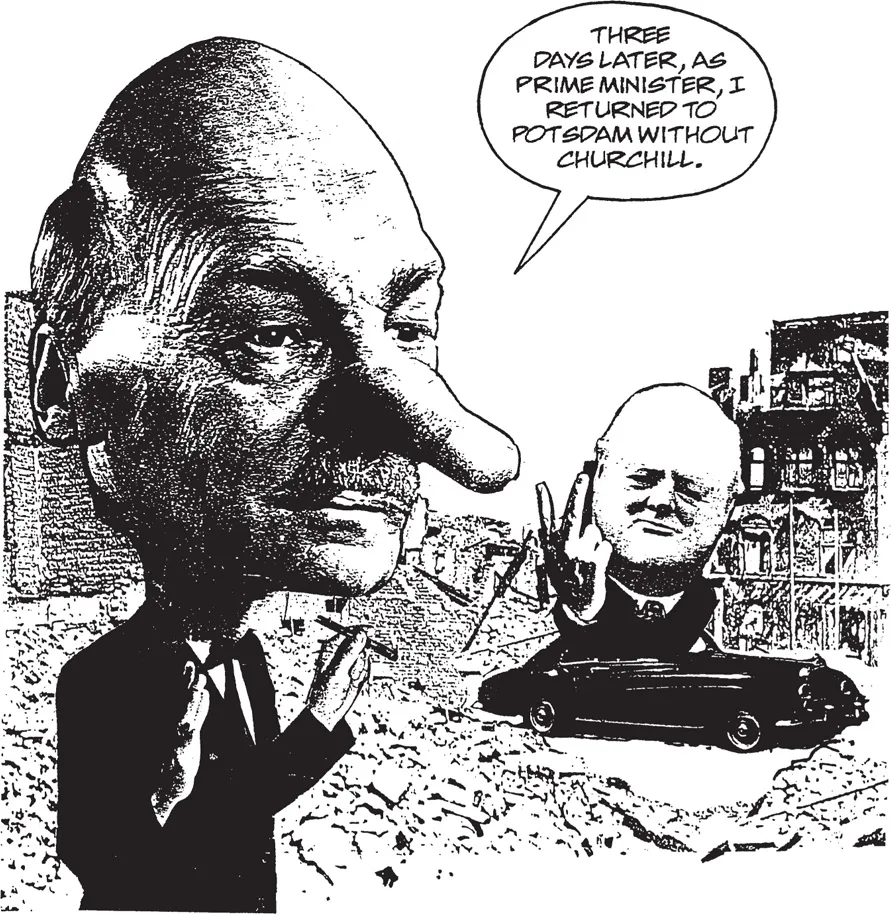
THREE DAYS LATER, AS PRIME MINISTER, I RETURNED TO POTSDAM WITHOUT CHURCHILL.
Furthermore, the Labour victory was overwhelming. They captured 393 seats in the House of Commons to the Conservatives’ 189.
Some were surprised that the war leader and hero, Churchill, should be booted out, but others who had followed the findings of Mass Observation, had listened to the ordinary voter and seen the reaction to the Beveridge Report, were not.
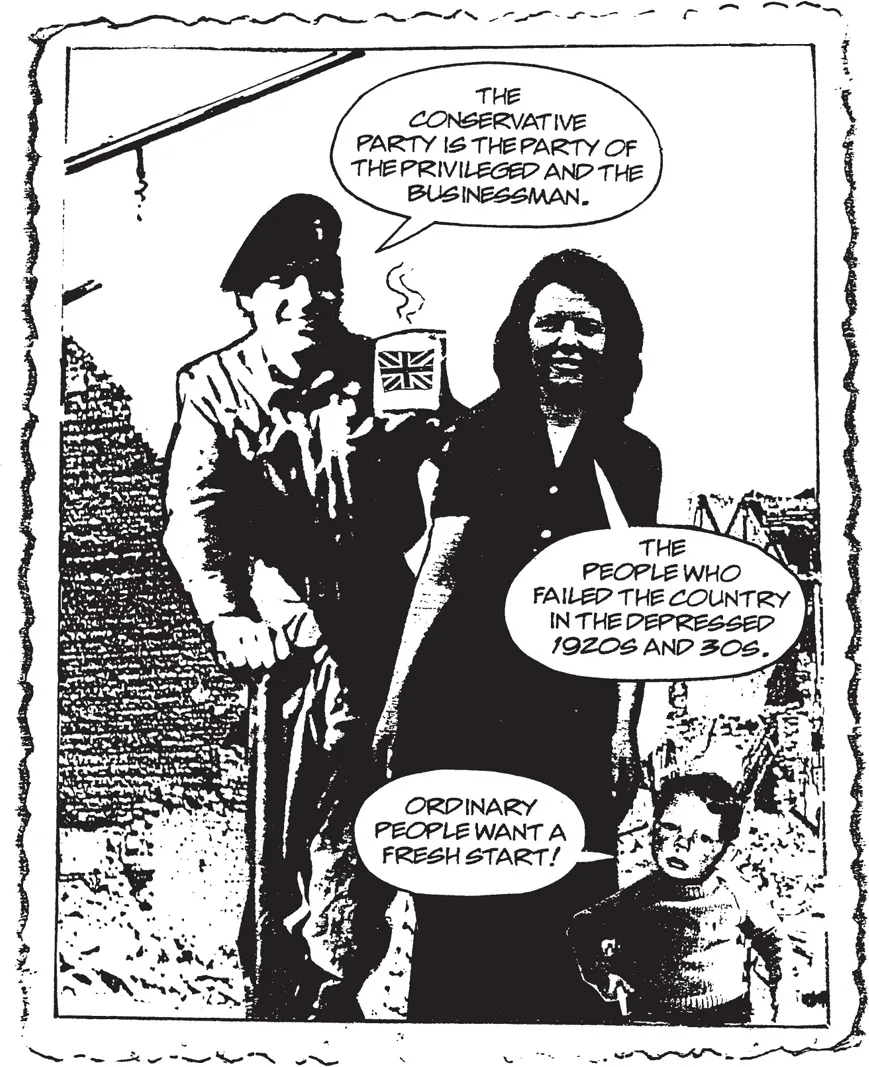
THE CONSERVATIVE PARTY IS THE PARTY OF THE PRIVILEGED AND THE BUSINESSMAN. THE PEOPLE WHO FAILED THE COUNTRY IN THE DEPRESSED 1920S AND 30S. ORDINARY PEOPLE WANT A FRESH START!
They wanted what Sir William Beveridge (1879-1963), director of labour exchanges 1909-16 and a director of the London School of Economics 1919-37, had suggested in his report to the House of Commons in 1942. What was the Beveridge Report?
The Beveridge Report
Social insurance should be part of a general policy of social progress. Social security can only be achieved through co-operation between the individual and the state.
Special benefits should be provided for unusual expenses in connection with birth, marriage and death.
Pensions should be available for all.
There should be a free medical service.
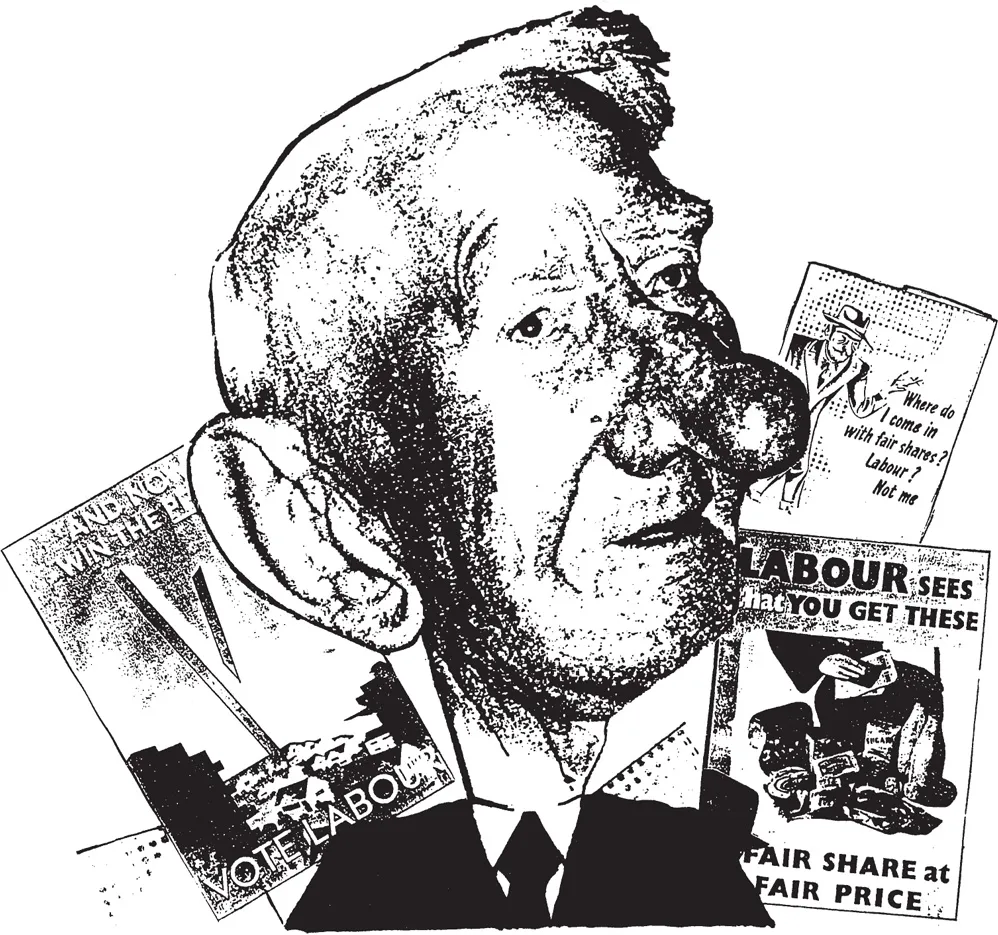
The Welfare State
The Report was universally acclaimed.
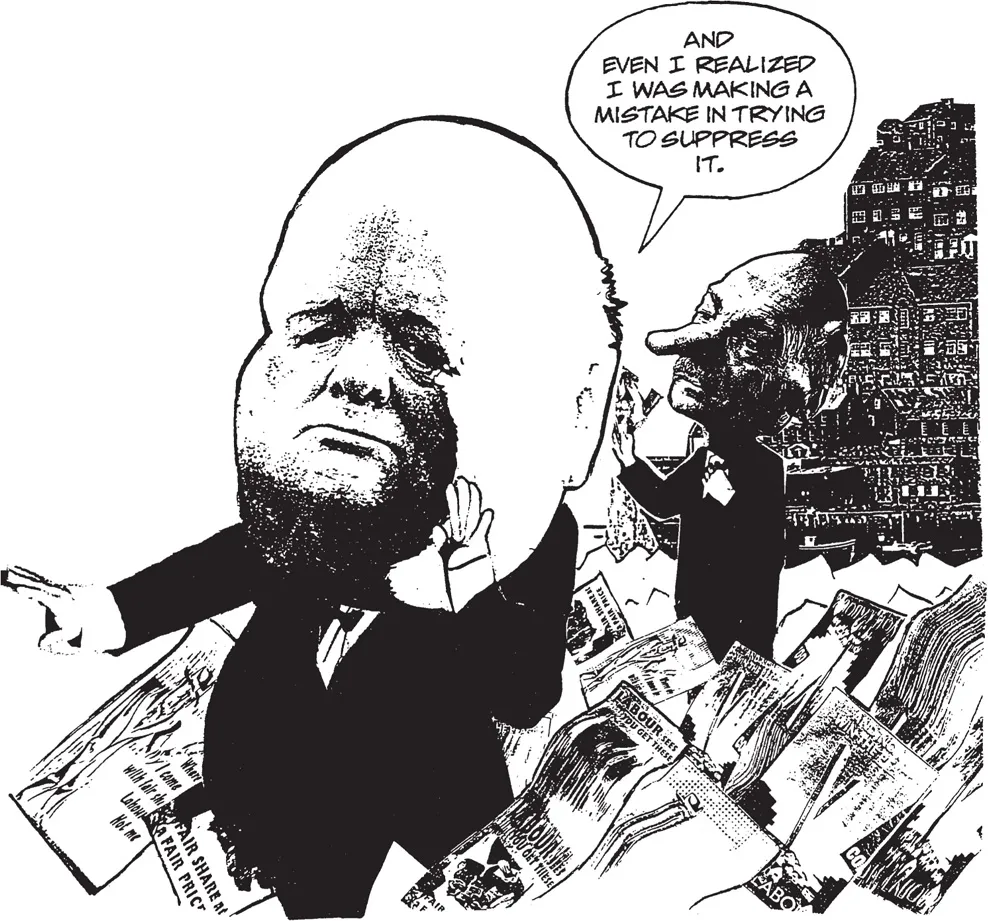
AND EVEN I REALIZED I WAS MAKING A MISTAKE IN TRYING TO SUPPRESS IT.
The Labour Party elected in 1945 on a wave of enthusiasm for collective security and the effectiveness of planning – after all, the War had been won by planning, hadn’t it? – legislated in its administration up to 1950 to bring in what became known as The Welfare State.
The nationalization of the means of production, distribution and exchange – the famous Clause 4 of the Labour Party constitution – was tackled with vigour and enthusiasm by the incoming Labour administration.
Nationalization and Social Security
The following nationalizations took place under the new Labour government:
| 1946 | Bank of England | |
| 1946 | British Overseas Airways, British European Airways and British South American Airways | |
| 1946 | Inland Transport Act (everything that ran on wheels for profit, except short-distance road haulage, lorries used by companies for their own products, and municipal bus companies) | |
| 1947 | The Coal Industry | |
| 1948 | Electricity | |
| 1948 | Cable and Wireless | |
| 1948 | Gas | |
| 1949 | Steel |

And, towering above all, the National Health Services Act (1946), providing “free” health care for all, described even by the Conservative MP, Derick Heathcoat-Amory (later Chancellor of the Exchequer) as: “By any test, a tremendous measure.”
Keynesianism
The intellectual justification for this planned approach to the economy came from John Maynard Keynes (1883-1946).
Keynesianism required that the large institutions, corporations and unions should drive the country’s economy and that the government should intervene constantly to balance the situation, increasing or decreasing financial stimuli where necessary.

OR RATHER FROM HOW MY WRITING WAS INTERPRETED. THE LABOUR PARTY GREW OUT OF THE WORKING MAN’S DESIRE FOR MORE POLITICAL SAY. AND OUR FIRST MEANS OF PROTECTION AGAINST THE CRUEL AND OPPRESSIVE EMPLOYERS OF LABOUR WAS THE TRADE UNION. THE PARTY GREW FROM THE UNIONS, AND THE UNIONS WERE ALWAYS A SIGNIFICANT FORCE IN THE PARTY, ESPECIALLY AS UNION FUNDS FINANCED THE PARTY.
The Trade Union Movement
After a shaky start in the last decades of the 19th century, both the trade union movement and the Labour Party were given a great boost by the outrage in the working class following a court decision in 1901.
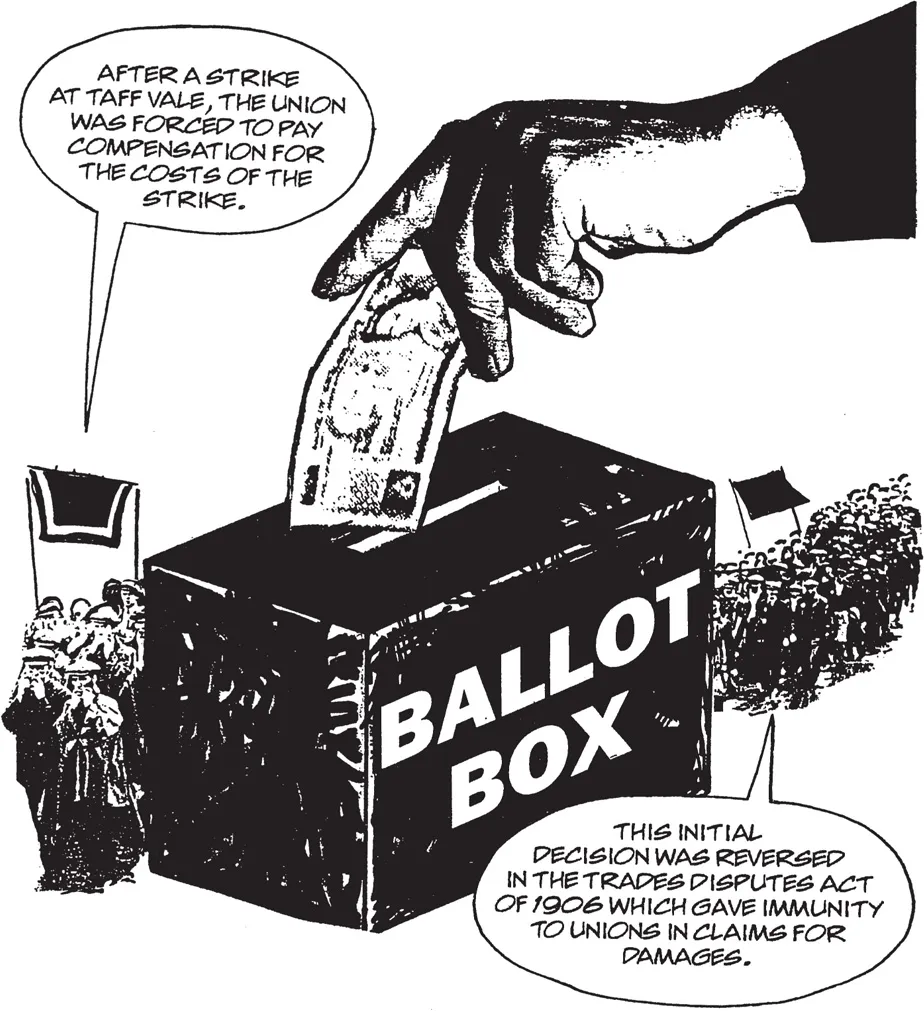
AFTER A STRIKE AT TAFF VALE, THE UNION WAS FORCED TO PAY COMPENSATION FOR THE COSTS OF THE STRIKE. THIS INITIAL DECISION WAS REVERSED IN THE TRADES DISPUTES ACT OF 1906 WHICH GAVE IMMUNITY TO UNIONS IN CLAIMS FOR DAMAGES.
The first case was a great step forward for the unions and the Labour Party. The Act gave the unions formidable power to live outside the law, later to be greatly abused.
By 1945, the unions were a very powerful force within the labour movement and the Labour Party. Denis Healey (b. 1917), long-time Labour MP, Chancellor of the Exchequer and Foreign Secretary in Labour administrations, said in his autobiography, The Time of My Life…
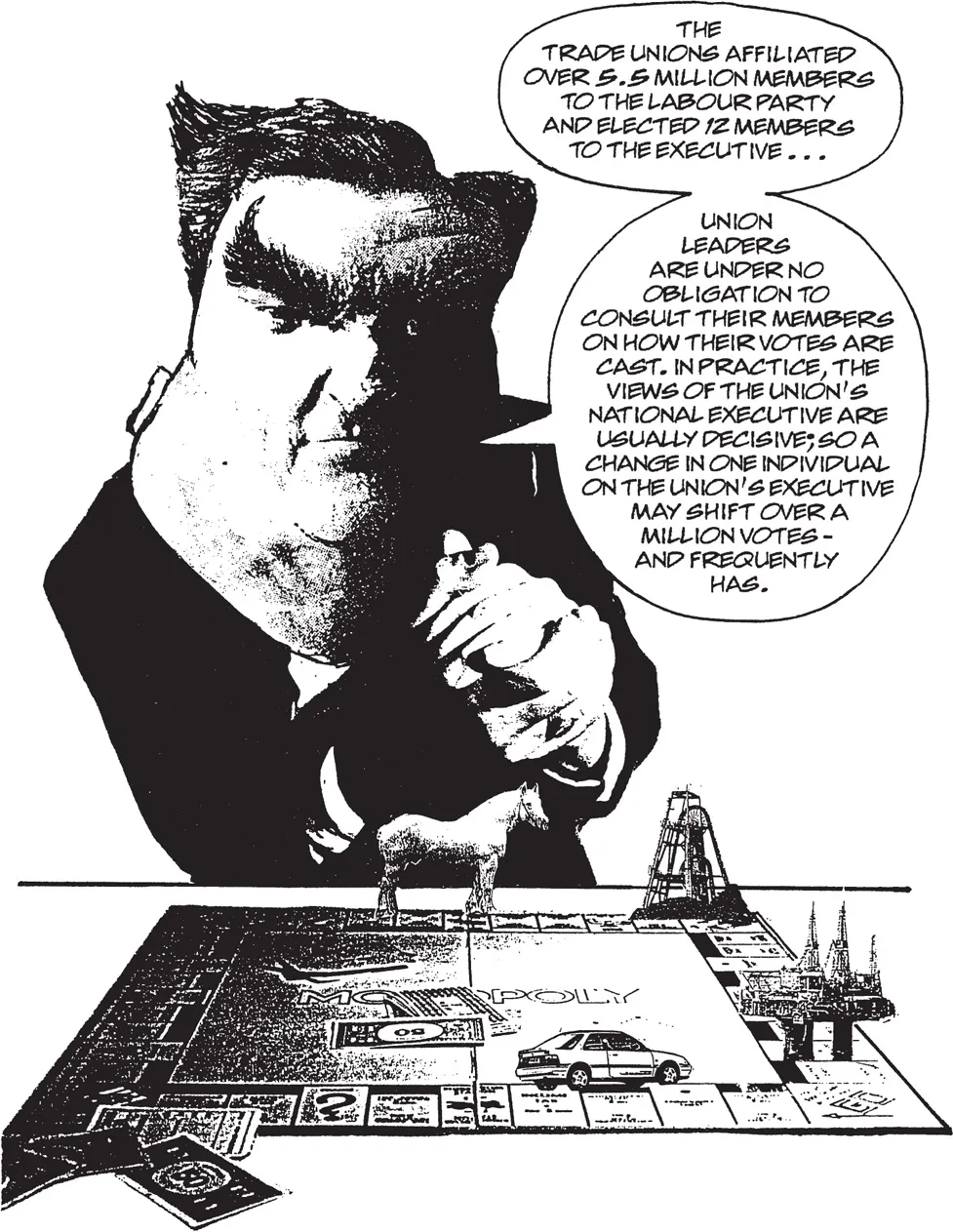
THE TRADE UNIONS AFFILIATED OVER 5.5 MILLION MEMBERS TO THE LABOUR PARTY AND ELECTED 12 MEMBERS TO THE EXECUTIVE … UNION LEADERS ARE UNDER NO OBLIGATION TO CONSULT THEIR MEMBERS ON HOW THEIR VOTES ARE CAST. IN PRACTICE, THE VIEWS OF THE UNION’S NATIONAL EXECUTIVE ARE USUALLY DECISIVE; SO A CHANGE IN ONE INDIVIDUAL ON THE UNION’S EXECUTIVE MAY SHIFT OVER A MILLION VOTES – AND FREQUENTLY HAS.
Who Rules?
But if the leaders of the unions could dominate the Executive of the Labour Party, ironically they were not as powerful within their own unions. Denis Healey again …
The real power lies not in the union headquarters but with the local shop stewards … Moreover, the TUC [Trades Union Congress, i.e. all the bosses of the unions] has no real power over its constituent unions, unlike its equivalents in Scandinavia, Germany and Austria; in those countries, governments have normally been able to rely on the annual agreements made at national level between centralized organizations of unions and employers, without direct government intervention. This is even more true of Japan, where the recognized need for a national consensus on all major economic issues has made possible 40 years of high growth, full employment, rapidly rising living standards and exceptionally low inflation.

“Butskellism”, or Consensus Politics
Appeasement of the unions...
Table of contents
- Cover
- Title Page
- Copyright
- Contents
- Britain Before Thatcher
- Brief History of Post-War Britain
Trusted by 375,005 students
Access to over 1.5 million titles for a fair monthly price.
Study more efficiently using our study tools.
Frequently asked questions
Yes, you can cancel anytime from the Subscription tab in your account settings on the Perlego website. Your subscription will stay active until the end of your current billing period. Learn how to cancel your subscription
No, books cannot be downloaded as external files, such as PDFs, for use outside of Perlego. However, you can download books within the Perlego app for offline reading on mobile or tablet. Learn how to download books offline
Perlego offers two plans: Essential and Complete
- Essential is ideal for learners and professionals who enjoy exploring a wide range of subjects. Access the Essential Library with 800,000+ trusted titles and best-sellers across business, personal growth, and the humanities. Includes unlimited reading time and Standard Read Aloud voice.
- Complete: Perfect for advanced learners and researchers needing full, unrestricted access. Unlock 1.5M+ books across hundreds of subjects, including academic and specialized titles. The Complete Plan also includes advanced features like Premium Read Aloud and Research Assistant.
We are an online textbook subscription service, where you can get access to an entire online library for less than the price of a single book per month. With over 1.5 million books across 990+ topics, we’ve got you covered! Learn about our mission
Look out for the read-aloud symbol on your next book to see if you can listen to it. The read-aloud tool reads text aloud for you, highlighting the text as it is being read. You can pause it, speed it up and slow it down. Learn more about Read Aloud
Yes! You can use the Perlego app on both iOS and Android devices to read anytime, anywhere — even offline. Perfect for commutes or when you’re on the go.
Please note we cannot support devices running on iOS 13 and Android 7 or earlier. Learn more about using the app
Please note we cannot support devices running on iOS 13 and Android 7 or earlier. Learn more about using the app
Yes, you can access Introducing Thatcherism by Peter Pugh,Carl Flint in PDF and/or ePUB format, as well as other popular books in Politics & International Relations & Political Biographies. We have over 1.5 million books available in our catalogue for you to explore.