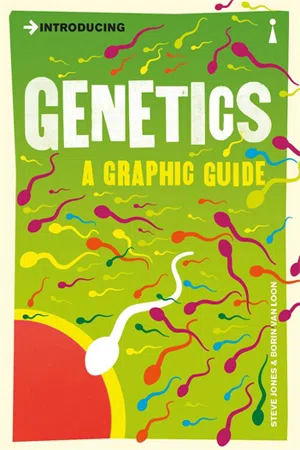
Genetics is the newest of all sciences - nothing useful was known about inheritance until just over a century ago. Now genetics is exploding, and before long we will have the complete code, written in three thousand million letters of DNA, of what makes a human being.
Introducing Genetics takes us from the early work of Mendel to the discovery of DNA, the human gene map and the treatment of inborn disease. No one can afford to be ignorant of genetics. This book is the perfect introduction.
- 176 pages
- English
- ePUB (mobile friendly)
- Available on iOS & Android
eBook - ePub
About this book
Information
Subtopic
Genetics in MedicineIndex
Biological Sciences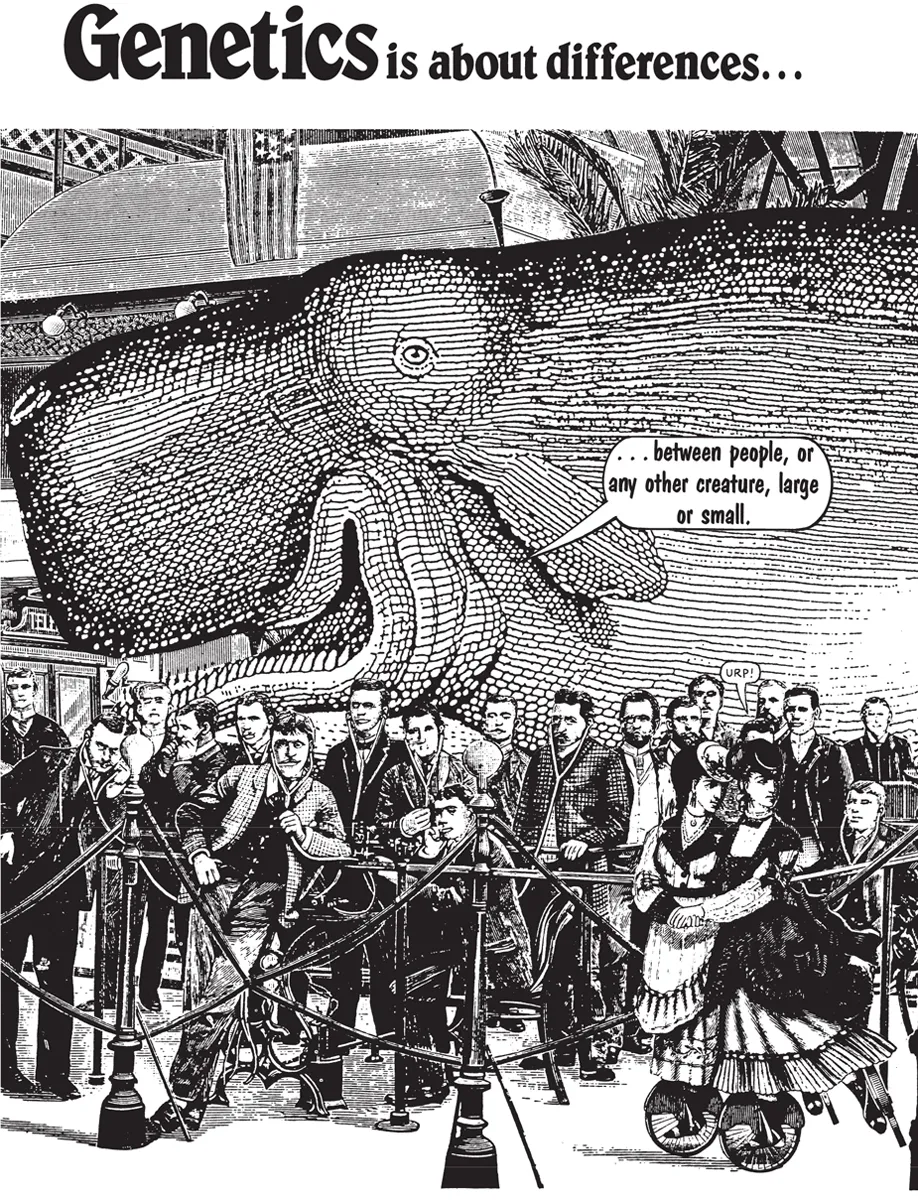
…between people, or any other creature, large or small.
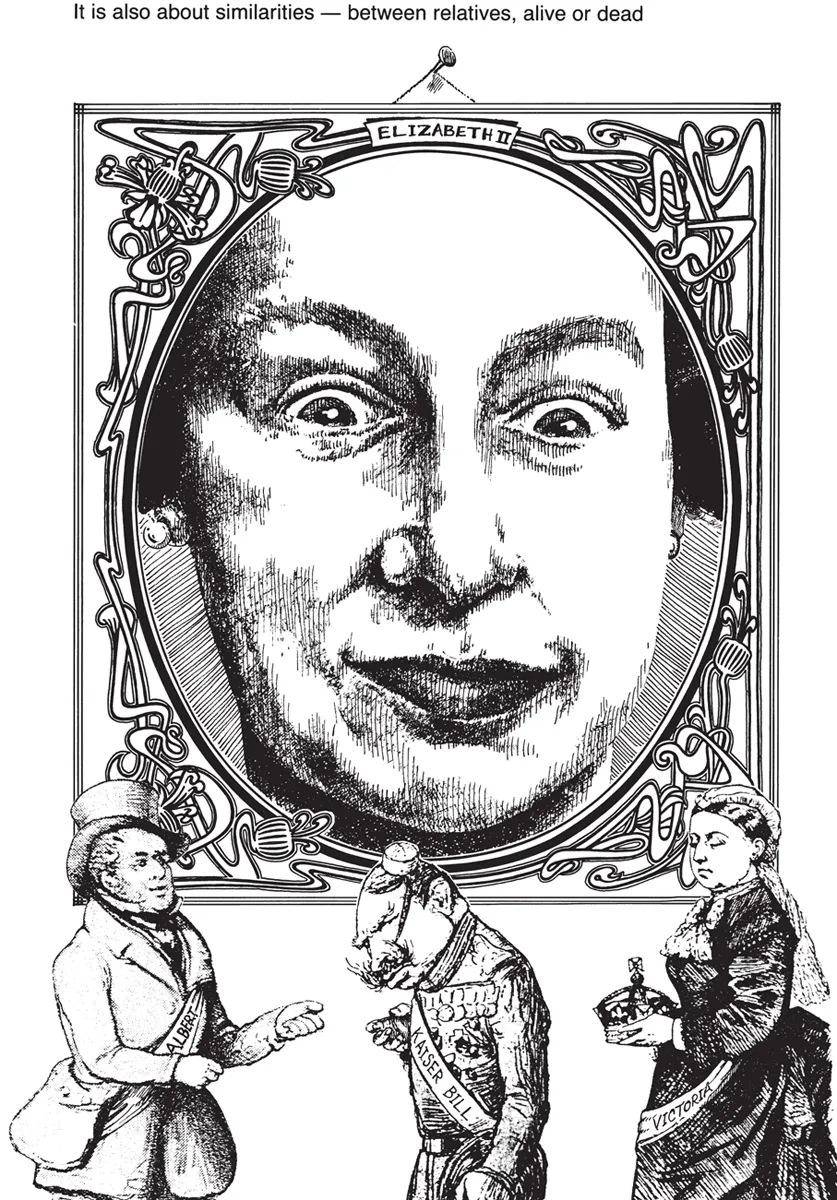
Genes are the record of biological history. Maps of how they are arranged say a lot about how humans evolved, how we are related to other creatures and even how life began.
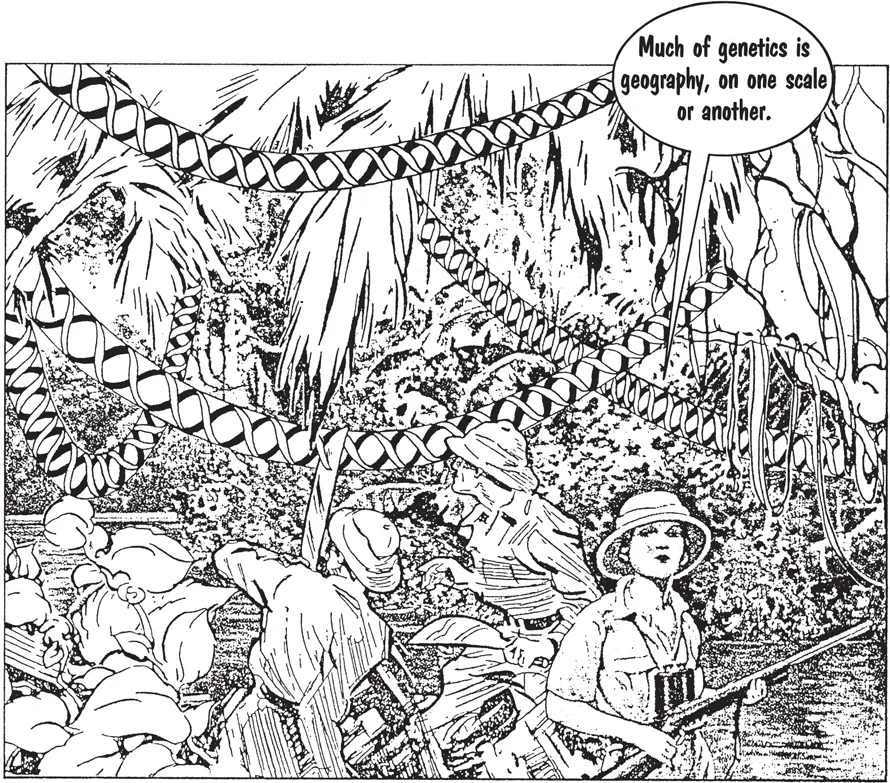
Much of genetics is geography, on one scale or another.
But genetics began long after the world was explored, …
… and later than any other biological science — because, unfortunately, the obvious has usually turned out to be wrong.
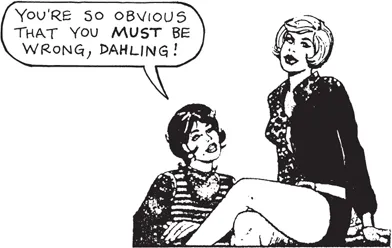
You’re so obvious that you must be wrong, dahling!
For a thousand years people believed that relatives look alike because they shared the same environment and that experience changes the way you look.
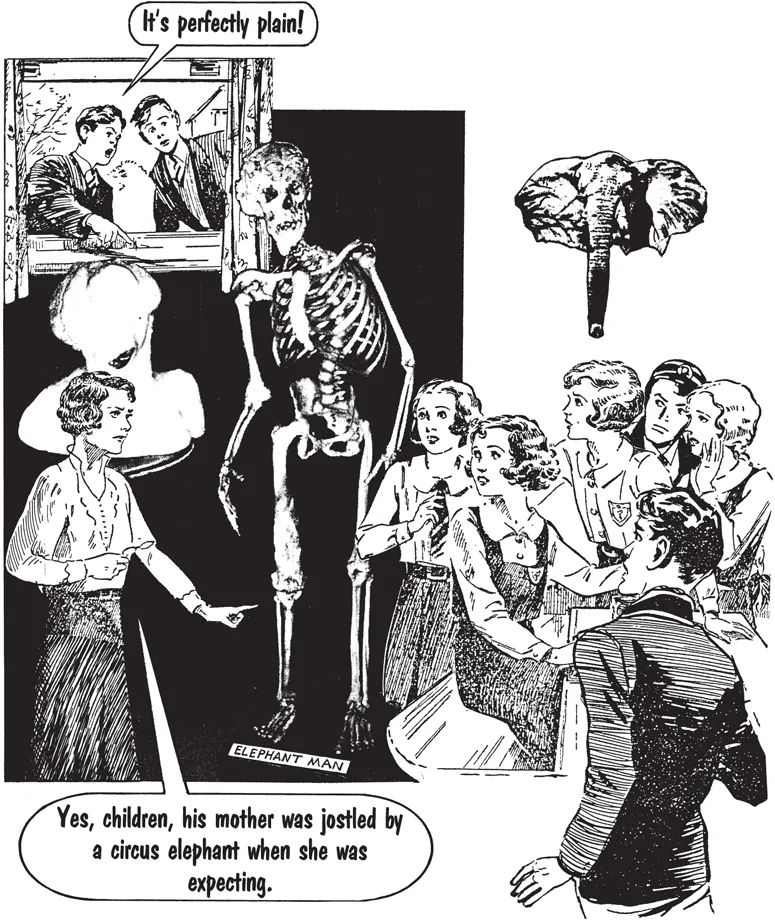
It’s perfectly plain! Yes, children, his mother was jostled by a circus elephant when she was expecting.
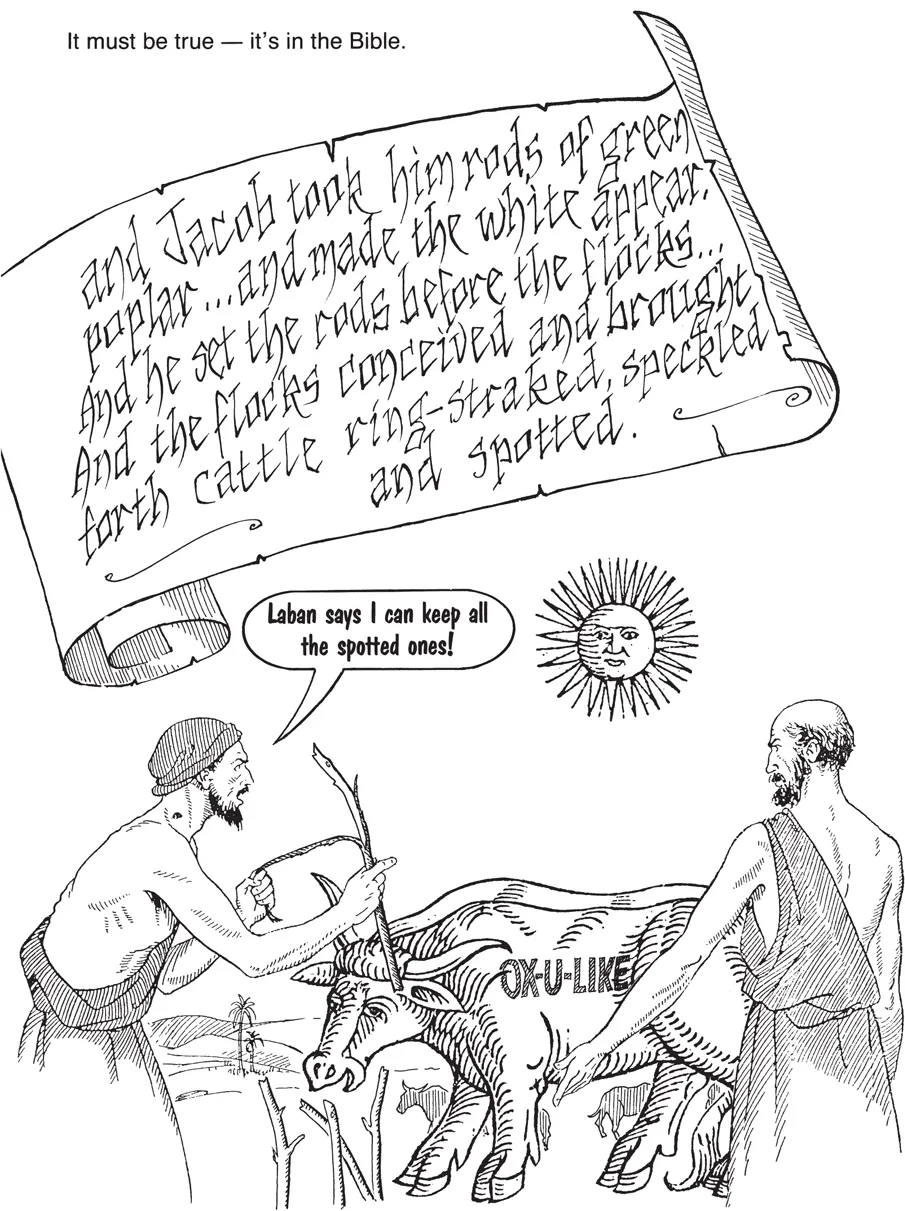
Laban says I can keep all the spotted ones!
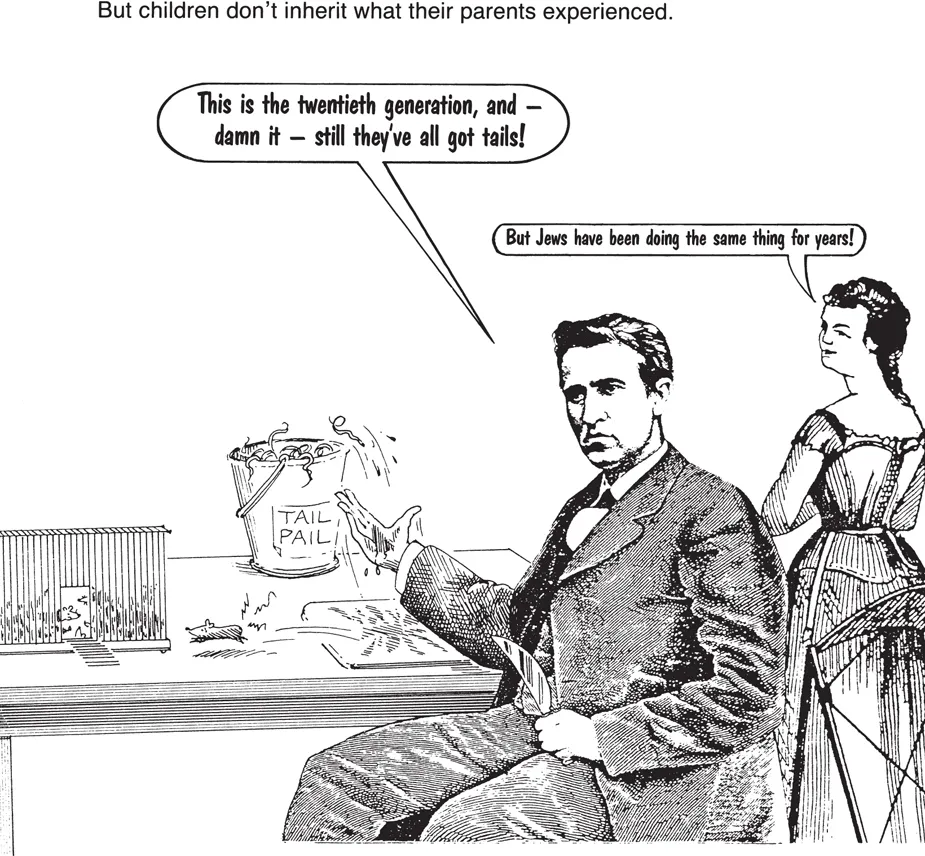
This is the twentieth generation, and – damn it – still they’ve all got tails! But jews have been doing the same thing for years!
Well, if that doesn’t work, perhaps children are the average of what went before. Darwin liked the idea that children were formed by mixing the blood of their parents. After all, his own family was pretty blue-blooded.
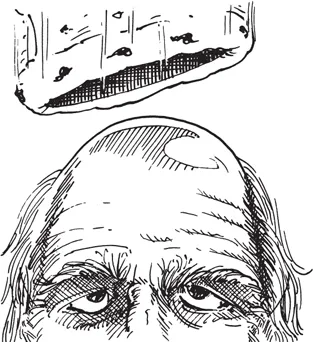
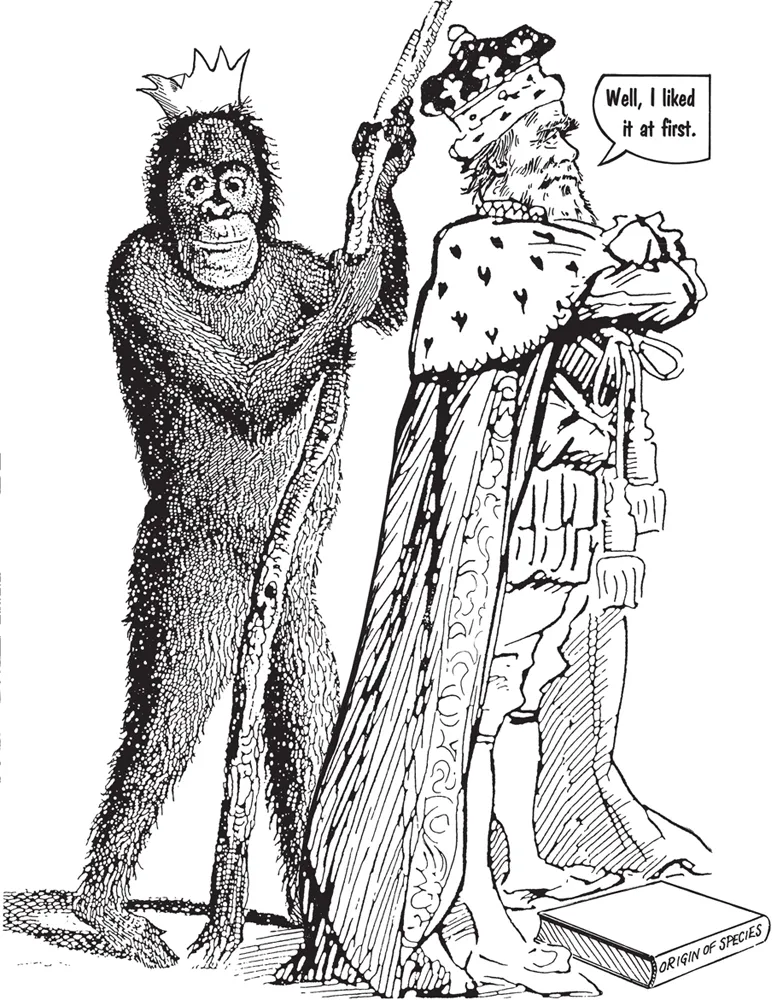
Well, I liked it at first.
Soon he read a nasty little article by Fleeming Jenkin, a Scots engineer. It pointed out a fatal flaw: if inheritance works like this, then any favourable character will be diluted out each generation until it disappears. The theory of evolution would not work! Jenkin had typically racist views…
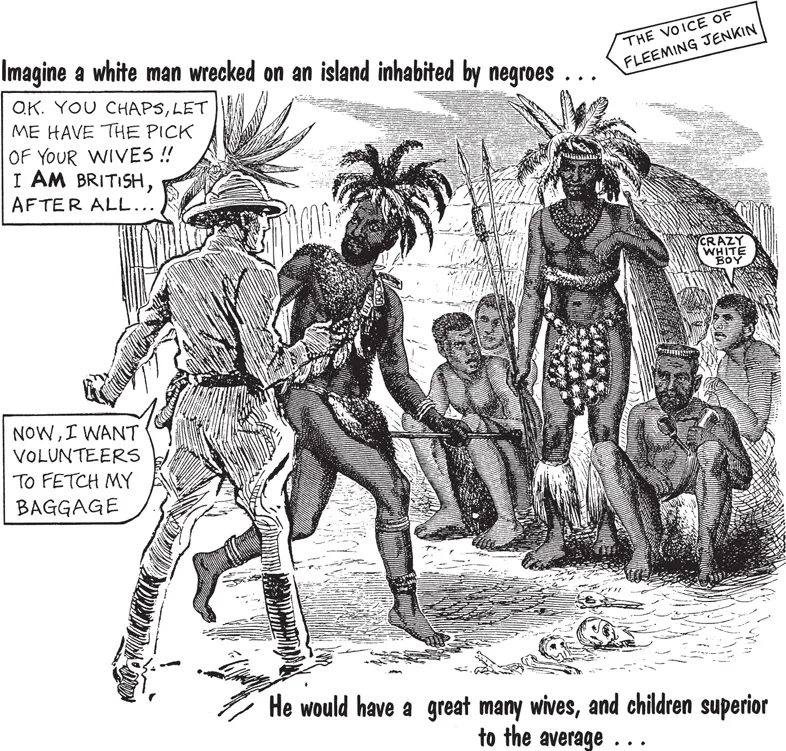
o.k. You chaps, let me have the pick of your wives!! I am british, after all… Now, I Want Volunteers to fetch my baggage the voice of fleeming jenkin crazy white boy
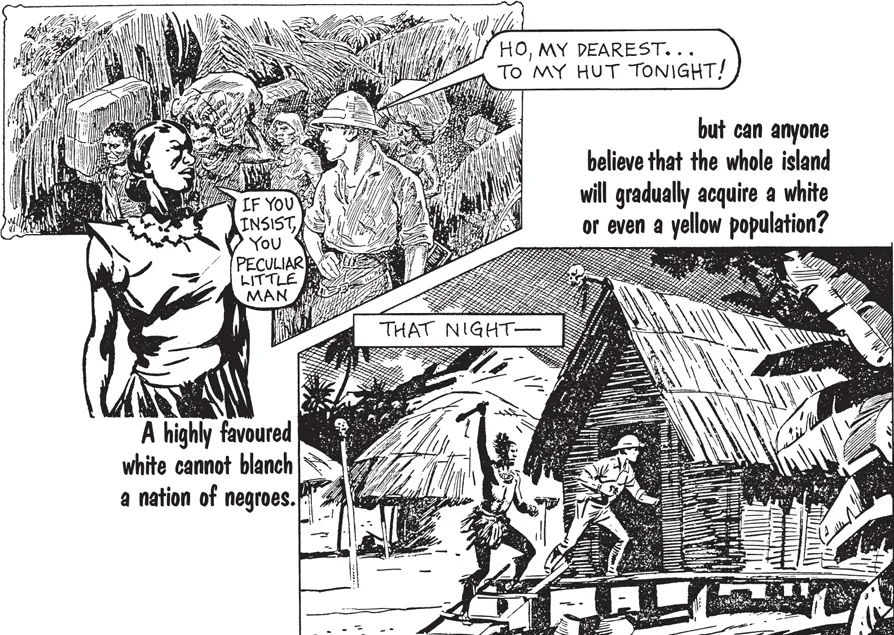
Ho, My dearest… to my hut tonight! if you insist, you peculiar little man
Soon, Darwin’s cousin, Francis Galton, got interested. Galton was a strange, unlikeable man.
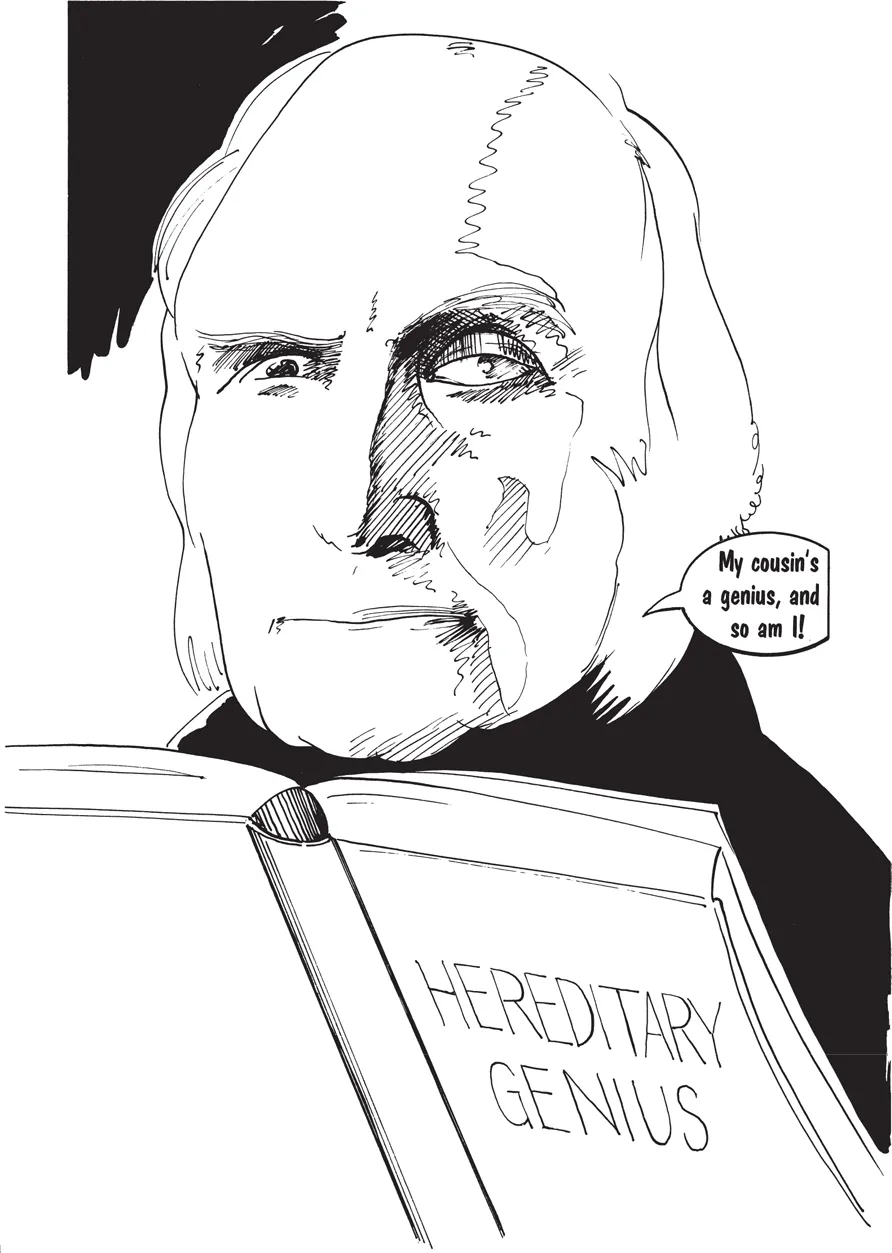
My cousin’s a genius, and so am i!
Like most Victorian scientists, he was rich. Unlike his cousin he completed his medical course (although he never practised). During it, he tried every drug in the book in alphabetical order, giving up at the purgative Croton Oil.
Galton travelled in Africa, riding on a bull into a chief’s house to frighten him into submission and measuring his wives’ buttocks with his naval sextant. He was interested in the inheritance of “genius” (judges were one example).
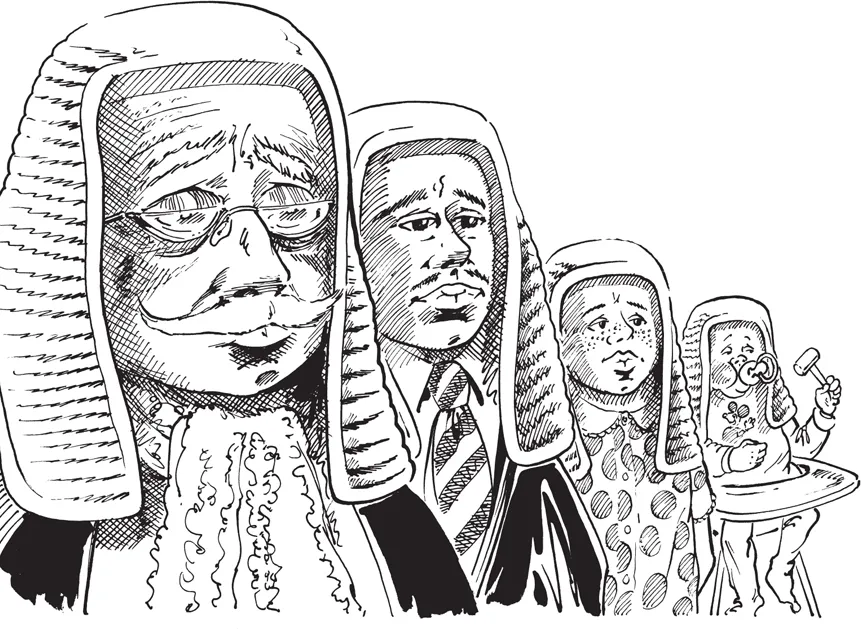
They seemed to turn up again and again in the same family. Perhaps genius was passed through the generations. But how? Could it really be mixing of bloods? He tried transfusing blood from a black rabbit into a white one.
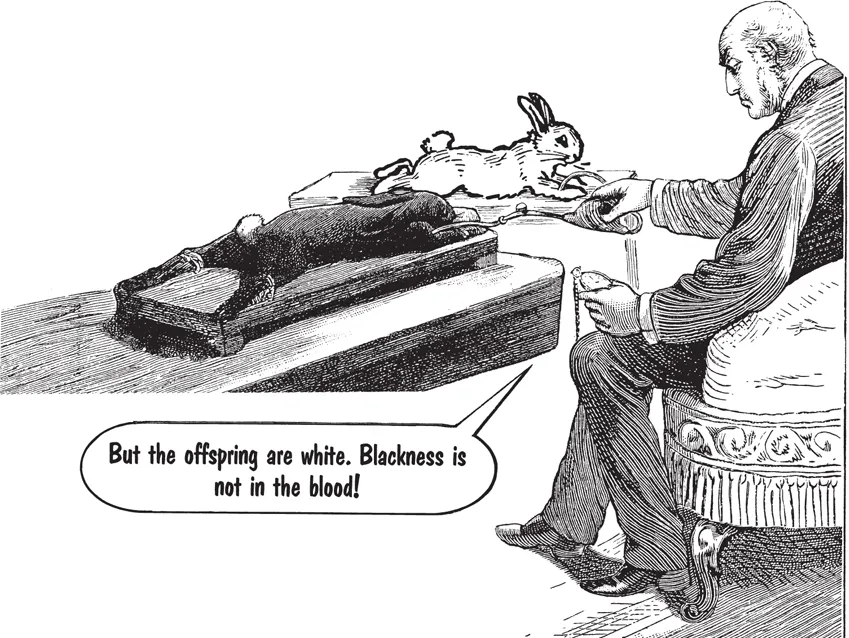
But the offspring are white. Blackness is not in the blood!
Galton died, childless, in 1911. He left a fortune to found the Laboratory for National Eugenics at University College London.
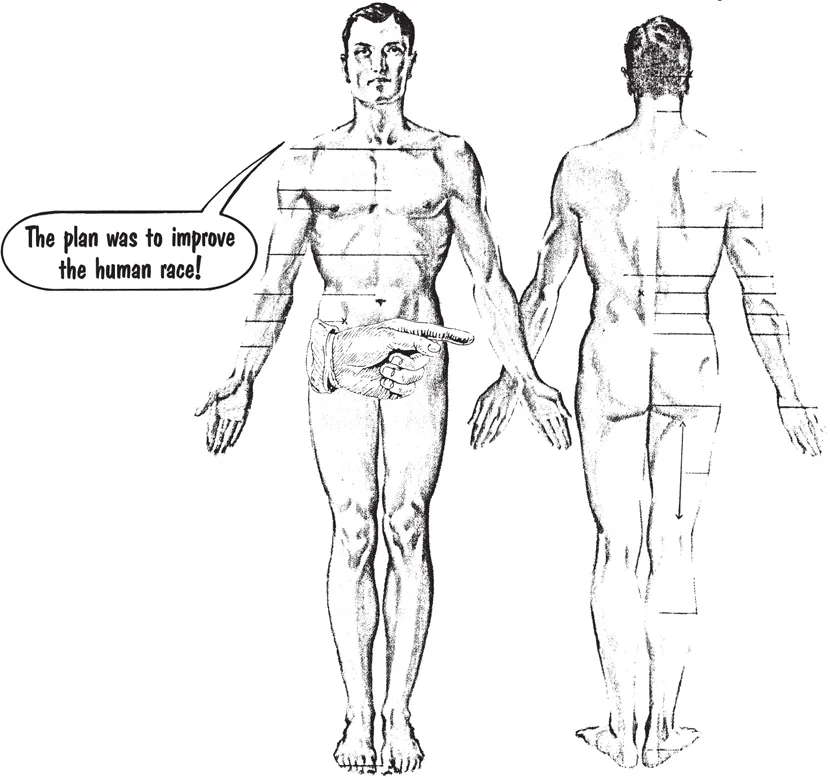
The plan was to improve the human race!
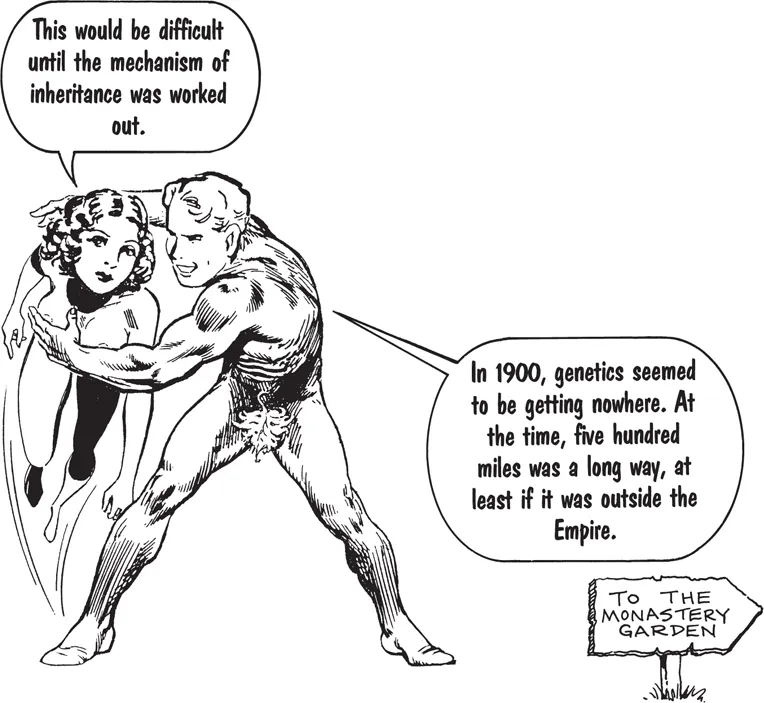
This would be difficult until the mechanism of inheritance was worked out. In 1900, genetics seemed to be getting nowhere. At the time, five hundred miles was a long way, at least if it was outside the Empire.
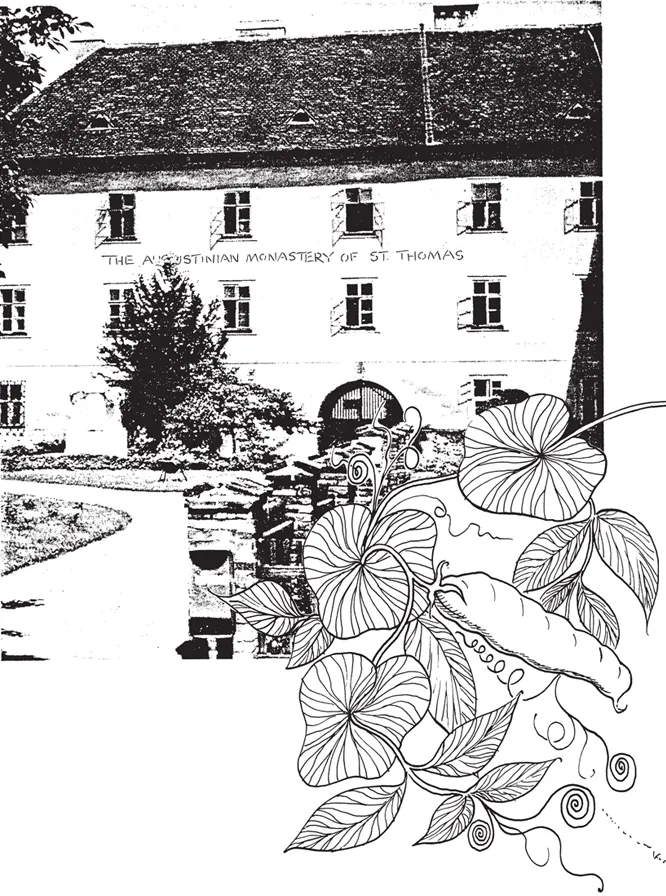
In Brünn, now in the Czech Republic, another failed student — Gregor Mendel, who had studied science at university but gave up — had become interested in inheritance at about the same time as Galton.
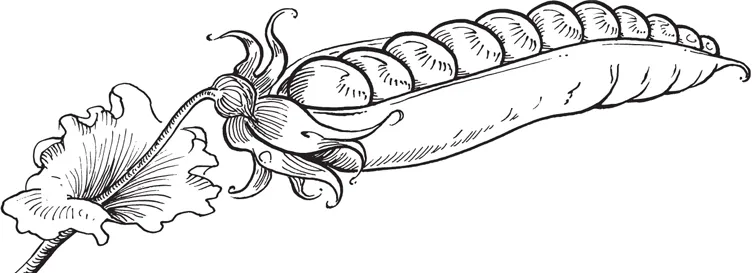
He had more sense than Galton; he studied not humans but peas. They had all kinds of advantages — clean, easy to keep, and the divorce rate was low. What’s more, each plant was both male and female, and could fertilize itself.
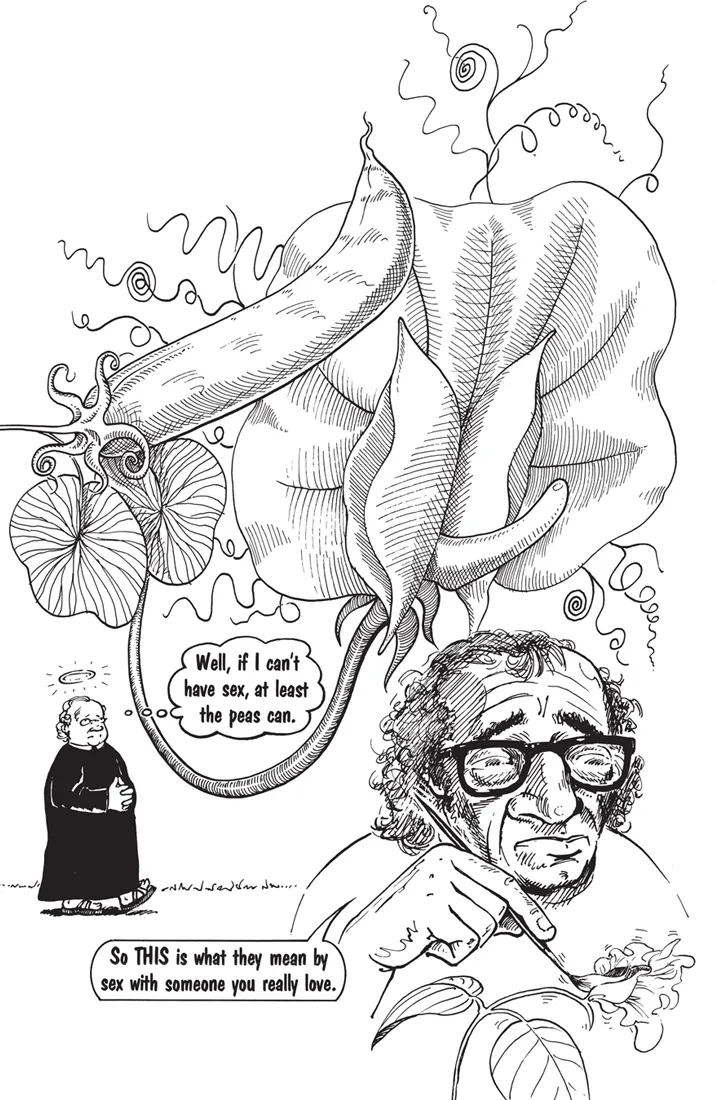
Well, if I can’t have sex, at least the peas can. So THIS is what they mean by sex with someone you really love.
Farmers had bred many different pure lines of peas: within a line every plant was the same; between lines they were different.
Mendel realized that this is just what was needed to study how inheritance works. He fertilized seeds from a line with round peas with pollen from another line with wrinkled seeds.
All the offspring of this cross were round — not the average of their parents at all, but like only one of them.
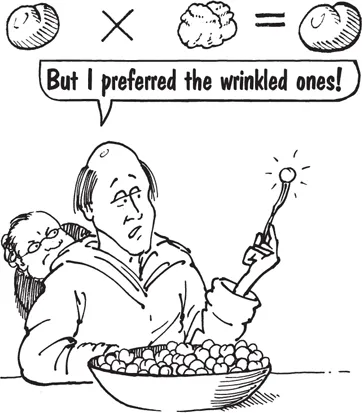
But I preferred the wrinkled ones!
Then, Mendel grew up these round peas, and self-fertilized them; he put pollen onto the eggs of the same plant. When he grew these up — a big surprise: both types, round and wrinkled, came back again!
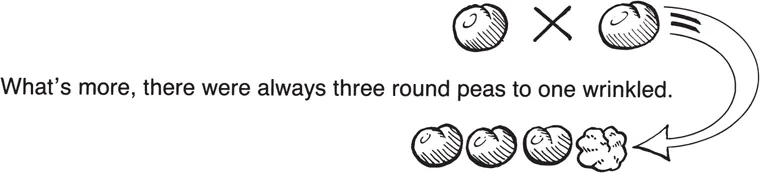
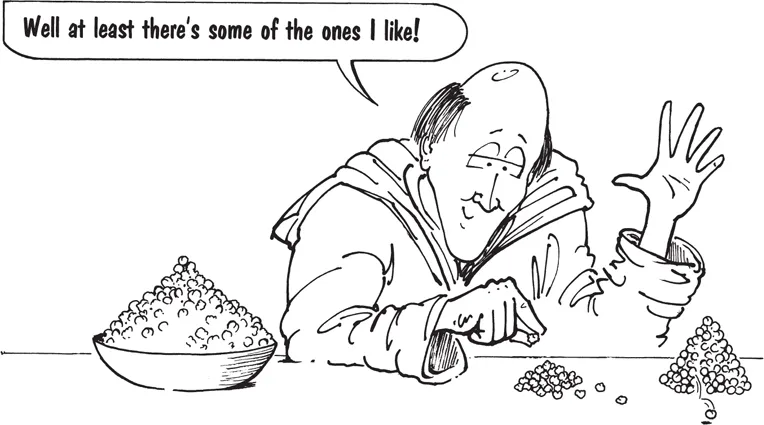
Well at least there’s some of the ones I like!
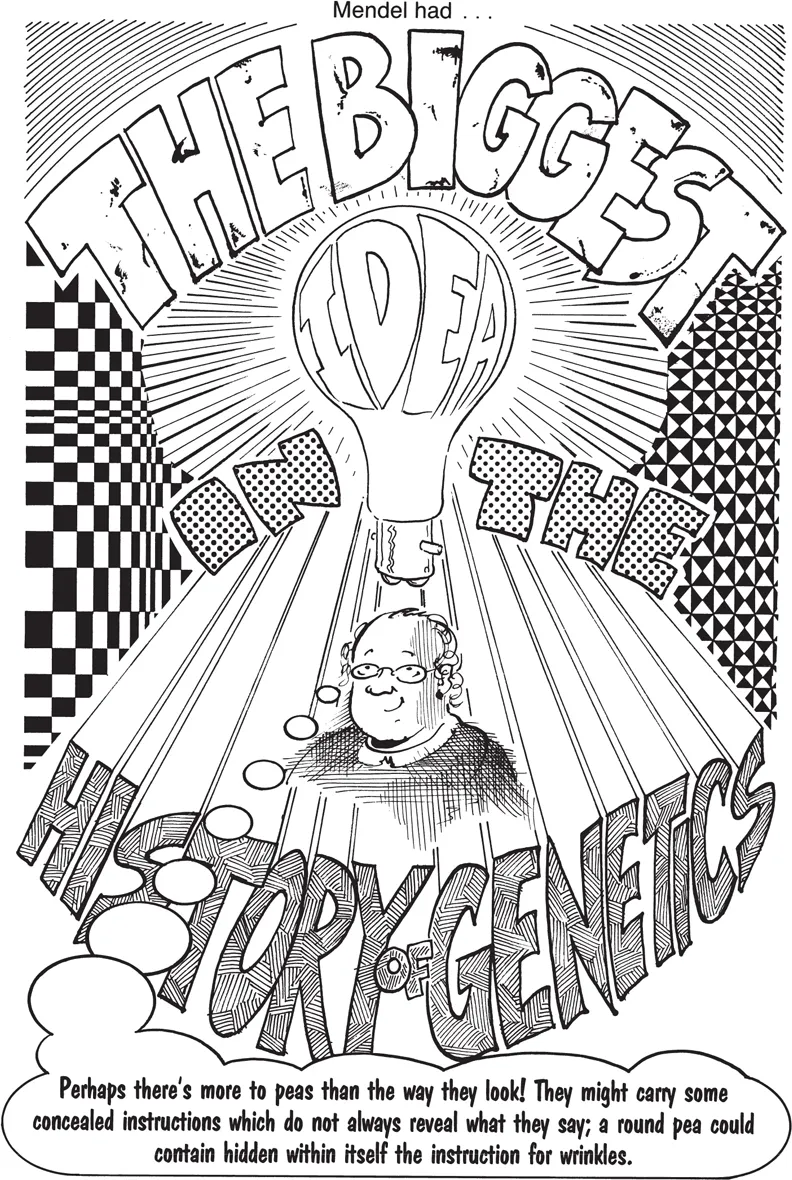
Perhaps there’s more to peas than the way they look! They might carry some concealed instructi...
Table of contents
- Cover
- Title Page
- Copyright
- Contents
- Genetics is About Differences…
- Footnote
- Further Reading
- About the Author
- About the Illustrator
- Index
Trusted by 375,005 students
Access to over 1.5 million titles for a fair monthly price.
Study more efficiently using our study tools.
Frequently asked questions
Yes, you can cancel anytime from the Subscription tab in your account settings on the Perlego website. Your subscription will stay active until the end of your current billing period. Learn how to cancel your subscription
No, books cannot be downloaded as external files, such as PDFs, for use outside of Perlego. However, you can download books within the Perlego app for offline reading on mobile or tablet. Learn how to download books offline
We are an online textbook subscription service, where you can get access to an entire online library for less than the price of a single book per month. With over 1.5 million books across 990+ topics, we’ve got you covered! Learn about our mission
Look out for the read-aloud symbol on your next book to see if you can listen to it. The read-aloud tool reads text aloud for you, highlighting the text as it is being read. You can pause it, speed it up and slow it down. Learn more about Read Aloud
Yes! You can use the Perlego app on both iOS and Android devices to read anytime, anywhere — even offline. Perfect for commutes or when you’re on the go.
Please note we cannot support devices running on iOS 13 and Android 7 or earlier. Learn more about using the app
Please note we cannot support devices running on iOS 13 and Android 7 or earlier. Learn more about using the app
Yes, you can access Introducing Genetics by Steve Jones,Borin Van Loon in PDF and/or ePUB format, as well as other popular books in Biological Sciences & Genetics in Medicine. We have over 1.5 million books available in our catalogue for you to explore.