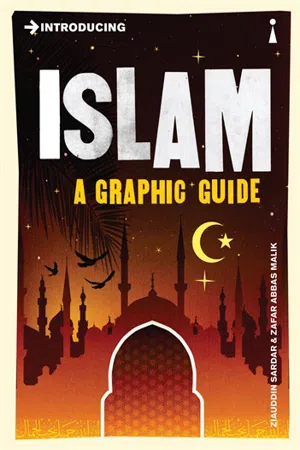
Islam is one of the world's great monotheistic religions. Islamic culture, spanning 1,500 years, has produced some of the finest achievements of humanity. Yet the religion followed by a fifth of humankind is too often seen in the West in terms of fundamentalism, bigotry and violence- a perception that couldn't be more wrong.
Introducing Islam recounts the history of Islam from the birth of Prophet Muhammad in the 6th century to its status as a global culture and political force today. Charting the achievements of Muslim civilisation, it explains the nature and message of the Qur'an, outlines the basic features of Islamic law, and assesses the impact of colonialism on Muslim societies.
Ziauddin Sardar and Zafar Abbas Malik show how Muslims everywhere are trying to live their faith and are shaping new Islamic ideas and ideals for a globalised world.
- 176 pages
- English
- ePUB (mobile friendly)
- Available on iOS & Android
eBook - ePub
About this book
Information
Topic
Theology & ReligionSubtopic
Islamic Theology
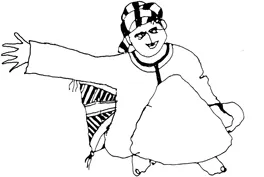
As Salam alaykum: peace be upon you. I am Fez and, insha Allah (God willing), I will make sure that the authors keep to the straight path. Stay tuned.
Muhammad, peace be upon him*, is the most influential man in history. But he is not an ordinary man. He is a Prophet – the last Prophet of God.
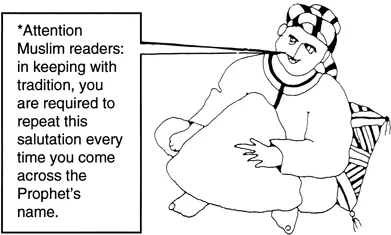
*Attention Muslim readers: in keeping with tradition, you are required to repeat this salutation every time you come across the Prophet’s name.
Prophet Muhammad did not start a new religion. He conveyed the same message as all the other prophets of God – including Adam, Noah, Ibrahim, Moses and Jesus.
The eternal message that Muhammad preached is not named after him. It is called Islam which means peace and submission to God. The term Islam also signifies the natural inclination of human beings, a God-centred worldview, a civilization with over fourteen hundred years of history and an universalist world culture.
The followers of Muhammad are not called Muhammadan, this is an insulting term that first emerged during the crusades. Those who believe in the message of Muhammad and that he is the last Messenger of God are called Muslims.
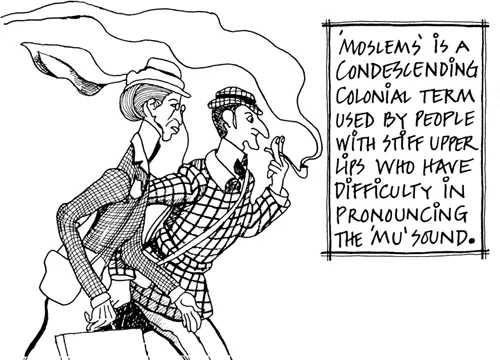
‘moslems’ is a condescending colonial term used by people with stiff upper lips who have difficulty in pronouncing the ‘mu’ sound.
The Life of Muhammad

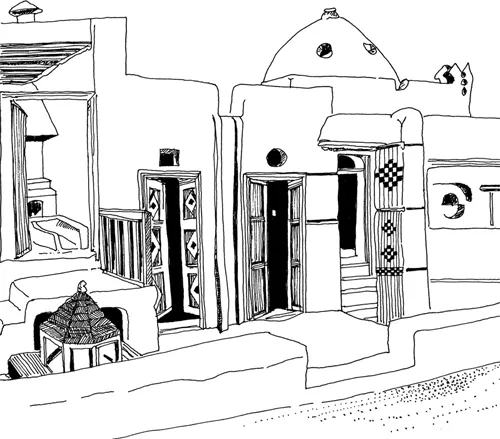
Makkah was a desert city. Its main distinction was the Ka’aba, the house dedicated to the One God and built under divine inspiration by Prophet Abraham. The majority of Makkah’s inhabitants were idol worshippers. Makkah functioned as a city-state, governed by a council of ten hereditary tribal chiefs with clear division of power. The most powerful of Makkan tribes was the Quraysh – the tribe of Muhammad. The city’s inhabitants were poor but generous people, they loved poetry and war, and were fiercely loyal to their tribes and their gods. While it had no natural resources of its own, it was an active commercial centre. Foreign traders brought their goods to be sold in the local market. Muhammad became a trader and accompanied Abu Talib on business trips to Palestine and Syria.
He is not one of us who proclaims the cause of nationalism and he is not one of us who fights the cause of nationalism and he is not one of us who dies in the cause of nationalism. Nationalism means helping your people in an unjust cause.
Prophet Muhammad
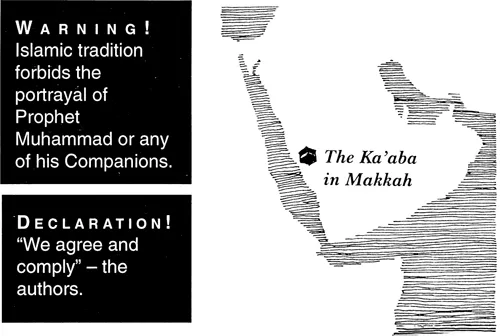
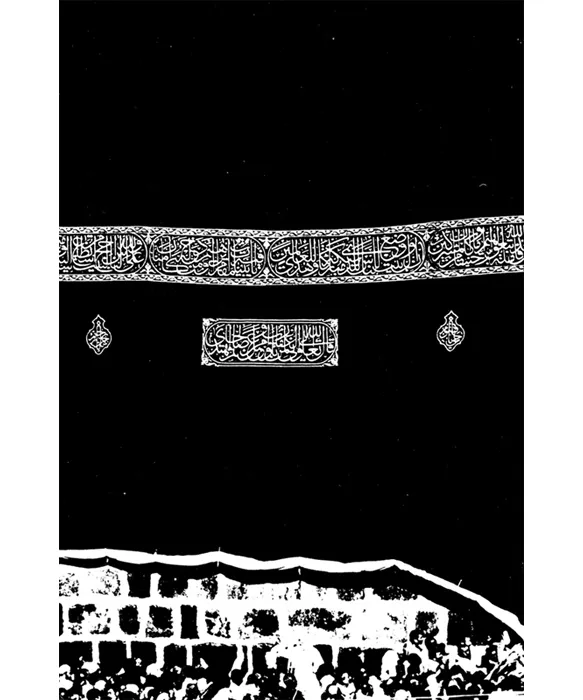
WARNING! Islamic tradition forbids the portrayal of Prophet Muhammad or any of his Companions. DECLARATION! “We agree and comply” – the authors. The Ka’aba in Makkah
The Pledge

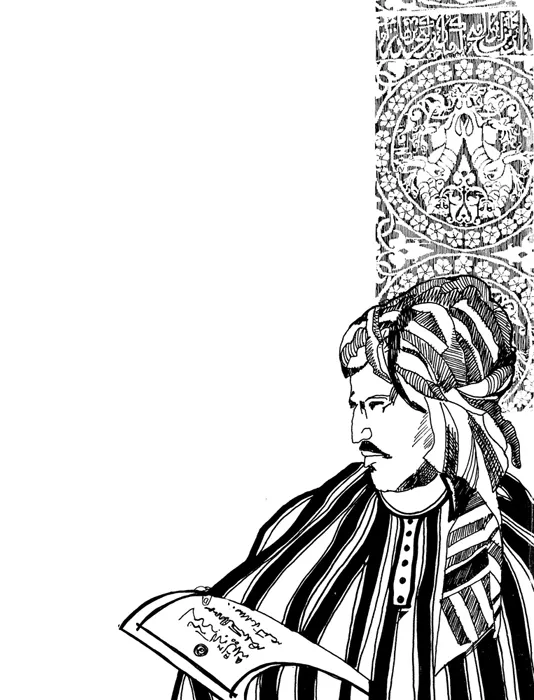
Muhammad’s Wisdom

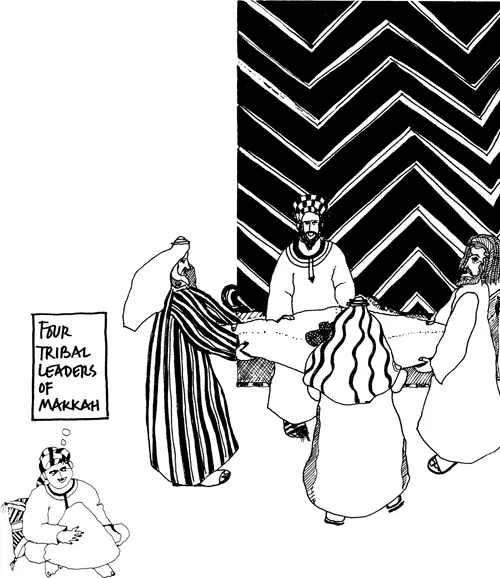
Four tribal leaders of makkah
Marriage

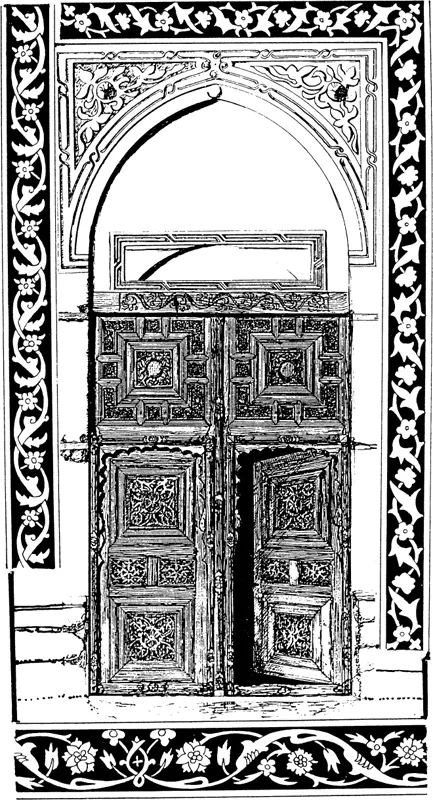
Muhammad’s courtesy, honesty and devotion to his work, earned the admiration of the widowed Khadija. So impressed was she with the young Muhammad that she proposed marriage. Muhammad accepted. At 40, she was 15 years older than him.
To bring about a just reconciliation between two contestants is charity, helping a person mount his animal or to load his baggage onto it is charity, a good word is charity, to remove obstacles in the street is charity, smiling upon the face of your brother is charity…sexual relations with your spouses is charity.
Prophet Muhammad
The Revelation

Table of contents
- Cover
- Title Page
- Copyright
- Contents
- The Life of Muhammad
- The Authors
- Further Reading
- Index and Little Dictionary
Trusted by 375,005 students
Access to over 1.5 million titles for a fair monthly price.
Study more efficiently using our study tools.
Frequently asked questions
Yes, you can cancel anytime from the Subscription tab in your account settings on the Perlego website. Your subscription will stay active until the end of your current billing period. Learn how to cancel your subscription
No, books cannot be downloaded as external files, such as PDFs, for use outside of Perlego. However, you can download books within the Perlego app for offline reading on mobile or tablet. Learn how to download books offline
Perlego offers two plans: Essential and Complete
- Essential is ideal for learners and professionals who enjoy exploring a wide range of subjects. Access the Essential Library with 800,000+ trusted titles and best-sellers across business, personal growth, and the humanities. Includes unlimited reading time and Standard Read Aloud voice.
- Complete: Perfect for advanced learners and researchers needing full, unrestricted access. Unlock 1.5M+ books across hundreds of subjects, including academic and specialized titles. The Complete Plan also includes advanced features like Premium Read Aloud and Research Assistant.
We are an online textbook subscription service, where you can get access to an entire online library for less than the price of a single book per month. With over 1.5 million books across 990+ topics, we’ve got you covered! Learn about our mission
Look out for the read-aloud symbol on your next book to see if you can listen to it. The read-aloud tool reads text aloud for you, highlighting the text as it is being read. You can pause it, speed it up and slow it down. Learn more about Read Aloud
Yes! You can use the Perlego app on both iOS and Android devices to read anytime, anywhere — even offline. Perfect for commutes or when you’re on the go.
Please note we cannot support devices running on iOS 13 and Android 7 or earlier. Learn more about using the app
Please note we cannot support devices running on iOS 13 and Android 7 or earlier. Learn more about using the app
Yes, you can access Introducing Islam by Ziauddin Sardar,Zafar Abbas Malik in PDF and/or ePUB format, as well as other popular books in Theology & Religion & Islamic Theology. We have over 1.5 million books available in our catalogue for you to explore.