Why do Hindus revere the cow?
Must Hindus be vegetarian?
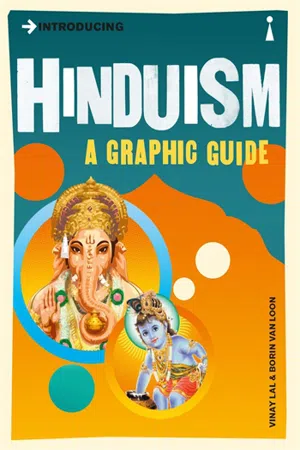
Hinduism is the world's oldest religion, yet the word 'Hindu' was never used before the 18th century by Hindus to describe themselves. it is defined as polytheistic, but Gandhi declared that a Hindu needn't believe in any god. it is a religion as much of myth as of history – it has no founder, no single authoritative book, even few central doctrines.
Introducing Hinduism offers a guide to the key philosophical, literary, mythological and cultural traditions of the extraordinarily diverse faith. It untangles the complexities of Hinduism's gods and goddesses, its caste system and its views on sex, everyday life and asceticism.
Vinay Lal and Borin Van Loon's hugely enjoyable tour through Hinduism also explores its links with and differences from Buddhism, Jainism and other religions, the resurgence of Hindu extremism, the phenomenon of Bollywood and the overseas Hindu diaspora.
- 176 pages
- English
- ePUB (mobile friendly)
- Available on iOS & Android
eBook - ePub
About this book
Information
Topic
Theology & ReligionSubtopic
HinduismWhat is Hinduism?
Hinduism, one is tempted to say, can be anything to anyone. Hindus themselves are fond of describing Hinduism as a way of life rather than as a religion.

Hindus, do not turn to the same book for moral guidance as muslims do the quran or christians to the bible. Mahatma gandhi, the most famous Hindu of recent times, had his own opinion. A man may not believe in god and still call himself a hindu.
No one has any idea whether Hinduism accepts converts to its religion. Hare Krishnas, the most visible sign of Hinduism’s spread to the West, emphatically declare that they do not view themselves as Hindus. The word “Hindu” itself is not of Indian origin, and Hindus did not describe themselves as such until the 18th century. Yet, Hinduism’s adherents characterize it as the world’s oldest faith.
Elusive Hinduism
In the West, Hinduism is comparatively invisible. Some people view it as synonymous with yoga, which has been reduced to aerobic-like exercises and meditational practices. From the Sanskrit “yuj”, which means “to yoke”, yoga is a school of Indian philosophy which aims to help the practitioner to come closer to the divine. All this has been largely forgotten.
To others, Hinduism is some vague, undefined and colourful religion with numerous deities.

Manu of its gods and goddesses appear to have multiple arms and legs.
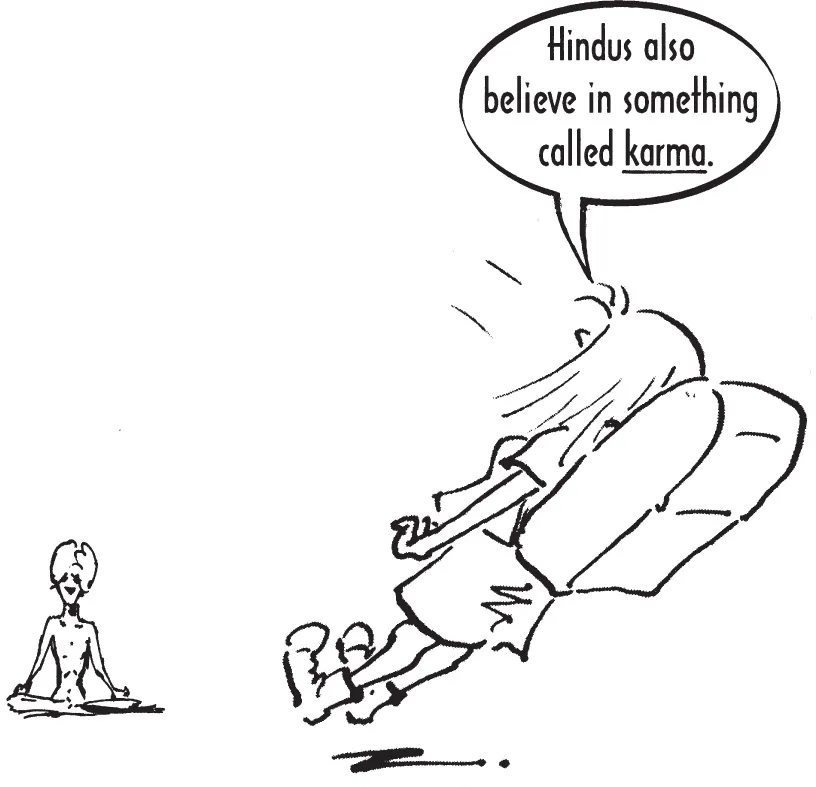
Hindus also believe in something called karma.
Hinduism certainly looks less stern as a religion than Islam, Christianity or Judaism.
Uncertain Origins in India
The central tenets of Hinduism are not easily described.
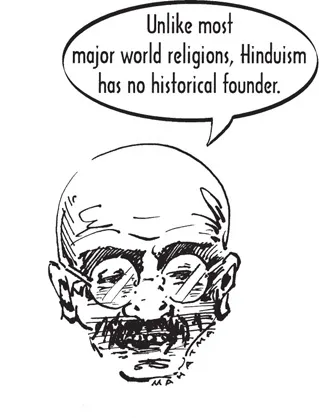
Unlike most major world religions, Hinduism has no historical founder.
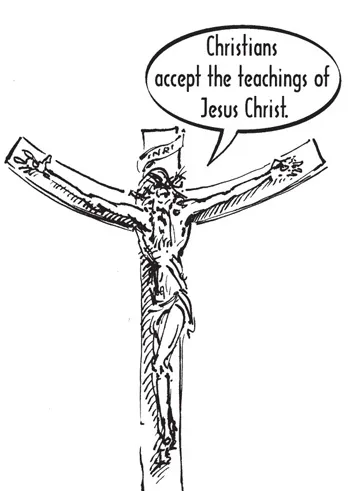
Christians accept the teachings of jesus christ.
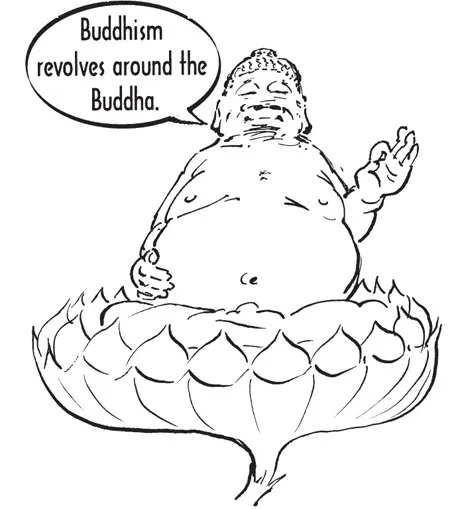
Buddhism revolves around the Buddha.
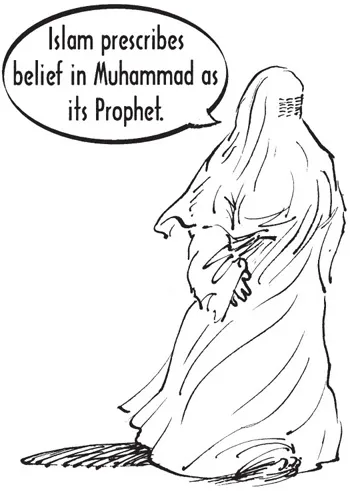
Islam prescribes belief in muhammad as its prophet.
All one can say of Hinduism’s origins, by contrast, is that it originated in the Indian subcontinent and that the religion has largely been confined to that part of the world.
The Indus Valley Civilization
The earliest civilization in India has been given the name of “Indus Valley” or “Harappan” after one of its most well-developed cities, Harappa, now in Pakistan.

This advanced, urban civilization, which developed around the river indus, flourished around 2500–1500 BC.
The Indus Valley people, who may be the forerunners of the Dravidian population of South India, appear to have been gradually pushed down south by the Aryans, who commenced their migrations from the Caucasus Mountains (in the present-day region of Georgia in the former Soviet Union) to India around 2000 BC.
Aryans and Hinduism’s Origins
The word “Aryan” originally meant “noble”. Nazism has given the word racial connotations in the 20th century. The early Aryans were a nomadic people. They brought to India the horse and the chariot, as well as the sacrificial altar.

The veneration of fire, around which hindu marriage rites are conducted, can be dated back to the aryans. Om, bhur-bhuvah-svah …
The oldest literature attributed to the Aryans, known as the Vedas, furnishes a relatively clear picture of their Gods, associated largely with different aspects of nature. Chief among them were Indra, the god of rain and thunder; Surya, the sun god; Varuna, the god of wind; and Agni, the fire god.
An Early Mix of Elements
Hinduism is generally viewed as having originated with the Aryans, but it is far more accurately described as an amalgam of pre-Aryan and Aryan elements. For instance, image-worship, which predominates in popular Hinduism, finds almost no mention in the Vedas. Shiva, the all-important god besides Vishnu, is almost certainly a non-Aryan god (absent in the Vedas) who eventually made his way into the Hindu pantheon. The innumerable mother goddesses (devis) who spangle Hinduism are also non-Aryan.

The Aryans most likely looked down upon the people they conquered as inferior. Indra is described in the Rig Veda, the most important of the Vedic scriptures, as the vanquisher of a dark-skinned people and destroyer of forts and citadels.
The indigenous people are seen as possibly matriarchal and “softer” in their approach to life. The Aryans are viewed instead as patriarchal and more inclined to prize masculinity.
Sanskrit: Language of the Gods
Though the Indus Valley people were literate, they left behind no literature. The Indus Valley script remains undeciphered down to the present day. The Aryans, on the other hand, were largely illiterate; but they bequeathed to India a prolific literature.
The religious literature of the Aryans consists of a wide variety of texts, all composed in Sanskrit, which means “perfected” or “well-made”. Sanskrit is sometimes referred to as a dead language in the manner of Gree...
Table of contents
- Cover
- Title Page
- Copyright
- Contents
- What is Hinduism?
- Further Reading
- Acknowledgements
- About the Author
- About the Illustrator
- Index
Trusted by 375,005 students
Access to over 1.5 million titles for a fair monthly price.
Study more efficiently using our study tools.
Frequently asked questions
Yes, you can cancel anytime from the Subscription tab in your account settings on the Perlego website. Your subscription will stay active until the end of your current billing period. Learn how to cancel your subscription
No, books cannot be downloaded as external files, such as PDFs, for use outside of Perlego. However, you can download books within the Perlego app for offline reading on mobile or tablet. Learn how to download books offline
Perlego offers two plans: Essential and Complete
- Essential is ideal for learners and professionals who enjoy exploring a wide range of subjects. Access the Essential Library with 800,000+ trusted titles and best-sellers across business, personal growth, and the humanities. Includes unlimited reading time and Standard Read Aloud voice.
- Complete: Perfect for advanced learners and researchers needing full, unrestricted access. Unlock 1.5M+ books across hundreds of subjects, including academic and specialized titles. The Complete Plan also includes advanced features like Premium Read Aloud and Research Assistant.
We are an online textbook subscription service, where you can get access to an entire online library for less than the price of a single book per month. With over 1.5 million books across 990+ topics, we’ve got you covered! Learn about our mission
Look out for the read-aloud symbol on your next book to see if you can listen to it. The read-aloud tool reads text aloud for you, highlighting the text as it is being read. You can pause it, speed it up and slow it down. Learn more about Read Aloud
Yes! You can use the Perlego app on both iOS and Android devices to read anytime, anywhere — even offline. Perfect for commutes or when you’re on the go.
Please note we cannot support devices running on iOS 13 and Android 7 or earlier. Learn more about using the app
Please note we cannot support devices running on iOS 13 and Android 7 or earlier. Learn more about using the app
Yes, you can access Introducing Hinduism by Borin Van Loon,Vinay Lal in PDF and/or ePUB format, as well as other popular books in Theology & Religion & Hinduism. We have over 1.5 million books available in our catalogue for you to explore.