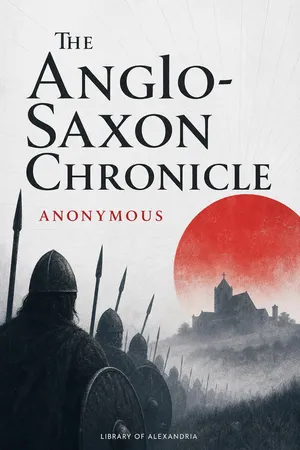
Kingdoms rise and fall, invaders arrive, and strange signs appear in the sky. Here is early England as generations of chroniclers chose to remember it.
The Anglo-Saxon Chronicle is one of the foundational sources for English history: a body of year-by-year records maintained by successive writers, many of them monastic scribes. Its entries bring together royal successions, battles, religious affairs, and the disruptions of everyday life. Accounts of Danish invasions and the Norman Conquest sit alongside reports of famine, disease, eclipses, and portents.
Rather than a single historian's continuous narrative, the work preserves the changing concerns of chroniclers across generations. Some entries are brief notices; others expand into forceful accounts of conflict and upheaval. Together they reveal both the events that shaped England and the beliefs through which medieval writers interpreted them. Reading the chronicle means encountering history not only as a sequence of dates, but as a record of what people feared, valued, and thought worth preserving.
What readers find inside:
- Kings and Kingdoms - Royal accessions, rivalries, and deaths trace the shifting landscape of English power.
- Invasion and Conquest - Danish attacks and the Norman Conquest show a country repeatedly transformed by warfare.
- Faith and Interpretation - Religious events and divine portents reveal the Christian outlook of the chroniclers.
- Disaster and Daily Life - Crop failures, plagues, and unusual natural events interrupt the record of rulers and battles.
- Historical Voices - Brief annals and longer accounts expose the priorities and perspectives behind the written record.
This work will appeal to readers of medieval English history, students seeking a primary source, and anyone interested in the relationship between memory, belief, and national identity.
Begin with the annals and discover the events that early England's chroniclers wanted posterity to remember.