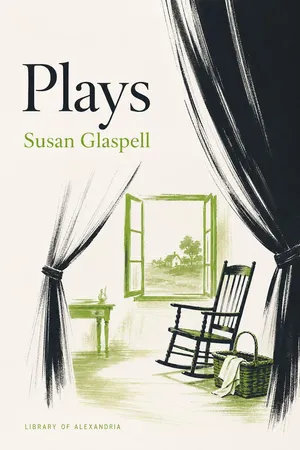
Who gets to decide what matters-and whose voice can be ignored? These four dramas turn overlooked details and acts of resistance into urgent questions about justice and belonging.
In Trifles, a murder investigation exposes the gulf between official authority and the understanding shared by women whose observations are dismissed. Drawing on a real criminal case, Susan Glaspell makes an ordinary kitchen the setting for a searching conflict between law, sympathy, and moral judgment. The drama's tension comes as much from what remains unsaid as from what investigators discover.
The Outside explores isolation and the possibility of renewed connection; The Verge follows a woman's unsettling determination to move beyond accepted limits; and Inheritors tests ideals of education and liberty against the pressures of conformity. A co-founder of the Provincetown Players, Glaspell helped shape experimental American theater. These works show her range, bringing intimate encounters and public conflicts into conversation without offering comfortable answers.
What readers find inside:
- Evidence and empathy - Trifles asks how gender and experience influence the truths people recognize.
- Isolation and connection - The Outside considers the pull of withdrawal and the claims of life beyond it.
- Experimental ambition - The Verge challenges conventional expectations of women through a restless search for new possibilities.
- Ideals under pressure - Inheritors examines the distance between professed commitments to liberty and the treatment of dissent.
- Power in conversation - Silence, disagreement, and competing perspectives make personal relationships sites of moral conflict.
For readers of feminist literature, theater lovers interested in American modernism, and students drawn to ethical debate, these dramas offer much to discuss-and characters whose struggles resist easy judgment.
Step into Glaspell's theater and discover how a small detail can challenge an entire way of seeing.