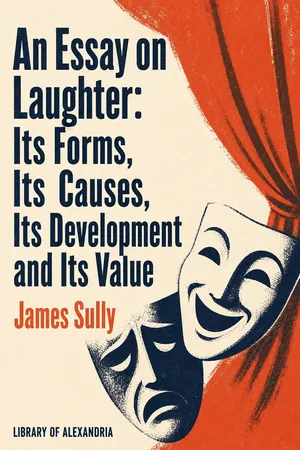
A laugh can bring people together-or reveal the distance between them. What makes this familiar response so powerful?
In An Essay on Laughter: Its Forms, Its Causes, Its Development and Its Value, psychologist James Sully examines amusement as a serious subject of inquiry. Combining psychological observation with philosophical reflection, he explores what prompts laughter, how it develops, and what its many expressions tell us about human thought and feeling.
Sully moves beyond the question of what makes a joke funny to consider humor in everyday experience and social life. Wit, absurdity, and the comic become ways of investigating how people perceive the world and respond to one another. His approach makes the book rewarding both as a historical work of psychology and as a source of questions that still matter: why does the same situation amuse one person but not another, and when does shared amusement become mockery?
What readers find inside:
- Psychological foundations - An exploration of the mental processes and emotional responses involved in amusement.
- Varieties of humor - Consideration of wit, absurdity, and the different experiences that provoke a laugh.
- Human development - Inquiry into the emergence and growth of laughter as part of human experience.
- Social meaning - Reflection on the ways humor expresses relationships, shared expectations, and differences between people.
- Philosophical questions - An examination of the significance of humor and its place in a thoughtful life.
This book will appeal to readers interested in the history of psychology, students of comedy and humor theory, and anyone curious about the unspoken meanings of everyday amusement. Rather than a collection of jokes, it offers a sustained investigation of why we find things funny.
Begin exploring the curious workings of humor and discover how much a laugh can reveal.