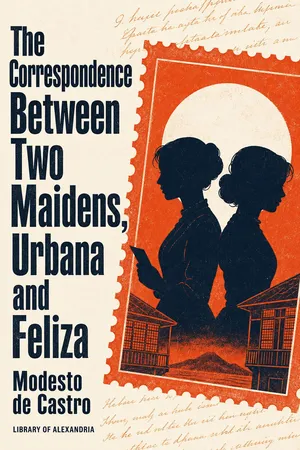
What can a sister's advice reveal about an entire society? These letters open a window onto the values, expectations, and everyday conduct that shaped nineteenth-century Filipino womanhood.
Modesto de Castro's The Correspondence Between Two Maidens, Urbana and Feliza presents moral instruction through an exchange of letters between sisters. Their correspondence considers proper manners, respect for parents, personal discipline, and the responsibilities of Christian life. The intimacy of sisterly counsel gives these lessons a personal voice, bringing questions of character into the familiar world of family and relationships.
A lasting work of Filipino literature, read in Philippine schools across generations, this epistolary classic also preserves a historical vision of education and social duty. Its ideals of modesty, humility, and honorable conduct invite readers to consider both the continuity of family values and the changing expectations placed on women. Read today, it offers an opportunity to understand a moral tradition in its own terms while reflecting on how that tradition speaks to the present.
What readers find inside:
- Sisterly counsel - Letters between Urbana and Feliza make moral education a conversation grounded in family ties.
- Manners and character - Advice on conduct connects outward courtesy with inward discipline and virtue.
- Christian duty - Religious belief shapes the work's understanding of responsibility, humility, and a good life.
- Family obligations - Respect for parents and care in relationships stand at the heart of its social teachings.
- Ideals of womanhood - The correspondence reveals historical expectations surrounding women's behavior and moral education.
This work will appeal to readers of Philippine literary classics, students of women's history, and anyone interested in the relationship between faith, etiquette, and family life.
Begin these letters to encounter a formative Filipino vision of character, kinship, and everyday duty.