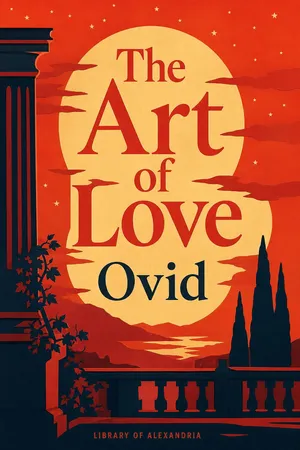
For Ovid, romance is not simply a matter of fate: it is a game of timing, persuasion, and practiced charm. His playful lessons reveal how much-and how little-the rituals of attraction have changed.
Written in ancient Rome, The Art of Love is a verse guide to finding and keeping a lover. Ovid adopts the voice of an expert instructor, turning desire into a subject that can be studied and taught. He addresses men in the first two books and women in the third, offering advice on encounters, appearance, conversation, letters, and the delicate business of sustaining another person's interest.
The poem's world is vividly social: theatres, public spectacles, banquets, and the busy meeting places of Roman life become settings for romantic possibility. Beneath its practical manner lies a sophisticated literary performance, full of wit, mythological examples, and knowing observations about vanity and self-deception. Its assumptions about gender and pursuit belong to antiquity, yet its attention to the gap between what lovers feel and what they choose to display still gives readers plenty to recognize and question.
What readers find inside:
- Courtship as strategy - Attraction becomes a sequence of choices about where to meet, what to say, and how to win attention.
- Roman social life - Public entertainments and private gatherings provide a lively backdrop to the pursuit of romance.
- Advice to both sexes - Ovid shifts his address from male to female readers, exposing competing expectations within the same romantic game.
- Myth and mischief - Stories from classical mythology enrich the lessons and sharpen the poem's comic effects.
- Desire and performance - Flattery, appearances, and calculated gestures raise enduring questions about sincerity in relationships.
This work will appeal to readers of classical poetry, anyone curious about everyday life in ancient Rome, and lovers of witty literature that treats familiar emotions from an unfamiliar angle.
Enter Ovid's Roman world and discover a poet who makes the pursuit of desire both entertaining and open to debate.