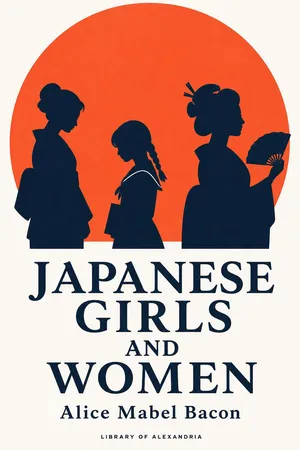
A society in transformation comes into focus through the daily lives of its women. From the family home to the classroom, this historical account explores the customs and expectations that shaped Meiji-era Japan.
In Japanese Girls and Women, Alice Mabel Bacon draws on her experience living in Japan to describe childhood, education, marriage, motherhood, and women's place in family and cultural life. Domestic routines and social obligations become a way to understand a country undergoing profound change, as established traditions met new approaches to schooling and wider international contact.
Bacon considers both the upbringing of daughters and the responsibilities of adult women, including the role of geishas in cultural life. Her account connects intimate experience with broader questions about social position, duty, and opportunity. Read today, it offers not a final verdict on Japan, but a historically situated Western observer's perspective: a valuable starting point for considering how women's lives are described across cultures and how education can reshape expectations.
What readers find inside:
- Childhood and Home - Family life reveals the customs and expectations surrounding a daughter's upbringing.
- Schooling and Change - Women's education brings the relationship between inherited roles and new opportunities into view.
- Marriage and Motherhood - Domestic responsibilities show how family structure shaped women's everyday experience.
- Geisha Culture - Bacon examines a distinctive social and cultural role often misunderstood by outsiders.
- Tradition and Transformation - Observations of daily life illuminate the tensions accompanying Japan's modernization.
This book will appeal to readers of Japanese social history, students of women's history, and anyone interested in firsthand accounts of cross-cultural encounters.
Step into Meiji-era households and classrooms to explore the lives behind a changing society.