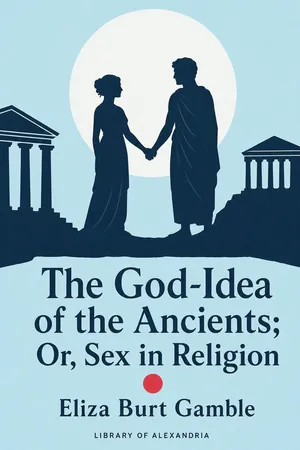
How did the feminine lose its place at the center of the sacred? Eliza Burt Gamble makes that question the starting point for a bold inquiry into belief, symbolism, and power.
First published in the nineteenth century, The God-Idea of the Ancients; Or, Sex in Religion explores religious history through the changing status of women and female divinity. Drawing on mythology, anthropology, theology, and comparative religion, Gamble examines the association of the feminine with creation, wisdom, and sacred authority. She argues that changes in religious images reflect broader shifts in the relationships between women and men.
At the heart of the book is Gamble's account of a movement from reverence for female deities toward male-centered systems of belief. Her readings of sexual symbolism and religious traditions challenge the assumption that masculine representations of divinity are universal or inevitable. Read today as a historical feminist argument rather than a statement of current scholarly consensus, the work offers a revealing encounter with an early effort to rethink the connections between spiritual authority and social inequality.
What readers find inside:
- Female divinity - Gamble explores the creative and spiritual significance assigned to goddesses and the feminine.
- Sacred symbolism - Images of sex and generation become clues to the ways ancient peoples understood life and divine power.
- Changing authority - The book connects shifts in religious belief with the growth of male social and theological dominance.
- Comparative inquiry - Mythology and religious traditions provide material for Gamble's account of changing concepts of deity.
- Feminist criticism - Her argument asks how inherited accounts of the sacred have marginalized women.
This book will interest readers of feminist religious history, students of goddess traditions, and anyone curious about nineteenth-century challenges to established theology. Its enduring appeal lies in the questions it raises about who defines the divine and whose experience those definitions preserve.
Begin an inquiry into the symbols and assumptions that have shaped religious ideas about women and men.