Global Political Economy (GPE) is a broad and varied field of study and draws insight from a great number of fields and approaches. One of the serious problems confronting academics and students is the sheer mass of theories and debates in the field. This textbook provides up-to-date summaries of the debates and approaches that are currently at the forefront of both European and American GPE.
This new revised and expanded second edition contains updated versions of most of the original chapters. In addition, there is a new section entitled 'Emerging issues in contemporary Global Political Economy (GPE)' and six new chapters.
The second edition is structured around three themes:
Part I focuses on the six central concepts of GPE: state, firm, power, labour, finance and globalization. Each one of them has been increasingly subjected to a rigorous and critical evaluation in recent scholarship.
Part II covers a select number of theories and debates currently at the forefront of GPE: game theory; behavioural economics; neo-, sociological and evolutionary institutionalism; neo-Marxism; development and post-development; libidinal economies; and economic constructivism.
Part III, which is new to this edition, is entitled 'Emerging issues in contemporary Global Political Economy (GPE)' and focuses on war, state and International Political Economy (IPE); race, gender and culture; environmental politics; and the rise of China.
This is essential reading for all serious scholars and advanced students of IPE.
Four decades after the emergence of International Political Economy (IPE) in the early 1970s as a branch of international scholarship (Cohen 2008; Denemark and O’Brien 1997; Gill and Law 1988), the nature, boundaries and intellectual ancestries of this field of study are still hotly disputed. Even the label IPE is under dispute: Gill and Law (1988: xxiii), for instance, prefer the term ‘Global Political Economy’ (GPE), privileging the global arena over inter-national relationships. Nowadays (2013) the two labels are used interchangeably, although the denomination IPE is generally adopted by those who view this field of study as a sub-field of political science and International Relations (IR), whereas GPE is normally the preferred label for those who view it as a transdisciplinary effort, closer to political economy than to IR. I will use the GPE label in this introductory chapter.1
Behind the veneer of contestation, IPE or GPE represents a community of scholars from a variety of social science disciplines who share something important in common. It is easier, however, to describe what they share in common in negative terms, as a critique of other approaches, whereas it is more difficult to agree upon much else. I tend to think of the field of IPE/GPE, therefore, not as a distinct academic discipline, but as a suggestive research programme that brings together studies from a range of social science disciplines which either implicitly or explicitly take seriously two sets of propositions:
first: that an international economy which operates in an environment that is divided among sovereign states of various power and size is profoundly different from an international economy that inhabits some abstract and integrated space imagined in conventional international economics textbooks;
second: that the dynamics of political action in a world that is witnessing an increasingly integrated and integrating economy is very different from the one imagined in conventional political science and International Relations.
How different is the ‘real’ world of a global political economy that operates in a state system from the one imagined by economists and/or conventional political science/International Relations; and more crucially, how we should go about conceptualizing the differences are questions that have never been settled.
In very broad terms, the field of GPE has approached the conundrums of the global political economy from two related perspectives: from a broad theoretical perspective that serves the ‘general theoretical orientations’ (Katzenstein et al. 1998: 647) in political economy; and from related developments in key themes or concepts in the field, such as the state, power, capital, trade, finance and so on. As GPE is closely related to political economy, it has also adopted with various degrees of success the four general theoretical orientations that have dominated political economy. These are:
standard economics, sometimes referred to as neoclassical economics;
Marxian or radical political economy;
evolutionary political economy (or evolutionary institutionalism); and
libidinal political economy – the least known, but equally important.,
Standard economics makes up the current orthodoxy in the field of IPE; the rest fill the contested area that is heterodoxy in GPE. The four general theoretical orientations often diverge on issues of substance, but also on the questions of philosophy, methodology and ethics.
Standard economics and Marxist political economies tend to share, however, in the words of Gammon and Wigan (Chapter 15 in this volume), the rationality postulate, which ‘views motivation in terms of pleasure seeking and pain avoidance’. Standard economics and Marxist political economy diverge, however, on the sort of questions they believe must be at the core of GPE. Standard GPE addresses questions such as: why do states fail to pursue the optimal course of action by imposing tariffs on their trading partners’ goods and services? (Carlson and Dacey, Chapter 7); what explains the decisions made by individuals over economic issues? (Elms, Chapter 8); what is the role of institutions in shaping economic behaviour? (Spruyt, Chapter 9). Marxist theory, in contrast, is concerned primarily with processes of exploitation and asymmetrical access to power and resources on a global scale (Dunford, Chapter 11; Overbeek, Chapter 12).
Evolutionary approaches, in contrast, tend to view the acquisitive individual, or homo economicus of standard economics, as representative of certain historical ‘habits of thought’, and hence not a particularly useful starting point for investigation (Schwartz, Chapter 10; and to some extent, Broome, Chapter 14). Whereas libidinal theories question the basic assumptions of standard economics: they question whether individuals are maximizing anything in particular. Instead they believe that individuals are strategizing to achieve the conditions that Freud described as primary narcissism (Gammon and Wigan, Chapter 15, and Ling, Chapter 18). Each of these general orientations yields, unsurprisingly, very different perspectives on the world.
The four general theoretical orientations tend to diverge also on other fundamental questions; for instance, on the nature and meaning of capitalism and capital. Standard economics regards capitalism essentially as a market economy (contrasted, for instance, with a planned economy). The institution of the market is seen as one of the greatest achievements of humanity. Market techniques of organization and co-ordination of human societies are based on the free interchange of communication between people. The freer the exchange, the better they function. Standard economics shares much more with libidinal economy than may appear at first glance. Both view markets essentially as ‘economies of desire’. Markets are communication devices employing the medium of the prices mechanism to transmit and communicate people’s desires for goods, services or non-material values. The theories diverge, however, in their reading of what desires are about, and how individuals express them. Standard economics believes that individuals are trying to maximize their lot – mostly their material lot – in this world. Libidinal economists ask, if that is so, why then do so many individuals appear to desire their own oppression or even their personal annihilation? Why do so many people seem to be prepared to sacrifice their own lives, in the name of abstract concepts such as God, the nation or the working classes?
Marxists, in contrast, view capitalism as a variant on an existential theme – the theme of exploitation by one (group) of people by another. World history – that is, the history of sedentary people – is a history of class struggle. And we are still struggling today. Evolutionary economists believe, in contrast, that the concept of capitalism is a misnomer. Capitalism evolved towards the end of the nineteenth century into something else. They call it business civilization. Businesses are viewed as ‘going concerns’, and capital nowadays is primarily ‘intangible’, representing what in accounting and legal language is defined as ‘goodwill’. Intangible capital is denominated as the capitalization of business concerns based on their anticipated earnings discounted against current rates of interest. Today (in 2013), business and the businesspeople and their techniques of buying and selling dominate the ‘economic’ agenda.
Standard economics-derived IPE is broadly associated with the ‘American school in IPE’: meticulous, exact and parsimonious. This school has tended to stress analytical rigorousness over conceptual innovation, and critical methodological thoroughness at the cost of asking some of the ‘big questions’ of the nature of the status quo of our time (Cohen 2008). The rest – Marxian, evolutionary institutionalist and libidinal theories – have tended, on the whole, to be associated with the ‘British’ or continental schools (although the evolutionary approach was very American to start with). They tend to stress conceptual innovation (sometimes) at the cost of some analytical clarity, preferring to answer ‘big questions’, but not necessarily providing new answers to the traditional questions of economics or politics.
We have, therefore, many approaches to choose from in the study of GPE. Should we pay attention to all four? Most GPE textbooks clearly favour one over the rest. I tend to be pragmatic on such matters: I ask whether the whole is more than the sum of its parts? I think it is. Hence, I think that we should pay attention to recent developments among the four approaches. Indeed, it is noticeable how the combined effects of the two sets of related theoretical developments (among the general theoretical orientations, and specific research programmes) have shifted our understanding of the nature of the global political economy since the publication of the first edition of this volume in 2000. The changes in perspective are due partly to the tremendous developments in the world ‘out there’; but partially because of (often) grudging acceptance of the validity of some of the arguments put forward by members of the other group – for example, the concept of GPE is now increasingly acceptable to both orthodoxy and heterodoxy; whereas the formalism that was nearly the exclusive terrain of orthodoxy is now adopted increasingly by heterodoxy as well.
And then there are important issues that concern us all. There are diverse topics: changes in the nature of the state (Moore, Chapter 2), business and the corporation (Phillips, Chapter 3), labour (O’Brien, Chapter 4), finance (Nesvetailova, Chapter 5), globalization (McMichael, Chapter 6), ecology (Dalby, Katz-Rosene and Paterson, Chapter 16), the rise of China (Beeson, Chapter 17), and the future of alternative politics (Ling, Chapter 18).
I also think that an informed reader would like … well, to be informed, before they reach their own conclusions. This volume is intended, therefore, to serve precisely such a purpose. It charts this shifting zonal terrain that marks the outer boundaries of contemporary European, American and developmental IPE and GPE. Our intention here is not to adjudicate among competing approaches, but to inform and educate the reader who may find it difficult to keep abreast of the range of scholarship that is relevant to contemporary GPE. A cursory acquaintance with GPE reveals it to be a broad and somewhat inchoate field of study. While the great majority of GPE texts still give the impression of a field divided into three so-called ‘paradigms’ – realism, liberalism and structuralism – it is evident that contemporary GPE has by and large moved on to a considerable degree. Global Political Economy has absorbed and, in turn, has been absorbed into, the broader trends in the social sciences, loosening in the process its ties to the discipline of International Relations. As a result, the main division lines in contemporary GPE no longer trail International Relations’ controversies, but reflect broader issues and contemporary debates in political economy and the social sciences.
This introductory chapter maps out contemporary debates in GPE. I stress in particular the rising in significance of the methodological debate between, on the one hand, rationalist and methodologically individualist approaches; and on the other, the critical or post-rationalist traditions.2 The book is divided into three parts. Part I focuses on seven of the central concepts of GPE: state, firm, capital, power, labour, finance and globalization, each of which is increasingly subjected to a rigorous and critical evaluation in contemporary scholarship. These are not necessarily the seven fundamental concepts of GPE, but they are the seven which have been the subject of the greatest debate and innovation in the past two decades. Part II covers a select number of theories currently at the forefront of GPE. These theories and approaches are drawn from the three broad traditions of rationalism, Marxism and institutionalism. Part III discusses some of the important issues, issues that are likely to dominate future agendas: ecology, China, and alternative conceptualizations of the human condition.
The epistemological foundations of orthodoxy and heterodoxy
At one level, the debates that are taking place in GPE replicate important debates in the social sciences more generally. They concern the salience of a range of approaches that are described as orthodoxy, and another range of approaches that are described as heterodoxy. The dispute is largely epistemological in nature, although in more practical terms, it takes shape as a methodological debate. At its core, the dispute is about the most efficient and useful ways in which we should go about investigating the nature of the ‘units’ out there and the relationship they establish between them over time.
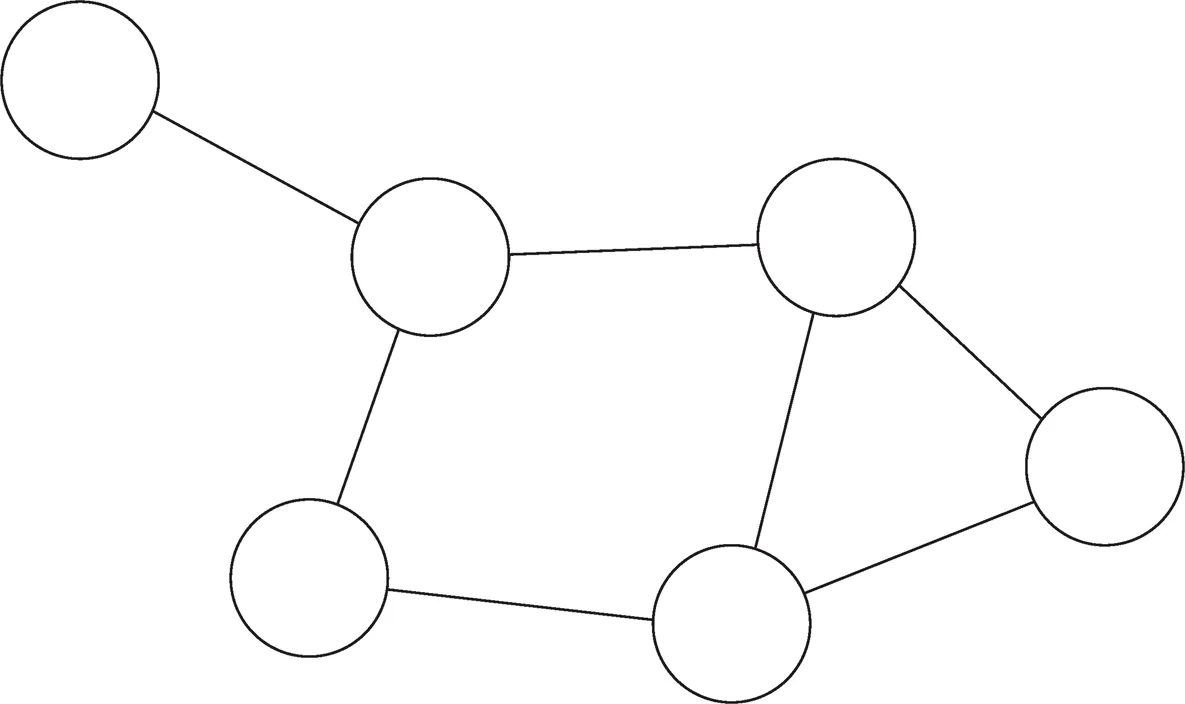
Orthodoxy in the social sciences is predicated on the assumption that the best available methodologies are drawn from a genre of theories that mathematicians call discrete mathematics. Discrete mathematics is a branch of mathematics and logic that is dealing with objects that can assume only distinct, separated values (like discrete numbers – 1, 2, 3 and so on). Graphs like the one in Figure 1.1. represent the sort of objects studied by discrete mathematics.3 (For an excellent discussion, see Easley and Kleinberg 2010.)
Figure1.1 Discrete mathematics
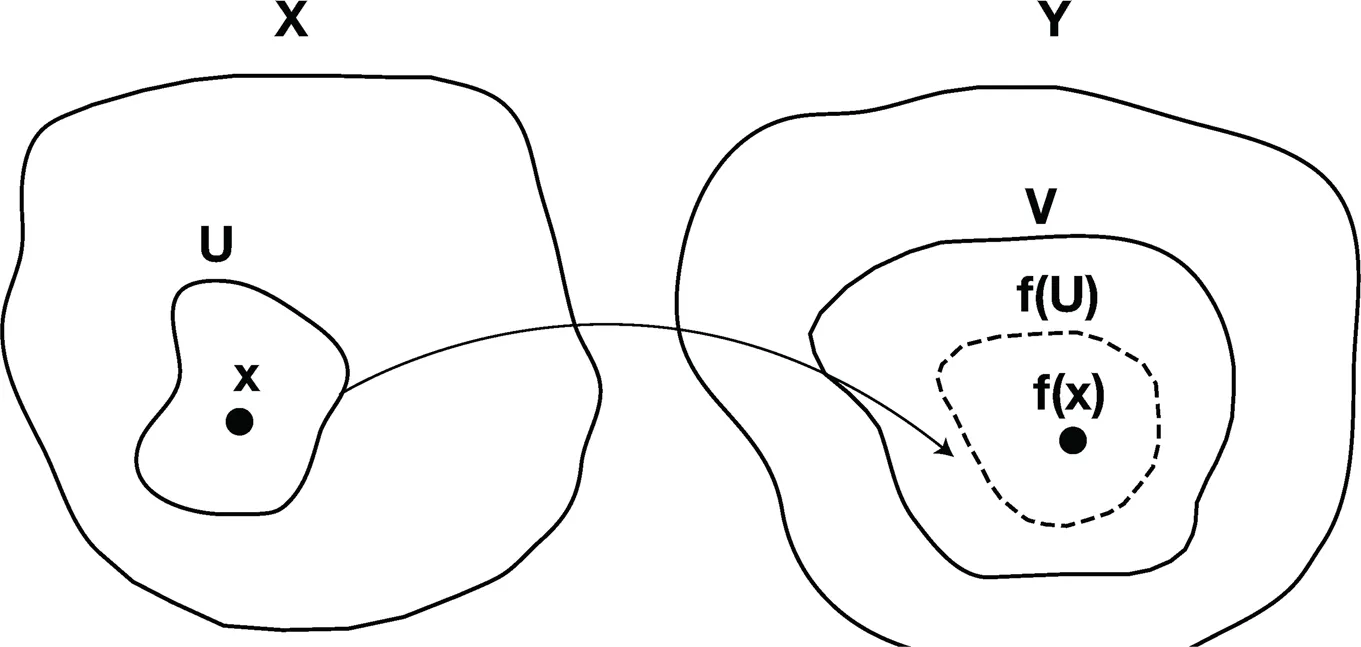
Discrete mathematics is contrasted with another branch of mathematics called ‘continuous mathematics’. Continuous mathematics deals with objects that can vary smoothly like liquefied or gaseous topological forms; in other words, objects of irregular
shape and size. It also deals with cases of species sharing a habitat, how each different species develops its own ecological niche. A more abstract depiction of continuous functions between topological spaces where there is generally no formal notion of distance (typically described by mathematicians as Figure 1.2) may represent better real-life situations in the international political economy, where the ‘units’ – states or businesses – are amorphous and the ‘system’ cannot be reduced to interaction among unit-like entities. So, for example, in a set ‘U’, which can represent a state, there could be internal changes that could be represented by f(x) without changing the nature of U (or the state itself).
Figure1.2 Continuous mathematics
Although rarely described in such terms, many of the important debates in the social sciences broadly, and GPE specifically, are concerned with the utility and scope of discrete mathematical models of the behaviour of people and organizations (such as states or firms) that populate our mental images of the social world. Orthodoxy is associated in the social sciences, on the whole, with the covering law- type of generalizations based on correlations, statistical probabilities or even intuition, attributing universal behavioural characteristics to discrete entities. Charles Tilly describes covering law accounts in the following terms: ‘In covering law accounts, explanation consists of subjecting robust empirical generalizations to higher- and higher-level generalizations, the most general of all standing as laws … Investigators search for necessary and sufficient conditions of stipulated outcomes, those outcomes often conceived of as dependent variables’ (Tilly 2001: 23). Formal modelling techniques, quantification and methodological questions tend to dominate orthodox inquir...
Table of contents
Cover Page
Half Title Page
Title Page
Copyright Page
Contents
List of figures
List of tables
Notes on contributors
Acknowledgements
List of abbreviations
1 New trends in Global Political Economy
Part I Concepts and themes in Global Political Economy (GPE)
Part II Theoretical innovation and contemporary debates
Part III Emerging issues in contemporary Global Political Economy (GPE)
Bibliography
Index
Trusted by 375,005 students
Access to over 1.5 million titles for a fair monthly price.
Study more efficiently using our study tools.
Frequently asked questions
Yes, you can cancel anytime from the Subscription tab in your account settings on the Perlego website. Your subscription will stay active until the end of your current billing period. Learn how to cancel your subscription
No, books cannot be downloaded as external files, such as PDFs, for use outside of Perlego. However, you can download books within the Perlego app for offline reading on mobile or tablet. Learn how to download books offline
Perlego offers two plans: Essential and Complete
Essential is ideal for learners and professionals who enjoy exploring a wide range of subjects. Access the Essential Library with 800,000+ trusted titles and best-sellers across business, personal growth, and the humanities. Includes unlimited reading time and Standard Read Aloud voice.
Complete: Perfect for advanced learners and researchers needing full, unrestricted access. Unlock 1.5M+ books across hundreds of subjects, including academic and specialized titles. The Complete Plan also includes advanced features like Premium Read Aloud and Research Assistant.
Both plans are available with monthly, semester, or annual billing cycles.
We are an online textbook subscription service, where you can get access to an entire online library for less than the price of a single book per month. With over 1.5 million books across 990+ topics, we’ve got you covered! Learn about our mission
Look out for the read-aloud symbol on your next book to see if you can listen to it. The read-aloud tool reads text aloud for you, highlighting the text as it is being read. You can pause it, speed it up and slow it down. Learn more about Read Aloud
Yes! You can use the Perlego app on both iOS and Android devices to read anytime, anywhere — even offline. Perfect for commutes or when you’re on the go. Please note we cannot support devices running on iOS 13 and Android 7 or earlier. Learn more about using the app
Yes, you can access Global Political Economy by Ronen Palan in PDF and/or ePUB format, as well as other popular books in Economics & Political Economy. We have over 1.5 million books available in our catalogue for you to explore.