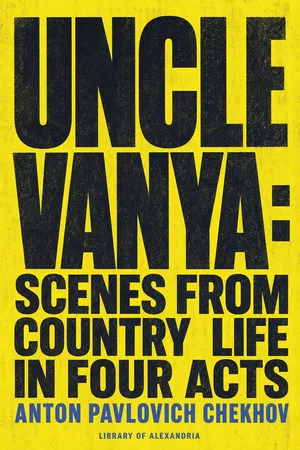
What happens when years of sacrifice begin to look like years thrown away? On a quiet Russian estate, disappointed hopes turn everyday conversation into a reckoning.
Anton Chekhov's Uncle Vanya brings together a household unsettled by the arrival of Professor Serebryakov and his young wife, Yelena. Vanya and his niece Sonya have worked to support the estate, but the professor's presence exposes old resentments and painful doubts. Vanya is drawn to Yelena, while Sonya loves Astrov, a country doctor whose exhaustion has not extinguished his concern for the natural world.
Across four acts, desire, jealousy, and wounded pride break through the routines of rural existence. Chekhov finds drama in awkward exchanges, failed connections, and the distance between what people hoped to become and what they are. Moving between bitterness and comedy, the play asks how anyone can go on when love is unanswered and meaningful work seems unrewarded. Its emotional precision keeps those questions close to home.
What readers find inside:
- Duty and resentment - Vanya confronts the personal cost of years spent serving another man's reputation.
- Unanswered love - Sonya, Vanya, Astrov, and Yelena reveal the loneliness of desires that do not align.
- A threatened landscape - Astrov's concern about disappearing forests connects human carelessness with damage to the earth.
- Comedy beside sorrow - Everyday absurdities interrupt the household's anguish without making its disappointments less real.
- Work and endurance - Sonya's resolve offers a moving response to suffering that cannot simply be put right.
This play will appeal to readers of Russian literature, theatre lovers drawn to psychological realism, and anyone interested in the tensions between family obligation and personal longing.
Enter Chekhov's restless household and discover how much can be at stake in an apparently ordinary day.