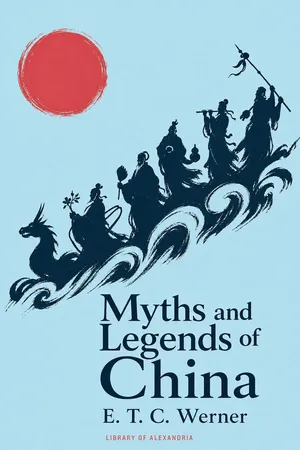
How did heaven and earth begin, and what connects human lives to the realm of spirits? Chinese mythology answers with stories of cosmic giants, immortal sages, warrior gods, and powers that govern the unseen world.
In Myths and Legends of China, sinologist and diplomat E. T. C. Werner brings together traditional narratives and an exploration of the beliefs behind them. Creation figures such as P'an Ku and Nu Kua appear alongside Hou Yi the archer, Kuan Ti the god of war, and the immortals of Taoist tradition. Their stories reveal a world in which nature, moral conduct, ancestral reverence, and supernatural authority are closely connected.
More than a sequence of tales, the book considers the cultural framework that gives these figures meaning. The heavens have their own administration; spirits influence earthly affairs; and the pursuit of immortality joins spiritual discipline to the hope of transcending ordinary life. As a classic Western study of Chinese traditions, Werner's account also offers a historical perspective on how this rich body of folklore was presented to English-speaking readers.
What readers find inside:
- Cosmic beginnings - Stories of P'an Ku, Nu Kua, and celestial powers explore the origins and ordering of the world.
- Immortal sages - Taoist figures embody quests for transcendence, wisdom, and a life beyond human limits.
- Heroes and warrior gods - Hou Yi and Kuan Ti connect extraordinary deeds with ideals of courage and moral duty.
- Ghosts and spirits - Encounters with supernatural beings reveal beliefs about death, justice, and the afterlife.
- A celestial hierarchy - The divine bureaucracy links heavenly authority with weather, human conduct, and destiny.
This book will appeal to readers of world mythology, enthusiasts of Chinese folklore, and anyone interested in the relationship between storytelling and religious belief.
Step into a world where the heavens mirror earthly life and every encounter with the supernatural carries human meaning.