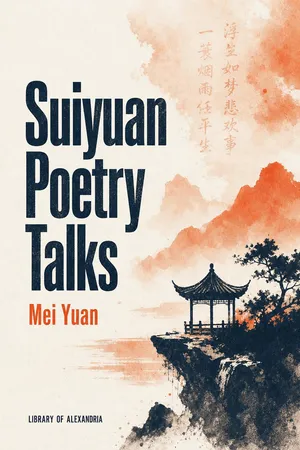
What makes a poem memorable: polished technique, a fresh image, or the feeling behind its words? Yuan Mei brings wit and independent judgment to a question every reader and writer of verse can share.
In Suiyuan Poetry Talks, the Qing dynasty poet and scholar considers the art of poetry through reflections, observations, and commentary on poets across generations. His discussions reach from celebrated figures such as Li Bai, Du Fu, Wang Wei, and Su Shi to lesser-known contemporaries, bringing literary judgment into contact with the pleasures of reading.
At the heart of the work is an interest in individual feeling and expression. Yuan Mei examines originality, inspiration, technical skill, and poetic taste without reducing the life of a poem to rules alone. Nature, imagery, and sincerity become ways of thinking about how language carries experience. His conversational approach makes this a rewarding encounter with Chinese literary aesthetics-and a continuing challenge to anyone who confuses correct composition with living verse.
What readers find inside:
- The individual voice - Reflections explore the place of personal emotion and originality in poetic expression.
- Poets across generations - Commentary connects renowned classical writers with voices from Yuan Mei's own literary world.
- Craft and inspiration - Observations consider how technical ability and creative impulse contribute to a poem's effect.
- Nature and imagery - Discussions reveal the importance of natural subjects and evocative language in Chinese poetics.
- The judgment of taste - Candid, sometimes humorous assessments invite readers to ask why particular lines succeed.
This work will appeal to readers of classical Chinese literature, poets thinking about their own practice, and anyone curious about the relationship between art and feeling. It offers both a historical perspective on literary judgment and questions that remain useful whenever we read or write.
Enter Yuan Mei's literary conversation and consider what gives a poem a voice of its own.