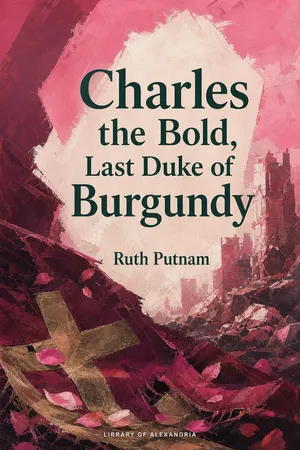
He inherited wealth and powerful territories. His ambition was to turn them into a kingdom-and his pursuit helped reshape Europe.
In Charles the Bold, Last Duke of Burgundy, Ruth Putnam follows the life of the fifteenth-century Valois ruler whose ambitions challenged the balance of power between France and the Holy Roman Empire. Charles sought to unite his possessions into a stronger realm, using diplomacy, alliances, and war to pursue a vision that brought formidable enemies into his path.
This historical biography places the man within the political world that shaped him: a wealthy Burgundian court, competing dynastic interests, and the struggle to transform inherited lands into lasting authority. From courtly splendor to the disastrous Burgundian Wars, his career exposes the distance between a ruler's intentions and his ability to command events. His downfall makes this more than a story of personal ambition; it is a window onto a turning point in European power.
What readers find inside:
- A ruler's ambitions - Charles's pursuit of a kingdom drives a life defined by expansion and conflict.
- Burgundian court life - Wealth, refinement, and dynastic prestige form the backdrop to political struggle.
- Diplomacy and rivalry - Relations with France and the Holy Roman Empire reveal the pressures surrounding his territories.
- The Burgundian Wars - Catastrophic campaigns bring the risks of relentless military ambition into focus.
- A changing Europe - The collapse of Charles's plans helps explain the shifting fortunes of Burgundy and its neighbors.
For readers of medieval European history, royal biography, and the history of leadership, Putnam offers a life in which character and politics are inseparable. It is an absorbing subject for anyone drawn to the fragile foundations of dynastic power.
Enter the world of late medieval Burgundy and follow one ruler's costly pursuit of a kingdom.