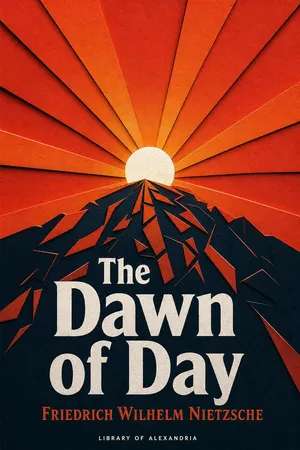
What if our deepest moral convictions have a history rather than an unquestionable authority? Nietzsche asks us to look beneath what we call good and discover the habits, fears, and desires that sustain it.
First published in 1881, The Dawn of Day explores morality through a sequence of philosophical aphorisms. Rather than build a single, orderly system, Friedrich Nietzsche approaches his subject through brief observations, psychological inquiries, and sustained challenges to accepted beliefs. Religion, conscience, custom, reason, and suffering become occasions for asking how human beings learned to value as they do.
At the heart of the book is a suspicion of moral judgments that conceal their own origins. Nietzsche examines the force of inherited habits, the motives behind apparently selfless conduct, and the authority granted to religious explanations. His shifting perspectives ask readers to linger over a claim, test its assumptions, and resist the comfort of a ready answer. An important stage in his philosophical development, this work remains compelling for its attention to the distance between the reasons people give and the impulses that move them.
What readers find inside:
- Moral Origins - Inquiries into how customs and inherited judgments acquire the force of obligation.
- Religion and Belief - Challenges to religious authority and the emotional needs that help sustain conviction.
- Human Motives - Psychological observations that unsettle simple accounts of virtue, intention, and selflessness.
- Suffering and Knowledge - Reflections on pain, inquiry, and the costs of questioning familiar explanations.
- Aphoristic Thinking - Compact arguments and sudden changes of perspective that reward careful, reflective reading.
This book will appeal to readers of moral philosophy, those interested in the psychology of belief, and anyone exploring Nietzsche beyond his most familiar sayings. Its questions offer a demanding companion for examining the assumptions behind everyday judgments.
Begin with one aphorism and let it open a wider inquiry into what you believe and why.