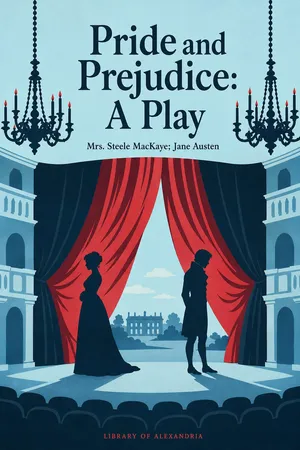
A sharp wit can expose another person's faults-and conceal one's own. Elizabeth Bennet and Mr. Darcy bring their memorable clash of temperaments to the stage in this dramatic adaptation of a beloved romance.
Mrs. Steele MacKaye's Pride and Prejudice: A Play draws on Jane Austen's novel to turn its social tensions and romantic misunderstandings into dramatic action. Elizabeth's independence and Darcy's reserve stand at the heart of a story in which first impressions are powerful, marriage carries social consequences, and affection must contend with mistaken judgments.
The theatrical form gives particular emphasis to encounters between characters: what they say, what they assume, and what they fail to understand. Wit and emotional tension work together as questions of class, reputation, and personal character complicate the possibility of love. For readers who know the novel, the script offers another way to encounter its central relationships; for those drawn to drama, it brings a familiar literary world into the immediacy of spoken exchange.
What readers find inside:
- Elizabeth Bennet - Her intelligence and independent spirit challenge the expectations surrounding courtship.
- Mr. Darcy - His reserved manner makes the relationship between appearance and character a central concern.
- Romantic misunderstanding - Assumptions and wounded feelings complicate the growing connection between the central characters.
- Class and marriage - Social standing and the pressure to marry shape the world of the story.
- Theatrical dialogue - Spoken exchanges carry the adaptation's humor, conflict, and emotional momentum.
This play will appeal to Austen readers curious about adaptation, lovers of romantic comedy, and actors or drama students interested in the passage from novel to stage.
Step into a world of pointed conversation and uncertain affections, where learning to judge more fairly may change everything.