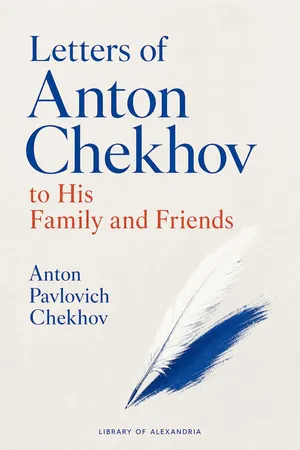
What does a writer notice when he is not writing stories? For Chekhov, the ordinary business of living offers endless occasions for humor, compassion, and clear-eyed thought.
Letters of Anton Chekhov to His Family and Friends brings readers into the personal world of the Russian playwright, short story writer, and physician. Addressing those closest to him, Chekhov discusses his work, health, travels, and daily concerns with a directness that makes the distance between his century and ours seem surprisingly small. Affection and irritation, artistic doubts and practical obligations share the page.
The correspondence follows a literary life rooted in more than literature. Medicine brings Chekhov into contact with suffering; writing demands close observation and resistance to easy sentiment. His accounts of places including Moscow, Yalta, and Sakhalin open a window onto Russian life, while reflections on publishing, criticism, and fellow writers illuminate the working world behind the stories and plays. These letters endure not simply for what they tell us about a famous author, but for their humor, restraint, and attention to other people.
What readers find inside:
- The working writer - Reflections on composition, publishing, and criticism reveal the practical pressures of a literary career.
- Medicine and compassion - A physician's experience informs observations of illness, suffering, and mortality.
- Private relationships - Personal exchanges reveal affection, vulnerability, and the demands of maintaining close ties.
- Russian places and society - Travels and everyday observations bring the world surrounding Chekhov's work into view.
- Wit and restraint - Wry humor and an unpretentious voice give ordinary concerns lasting literary interest.
This collection will appeal to readers of Russian literature, writers curious about the habits and judgments behind great fiction, and anyone drawn to intimate accounts of a life devoted to both people and art.
Begin with these personal exchanges and discover the observant, humane voice beyond the stage and the story.