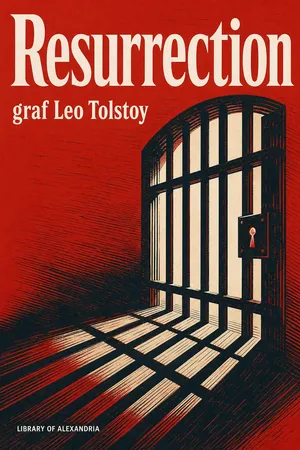
He has come to court to judge a stranger. Instead, he must confront the life he helped destroy.
In Resurrection, Leo Tolstoy's final novel, Prince Dmitri Nekhlyudov serves on a jury and recognizes the accused, Katyusha Maslova, as the young woman he once seduced and abandoned. The encounter breaks through his comfortable existence as a Russian aristocrat. Determined to help her, he begins to examine not only his own conduct but also the institutions that punish the vulnerable while protecting the privileged.
From courtrooms and prisons to the journey toward Siberia, Tolstoy brings private remorse into conflict with public injustice. Nekhlyudov's desire to make amends is tested by the distance between good intentions and meaningful responsibility. Maslova, meanwhile, is more than an occasion for his awakening: her suffering, distrust, and choices challenge his understanding of what he owes her. The novel's scrutiny of class power, religious hypocrisy, and legal cruelty gives its central question lasting force: can a changed conscience become a changed life?
What readers find inside:
- A fateful recognition - A jury summons brings Nekhlyudov face to face with a woman whose past is inseparable from his own.
- Justice under examination - Courts and prisons reveal the gulf between legal procedure and human dignity.
- The burden of privilege - An aristocrat questions the wealth, habits, and social protections he once accepted.
- Redemption without shortcuts - Remorse leads to difficult questions about responsibility, compassion, and the limits of making amends.
- Spiritual searching - Tolstoy tests outward religious observance against the demands of an ethical life.
For readers of Russian classics, fiction about social injustice, and searching stories of moral transformation, this is a novel that joins intimate human conflict with an unsparing view of society.
Enter Tolstoy's world of judgment and conscience, and follow a reckoning that reaches far beyond the courtroom.