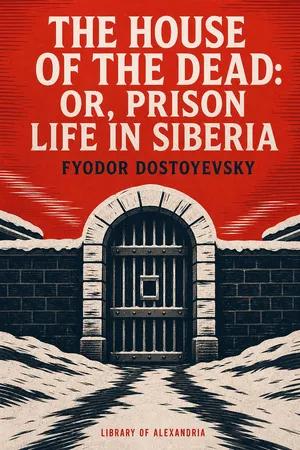
What remains of a person when almost everything has been taken away? Behind the walls of a Siberian penal colony, Dostoyevsky finds cruelty and despair-but also stubborn, unexpected signs of humanity.
Drawing on his own years of imprisonment, Fyodor Dostoyevsky blends memoir and fiction in The House of the Dead: Or, Prison Life in Siberia. Through the observations of a convict narrator, he portrays a nineteenth-century Russian prison world shaped by forced labor, harsh discipline, confinement, and the difficult relationships among men compelled to live together.
Rather than building toward a single dramatic revelation, the book gathers its force through encounters, recollections, and closely observed routines. Prisoners emerge as individuals with histories, vanities, grievances, and capacities for kindness that no sentence can fully explain. Dostoyevsky neither excuses violence nor allows the people who commit it to become mere labels. His attention to suffering and the psychology of captivity makes this an enduring challenge to easy judgments about guilt, justice, and moral worth.
What readers find inside:
- A world of confinement - Daily routines and forced labor reveal how captivity reshapes ordinary experience.
- Individual portraits - The men around the narrator resist any simple division between monsters and victims.
- Power and punishment - Harsh discipline exposes the distance between legal authority and human justice.
- Unexpected compassion - Moments of generosity and fellowship interrupt an atmosphere of suspicion and suffering.
- Psychological insight - Pride, shame, loneliness, and hope become central to the struggle to preserve a sense of self.
This book will appeal to readers of Russian classics, psychologically searching fiction, and literature concerned with punishment and human dignity. Its blend of personal experience and imaginative storytelling offers a searching encounter with people too often seen only through their crimes.
Enter Dostoyevsky's world of captivity and discover the lives that persist beyond society's judgment.