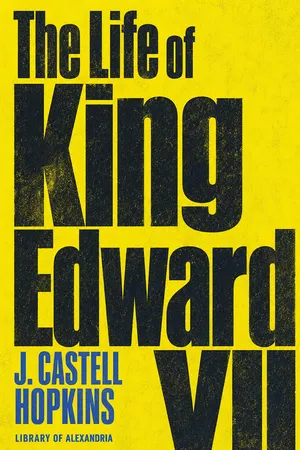
A crown confers rank, but personality gives it influence. Edward VII's story reveals how charm, ceremony, and social connections could become instruments of royal power.
In The Life of King Edward VII, J. Castell Hopkins follows the monarch from his royal upbringing through his long years as Prince of Wales to his comparatively brief reign. The eldest son of Queen Victoria, Edward spent decades in public view before succeeding to the throne in 1901. His story bridges the Victorian court and the changing world of early twentieth-century Britain, where inherited traditions met new political and social pressures.
Hopkins explores the relationship between Edward's private character and public position: his taste for society, his influence on fashion and culture, and his use of personal relationships and ceremonial prestige in diplomacy. The result is a portrait of monarchy exercised not simply through formal authority, but through visibility, manners, and international encounters. For readers today, it offers a historical perspective on the enduring importance of public image and personal influence in national affairs.
What readers find inside:
- Royal upbringing - Edward's childhood and youth provide the starting point for understanding his later character.
- Years of waiting - His long position as Prince of Wales brings the opportunities and constraints of royal status into focus.
- Society and style - His interests in art, fashion, and social life connect the court with wider British culture.
- Diplomatic influence - State visits, personal connections, and ceremony reveal the international role of the sovereign.
- A changing monarchy - His reign shows royal tradition adapting to the pressures of a new century.
This biography will appeal to readers of British royal history, those interested in Victorian and Edwardian society, and anyone curious about the human character behind a ceremonial office.
Step into Edward's world and discover the personal influence behind the royal image.