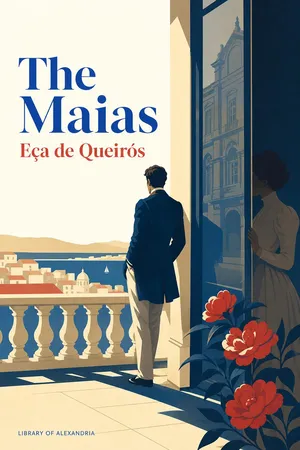
A family can survive exile, grief, and political upheaval. But can it survive the truth about itself?
In The Maias, Eça de Queirós brings three generations of a Portuguese family into a richly observed portrait of nineteenth-century Lisbon. Afonso da Maia settles into the Ramalhete mansion with his grandson Carlos, a young physician whose intelligence and charm promise a distinguished future. Around them, fashionable society moves through dinners, horse races, literary disputes, and debates about a nation whose ambitions rarely become action.
When Carlos falls in love with the elegant Maria Eduarda, their attachment seems to offer something more substantial than the pleasures of his privileged circle. Yet a history of separation and deception shadows their happiness. Moving between intimate feeling and biting social comedy, the novel reveals how little its characters understand the foundations of their own lives. Its enduring power lies in that double vision: tenderness toward human hopes, and an unsparing eye for the illusions that undo them.
What readers find inside:
- Three generations - The Maia family's history links private sorrow with Portugal's political and social changes.
- Forbidden desire - Carlos and Maria Eduarda's love gathers emotional force beneath the weight of an unknown past.
- Lisbon society - Drawing rooms, dinner tables, and race meetings reveal a world of wit, vanity, and frustrated ambition.
- Memorable companions - Afonso's dignity and Ega's sardonic brilliance offer contrasting perspectives on Carlos and his choices.
- Realism and tragedy - Ordinary habits, missed possibilities, and self-deception become the material of devastating consequences.
For readers of European classics, multigenerational family stories, and social satire, this novel offers both the sweep of a society in view and the closeness of a deeply personal loss.
Enter the Ramalhete and discover the hopes, secrets, and desires that bind a family together.