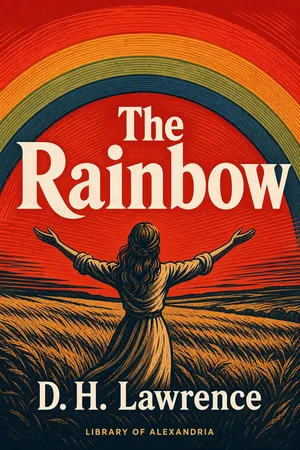
How much of yourself can you give to love-and still remain your own person?
Set in the English Midlands, D. H. Lawrence's The Rainbow follows three generations of the Brangwen family as rural traditions meet an increasingly industrial world. From Tom Brangwen and Lydia to Anna and Will, and finally to Ursula, each generation renews the struggle between the longing for intimacy and the need for an independent life.
Marriage, faith, work, and sexual desire become the grounds on which these characters test who they are and what they want. Ursula's search for a life beyond inherited expectations gives the novel a particularly urgent focus. First published in 1915 and prosecuted for obscenity, The Rainbow challenged the moral boundaries of its time. Its lyrical attention to landscape and bodily experience, together with its unsparing treatment of relationships, continues to make its questions feel personal rather than remote.
What readers find inside:
- Three generations - The Brangwens' changing hopes and conflicts reveal both the strength and the constraints of family inheritance.
- Love and autonomy - Intimate relationships expose the tension between emotional connection and the desire to remain a separate self.
- Ursula's search - A questioning young woman seeks meaning and independence beyond the roles laid out for her.
- England in transition - Rural life, industrial change, and shifting expectations shape the family's experience across generations.
- Faith and desire - Religious feeling and sensual experience inform the characters' attempts to find fulfillment.
This novel will appeal to readers of multigenerational family stories, psychologically searching fiction, and classics concerned with women's lives and independence.
Enter the Brangwens' world and follow their restless search for love, meaning, and a life of their own.