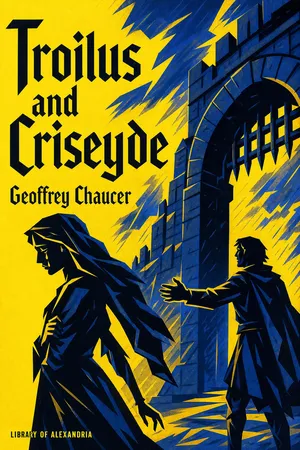
What can lovers promise when war makes their future impossible to know? In besieged Troy, a secret romance becomes a searching test of trust, loyalty, and hope.
Geoffrey Chaucer's Troilus and Criseyde tells the story of Troilus, a Trojan prince, and Criseyde, a widow whose father has gone over to the Greeks. With the help of her uncle Pandarus, Troilus wins her affection, and their love grows in secrecy. But when a prisoner exchange sends Criseyde to the Greek camp, private happiness gives way to the demands of war-and promises must survive distance, uncertainty, and competing loyalties.
Written in the fourteenth century, this narrative poem brings the ideals of medieval courtly love into the world of the Trojan War. Chaucer attends closely to hesitation, persuasion, longing, and self-deception, allowing his lovers to emerge as complicated people rather than simple emblems of faithfulness or betrayal. Questions of fate and choice run through their story, while the narrator's sympathy and irony keep its moral judgments unsettled. The result is a tragedy that asks not only why love fails, but how well anyone can understand another heart.
What readers find inside:
- A secret courtship - Troilus and Criseyde pursue an intimate bond within a city under siege.
- Pandarus's persuasion - Criseyde's uncle acts as an intermediary whose ingenuity raises questions about friendship and manipulation.
- Love across enemy lines - A prisoner exchange places political necessity in direct conflict with personal devotion.
- Fortune and choice - The lovers' changing circumstances test the power of human promises against events beyond their control.
- Psychological depth - Desire, fear, hope, and divided loyalty complicate any easy judgment of the characters.
This poem will appeal to readers of medieval literature, lovers of tragic romance, and anyone drawn to stories in which public conflict transforms private lives.
Enter Chaucer's Troy and follow a love whose uncertainties remain painfully familiar.