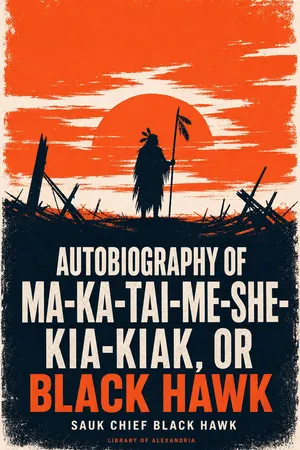
What does the loss of a homeland look like to the people forced to leave it? A Sauk leader's account places that question at the heart of American history.
First published in 1833, Autobiography of Ma-ka-tai-me-she-kia-kiak, or Black Hawk is a dictated memoir of early life, community, warfare, and displacement. Black Hawk describes the customs and values of the Sauk people and the mounting tensions between Indigenous nations and an expanding United States. His attachment to his homeland gives the narrative its emotional force: land is not merely territory, but a place of memory, belonging, and obligation.
The account turns to the causes and consequences of the Black Hawk War of 1832, presenting the conflict from the perspective of a leader who lived through it. Alongside the events of war are reflections on loyalty, injustice, defeat, and exile. The memoir has lasted because it challenges readers to look beyond accounts of settlement and conquest and consider whose experiences shape the historical record. Its personal voice makes a distant conflict immediate without separating it from the life of a people.
What readers find inside:
- Sauk Life - Recollections of customs, beliefs, and community reveal the values behind the narrator's choices.
- A Contested Homeland - The struggle over land shows the collision between Indigenous belonging and American expansion.
- The War of 1832 - A participant's account explores the conflict's origins and devastating consequences.
- Leadership and Loyalty - Personal reflections connect public decisions with duties to family, people, and place.
- Loss and Memory - Defeat and displacement become part of a larger effort to preserve a people's story.
This memoir will appeal to readers of Native American history, students of the nineteenth-century United States, and anyone drawn to personal narratives that question familiar versions of the past.
Begin this enduring account and encounter the struggle for a homeland through the voice of one of its defenders.