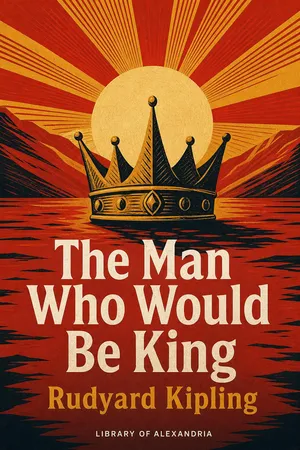
Two adventurers want a kingdom. What happens when the people they hope to rule believe they are more than human?
In Rudyard Kipling's The Man Who Would Be King, Daniel Dravot and Peachey Carnehan leave British India with an audacious plan: travel to Kafiristan and make themselves rulers. Armed with confidence, cunning, and military experience, they turn an improbable scheme into a dangerous reality. But worldly ambition becomes something far harder to control when authority is entangled with religious belief.
Told through a frame narrative that gives the adventure the unsettling force of a survivor's testimony, this short work moves from bold promises to the consequences of overreaching. Kipling combines the momentum of an expedition story with a searching portrayal of loyalty, self-deception, and imperial arrogance. The remote setting and extraordinary premise draw readers in; the changing relationship between the two men gives the tale its human weight. Its enduring question is not simply how power is seized, but what happens when those who possess it begin to believe their own inventions.
What readers find inside:
- An audacious pact - Dravot and Carnehan bind themselves to a shared plan to become rulers beyond British control.
- Empire's frontier - The journey to Kafiristan places colonial ambition in a setting the adventurers do not fully understand.
- Power and belief - Political authority becomes perilous when the men's ambitions collide with local religious expectations.
- Friendship under strain - Companionship and loyalty face the pressures created by success and unequal desires.
- Pride and consequence - The story traces the distance between a daring dream and a destructive illusion.
A compelling choice for readers of classic adventure, short literary fiction, and stories that question the promises and costs of empire.
Follow Dravot and Carnehan beyond the familiar map and into a scheme whose greatest danger is their own belief in it.