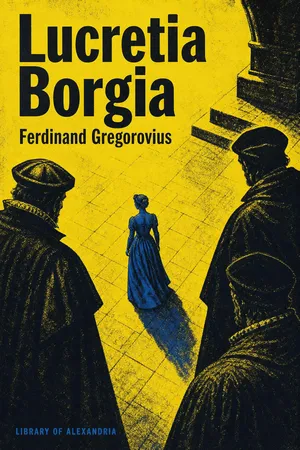
Her name became a byword for scandal. But how much of her reputation belongs to the woman herself, and how much to the enemies of her family?
In Lucretia Borgia, Ferdinand Gregorovius examines one of Renaissance Italy's most disputed lives. Daughter of Pope Alexander VI and sister of Cesare Borgia, Lucretia stood at the intersection of family ambition, papal authority, and dynastic marriage. Moving through the worlds of Rome and Ferrara, this historical biography places her life within the courts and political alliances that shaped her choices.
Drawing on letters, diplomatic correspondence, papal records, and contemporary accounts, Gregorovius tests inherited accusations against historical evidence. His portrait looks beyond the familiar figure of poison and intrigue to consider a cultured woman whose public identity was inseparable from her family's power. The result invites readers to weigh rumor against documentation and to ask how a notorious reputation takes hold-and why it endures.
What readers find inside:
- Legend and evidence - The biography examines the distance between sensational accusations and the surviving historical record.
- A powerful family - Alexander VI and Cesare Borgia illuminate the political pressures surrounding Lucretia's life.
- Renaissance courts - Rome and Ferrara provide settings where culture, status, and diplomacy were closely intertwined.
- Marriage and alliances - Lucretia's position reveals how noblewomen's lives could serve the ambitions of ruling families.
- A disputed reputation - Gregorovius considers the human being obscured by centuries of scandal and dramatic retelling.
For readers of Renaissance history, biographies of influential women, and accounts of papal politics, this is a chance to approach a familiar name with a more questioning eye.
Step into Renaissance Italy and discover the life behind the legend.