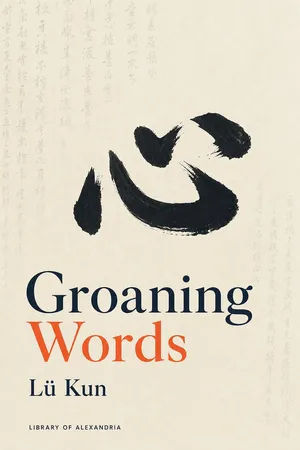
Knowing what is right is not the same as doing it. For Lü Kun, that stubborn gap is where the work of moral life begins.
Written by a senior official of the Ming dynasty, Groaning Words brings Chinese moral philosophy into the intimate territory of illness, frustration, and unfinished self-improvement. Over thirty years, Lü Kun recorded reflections prompted by pain, insight, and self-reproach. His short, concentrated passages examine character without pretending that their author has mastered the lessons he offers.
Rooted in Confucian self-cultivation, the work ranges from the wandering mind and the dangers of self-deception to family duties, friendship, and the exercise of authority. Lü Kun considers both the principles underlying human nature and the practical question of correcting another person without humiliation. Stillness, sincerity, and genuine care recur throughout: virtue must be practiced rather than displayed, and governing well requires more than administrative skill. The result is a searching encounter with questions that remain urgent wherever people hold responsibility for others.
What readers find inside:
- The examined mind - Reflections probe distraction, self-deception, and the discipline needed to recognize one's own failings.
- Character in practice - Moral understanding is tested against conduct, habit, and the difficulty of changing oneself.
- Family and friendship - Duties to parents, children, siblings, and friends reveal the everyday demands of ethical relationships.
- Power and responsibility - Public office becomes a test of sincere concern for others rather than the outward performance of virtue.
- Philosophical candor - Brief passages connect questions of human nature and principle with the author's admissions of continuing struggle.
For readers of Chinese philosophy, lovers of moral aphorisms, and those drawn to the reflective writings of Marcus Aurelius or Montaigne, this work offers a different tradition of rigorous self-questioning. It also speaks to anyone thinking seriously about leadership and personal responsibility.
Begin with a single reflection and consider what it asks of your own daily actions.