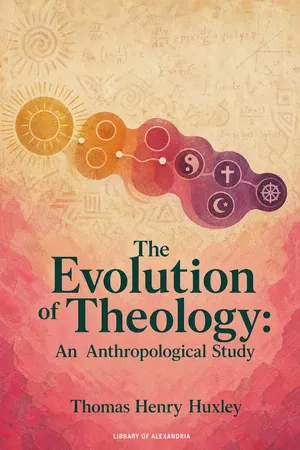
What happens when religious beliefs are examined as part of human history rather than as truths outside it? Thomas Henry Huxley brings that question to the development of theology.
In The Evolution of Theology: An Anthropological Study, Huxley considers how religious ideas arise and change within human societies. His approach places early beliefs and later doctrines within the same field of inquiry, asking how culture, experience, and intellectual development shape what people believe about the spiritual world.
Writing amid the Victorian debates over science and religious authority, Huxley treats theology as a subject for comparison and critical investigation. Early mythologies, tribal beliefs, and changing moral ideas become evidence in an argument about the human origins of religious thought. The essay remains engaging not because it settles every question, but because it asks readers to examine the assumptions behind inherited convictions-and to consider what historical explanation can and cannot tell us about faith.
What readers find inside:
- Religion in human culture - Beliefs are considered in relation to the societies in which they develop.
- Early spiritual ideas - Huxley examines older forms of belief as part of the history of theological thinking.
- Changing doctrines - The argument challenges the view that religious systems stand apart from historical change.
- Morality and belief - The essay considers connections between evolving ethical ideas and religious thought.
- Science and authority - Huxley's critical method raises enduring questions about evidence, tradition, and the grounds of conviction.
This work will appeal to readers of comparative religion, students of anthropology and intellectual history, and anyone interested in the long conversation between scientific inquiry and faith.
Begin Huxley's inquiry and consider religious thought from a different historical perspective.