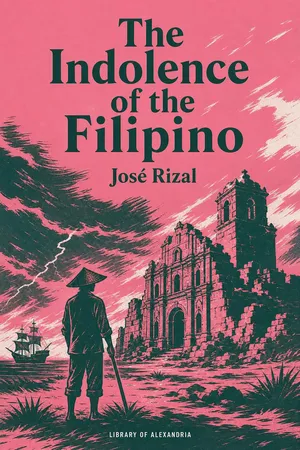
What if a people's supposed laziness is not a trait, but the consequence of how they are governed?
First published in 1890, José Rizal's The Indolence of the Filipino confronts a stereotype used to justify Spanish colonial rule in the Philippines. Rather than accept an accusation about national character, Rizal examines the conditions shaping daily life: damaged industries, restricted enterprise, discouraged education, and the fear produced by colonial power.
His argument moves the debate from inherited prejudice to historical and economic causes. What incentive is there to work when effort brings little security or reward? How can a society prosper when its people lack the opportunity to develop their abilities? By connecting productivity with dignity, education, and just government, Rizal makes a case for reform and national renewal. The essay remains a searching contribution to discussions of colonialism, racial stereotypes, and the ways institutions can limit human potential.
What readers find inside:
- A stereotype challenged - Rizal questions the claim that idleness is an inborn characteristic of Filipinos.
- Colonial economics - The essay considers how the disruption of industry and native enterprise undermines productive work.
- Power and opportunity - Political and religious conditions become part of an inquiry into the causes of social stagnation.
- Education and reform - Rizal presents learning and national unity as foundations for renewed confidence and progress.
- Identity and dignity - A defense of a maligned people becomes an argument for recognizing their capacity to shape their future.
This work will appeal to readers of Philippine history, students of anticolonial thought, and anyone interested in how prejudice turns unequal conditions into judgments about an entire people.
Begin this incisive essay and follow Rizal's challenge to look beyond the accusation to the system behind it.