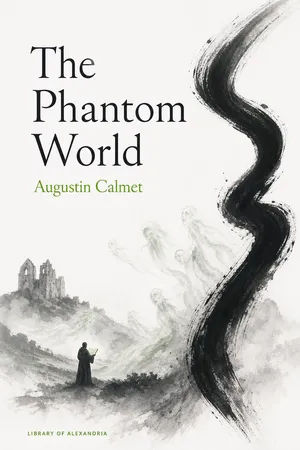
What should we believe when witnesses report encounters with the dead? Ghosts, vampires, and apparitions put faith, testimony, and reason to the test in this remarkable eighteenth-century inquiry.
In The Phantom World, Benedictine scholar Augustin Calmet gathers accounts of spirits, haunted places, demonic possession, and the restless dead. His investigation includes the notorious vampire reports of Eastern Europe, where stories of returning corpses raised unsettling questions about death and the limits of explanation. Rather than treating every report as either proof or nonsense, he examines the claims through religious learning, historical accounts, and the evidence offered by witnesses.
The result is more than a collection of eerie tales. It is a record of how people tried to understand experiences that seemed to challenge ordinary life and Christian teaching alike. Calmet's willingness to place extraordinary testimony under scrutiny gives the book its lasting interest: readers encounter not only supernatural beliefs, but also the difficult business of deciding whom to trust, what counts as evidence, and where certainty ends.
What readers find inside:
- Ghosts and apparitions - Reports of spectral encounters reveal the persistent questions people have asked about the presence of the dead.
- Vampires and revenants - Accounts from Eastern Europe explore fears surrounding bodies believed to return from the grave.
- Possession and spirits - Discussions of demonic activity show how supernatural claims intersected with religious belief.
- Faith and reason - Calmet weighs extraordinary reports against theology and the demands of careful judgment.
- Folklore and testimony - Historical narratives and witness accounts preserve a rich picture of beliefs about the unseen.
For readers of ghost lore, students of religious history, and anyone curious about the roots of vampire traditions, this work offers a compelling meeting of unsettling stories and serious inquiry.
Enter Calmet's investigation and consider the evidence that kept the unseen so vividly present.