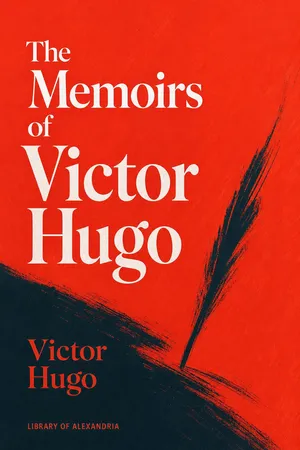
What happens when a writer's conscience brings him into conflict with power? These memoirs reveal a life in which literature, political conviction, and personal experience cannot be separated.
In The Memoirs of Victor Hugo, the poet, playwright, and novelist reflects on the experiences and beliefs that shaped his public and private life. From childhood in post-revolutionary France to literary fame and exile, his recollections bring together the concerns of an artist and those of a citizen. The imagination behind Les Misérables and The Hunchback of Notre-Dame emerges alongside a persistent concern for justice, liberty, and human dignity.
Rather than offering only a sequence of milestones, the work makes room for reflection on memory, creativity, loss, and moral duty. Hugo's opposition to capital punishment and sympathy for the poor connect his personal convictions with the larger conflicts of nineteenth-century France. His experiences invite a question that remains urgent: what responsibility does a writer bear toward the society in which he lives?
What readers find inside:
- A literary life - Recollections explore the relationship between lived experience and creative work.
- France in upheaval - Personal memories unfold against a background of political change and public conflict.
- The experience of exile - Banishment becomes a lens through which to consider belonging, conviction, and artistic purpose.
- A social conscience - Reflections on poverty, punishment, and human rights illuminate Hugo's commitment to justice.
- Private feeling - Grief and introspection reveal the human concerns behind a celebrated public voice.
For readers of literary autobiography, students of nineteenth-century French culture, and admirers of Hugo's fiction, these memoirs offer a personal way into the ideas that animated his life and writing.
Begin reading and encounter the writer where memory, imagination, and conscience meet.