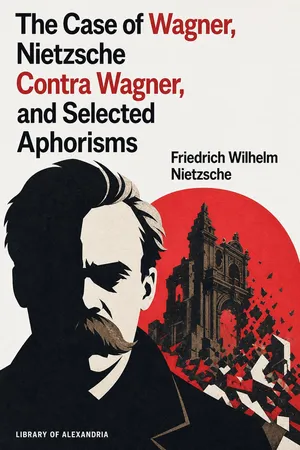
Can great art be bad for us? Nietzsche turns his break with Richard Wagner into a fierce inquiry into music, morality, and the values a culture chooses to admire.
In The Case of Wagner and Nietzsche Contra Wagner, a former admirer challenges the composer whose operas had once helped shape his hopes for art. Nietzsche attacks what he sees as theatrical excess, emotional manipulation, and decadence in Wagner's music and ideals. His target is more than one artist: it is a way of listening, judging, and living that mistakes overwhelming sensation for strength.
Personal disillusionment gives these writings their heat, but their questions reach beyond the quarrel. What makes art life-affirming? When does beauty become an escape from reality? How do artistic tastes express moral commitments? Alongside the two critiques, selected aphorisms extend the inquiry into art, power, morality, and the individual. By turns sarcastic, provocative, and searching, Nietzsche makes aesthetic judgment a test of cultural health-and asks readers to examine their own pleasures as closely as their beliefs.
What readers find inside:
- A broken allegiance - Nietzsche reassesses an artist he once admired and challenges the ideals behind that admiration.
- Music and decadence - Wagner's art becomes the focus of an argument about exhaustion, excess, and cultural decline.
- The power of theater - Nietzsche questions the emotional effects of artistic spectacle and the authority it can command.
- Art and morality - The critiques explore whether aesthetic experience strengthens life or encourages retreat from it.
- Concentrated provocations - Selected aphorisms bring pointed reflections on power, values, and individuality into the discussion.
For readers of German philosophy, lovers of opera and music criticism, and anyone drawn to arguments about art's influence on everyday life, these writings offer a demanding and deeply personal encounter.
Enter the quarrel and consider what your own response to art reveals about the values you live by.