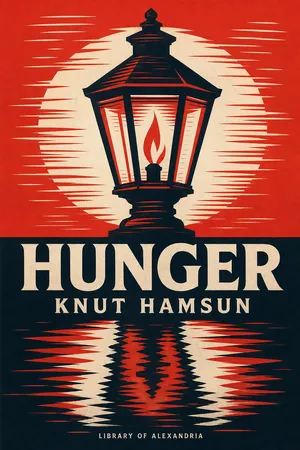
He needs food, but pride keeps getting in the way. For an unnamed writer on the streets of Kristiania, every encounter becomes a test of dignity, invention, and survival.
First published in 1890, Knut Hamsun's Hunger follows a struggling writer through the Norwegian city now known as Oslo. He tries to earn money from his writing while enduring the physical and mental effects of going without food. His thoughts dart between grand ambitions and humiliating necessities, sudden generosity and bursts of anger. Even when help seems possible, his own impulses can make it difficult to accept.
The novel's force lies in the intimacy of its narration. We experience the city through a consciousness made increasingly unstable by deprivation, where ordinary exchanges take on extraordinary emotional weight. Interior monologue, shifting moods, and unsettling flashes of humor bring the reader close to a man who can observe himself sharply yet cannot reliably govern his actions. A landmark of psychological fiction and early modernism, Hunger still challenges easy assumptions about poverty, artistic ambition, and the stories people tell themselves to endure.
What readers find inside:
- An unnamed narrator - A would-be writer reveals his contradictions through an intensely personal first-person voice.
- A city of encounters - Kristiania's streets provide the setting for moments of hope, embarrassment, isolation, and conflict.
- Pride against necessity - The desire to preserve dignity repeatedly collides with the urgent demands of the body.
- A mind under strain - Starvation shapes the narrator's perceptions, moods, and increasingly unpredictable behavior.
- The cost of creation - Literary ambition persists even as the practical conditions needed to sustain it fall apart.
For readers of psychological classics, early modernist fiction, and stories of artists struggling at society's margins, this is an intimate and disquieting encounter with human vulnerability.
Step into Kristiania and follow a voice that makes the struggle to survive impossible to ignore.