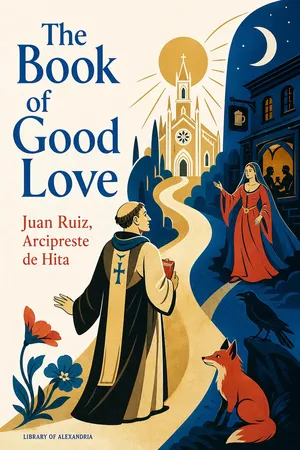
When sacred ideals meet earthly desire, even a moral lesson can become a comic adventure.
Written in fourteenth-century Castile, Juan Ruiz's The Book of Good Love follows an archpriest's amorous misadventures through a lively mixture of storytelling, fables, lyric songs, and satire. With the resourceful go-between Trotaconventos as a central figure, courtship becomes an occasion to explore vanity, appetite, persuasion, and the gap between what people preach and what they do.
At the poem's heart lies the contrast between love directed toward God and the foolish desire that leads people astray. Yet its humor and sympathy for human weakness resist a simple moral verdict. Devotional hymns sit beside earthy comedy; animal tales interrupt romantic pursuits; Carnival and Lent become opponents in an allegorical battle. Drawing on Latin, Arabic, French, and Castilian traditions, Ruiz creates a voice whose wit and contradictions continue to invite fresh readings.
What readers find inside:
- Romantic misadventures - The archpriest's courtships expose the distance between desire and fulfillment.
- Trotaconventos - The cunning intermediary brings practical ingenuity to the tangled business of attraction.
- Fables and Satire - Animal stories and a mock trial offer pointed reflections on human conduct and corruption.
- Songs and Lament - Devotional lyrics, mountain pastorals, and mourning for Trotaconventos reveal the poem's emotional range.
This work will appeal to readers of medieval literature, lovers of literary satire, and anyone intrigued by the uneasy relationship between faith and desire. Its shifting forms reward readers willing to follow a storyteller who can be devout, mischievous, and moving in turn.
Enter medieval Castile and discover a poem that makes human contradiction a source of both laughter and reflection.