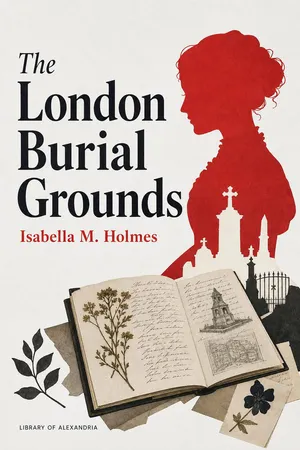
A city's history does not end where its graves begin. Discover the overlooked places that reveal how London has lived with-and too often forgotten-its dead.
In The London Burial Grounds, Isabella M. Holmes surveys a landscape of churchyards, cemeteries, and lost places of interment. Drawing on historical research, municipal records, and personal observation, she explores how generations of Londoners made room for their dead, and what happened when an expanding city pressed against those spaces. Overcrowded churchyards, plague burials, and the resting places of rich and poor become evidence of a much larger urban story.
This is both a record of places and an argument for remembering them. Holmes connects burial practices with public health, religious life, social inequality, and the pressures of development. Her concern for preservation gives the work a lasting urgency: when a graveyard disappears from view, what happens to the people and histories it once held? For readers today, the book offers a way to look beyond familiar streets and buildings toward the older patterns of life beneath and around them.
What readers find inside:
- Forgotten sites - Lost and overlooked burial places reveal a less visible geography of the capital.
- Death and disease - Plague and crowded churchyards illuminate the relationship between burial and urban health.
- Class and faith - The treatment of the dead reflects divisions and beliefs among the living.
- A changing city - Urban expansion puts pressure on places set aside for remembrance.
- Preservation and dignity - Holmes asks readers to take the historical and human value of burial spaces seriously.
For readers of London history, cemetery enthusiasts, and anyone interested in the relationship between cities and memory, this survey brings an easily overlooked subject into focus.
Begin exploring the graveyards and forgotten spaces that hold another history of London.